
Follow our live coverage here.
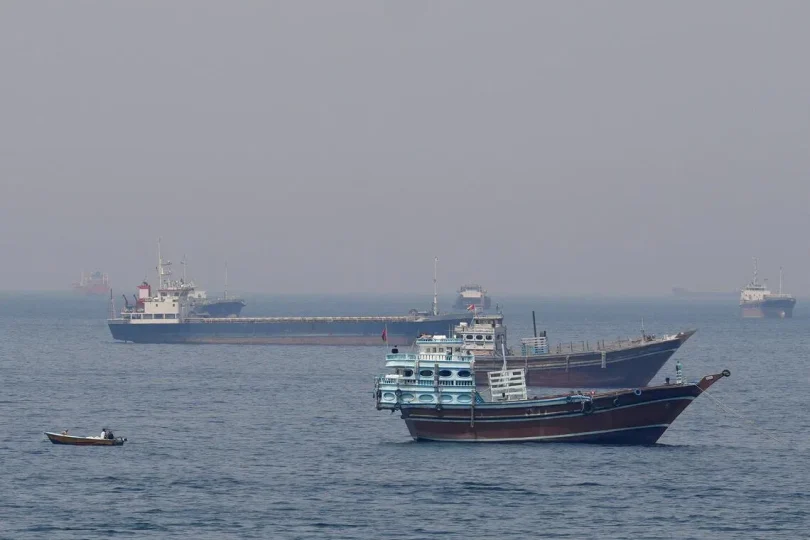
Even if the Strait of Hormuz opens again, energy executives and analysts say the industry will no longer be able to count on it as it used to. For the strait, there is no going back to normal.
Countries across the region are exploring building, expanding or rehabilitating infrastructure that would bypass the strait.
And nations that import fuel from the region are racing to secure oil and gas from elsewhere, putting conservation measures in place and turning to alternatives like coal.
Those strategies are likely to shift over time. Today’s coal use may give way to greater investment in solar power and nuclear energy, for example.
No matter what happens next, Iran will not forget how easy it is to strangle shipping through the strait, meaning that energy companies and consumers must prepare for a very different future.
“From the moment missiles started falling and drones started hitting, it was very clear that we weren’t going back,” said Mr Badr Jafar, a businessperson who serves as special envoy for business and philanthropy for the United Arab Emirates.
To stem the current energy crisis, Saudi Arabia and the UAE have rerouted substantial portions of the oil they produce to ports away from the Strait of Hormuz, via pipelines built years ago in preparation for a crisis.
Iraq also recently started sending a small amount of oil to Turkey in a pipeline that has slid in and out of service for years because of political and armed conflict.
More than 7 million barrels of oil are being shipped out of the Persian Gulf each day on one of those routes, up from fewer than 4 million barrels a day before the war, according to the International Energy Agency (IEA).
But that is a fraction of the 20 million barrels of oil that travelled through the strait daily before the war. And pipelines are doing nothing for geographically isolated countries like Kuwait and Qatar. They are also of little use for transporting aluminium, fertiliser and other goods.
For those reasons, not to mention geopolitical objectives, reopening the strait remains very important. The strait’s centrality is why international oil prices plunged 9 per cent on April 17, to their lowest levels since the second week of the war, after Iran’s foreign minister said the strait would be “completely open”.
But Iran reversed course the next day, after US President Donald Trump made clear that US forces would keep blockading vessels travelling to and from Iranian ports. The United States later seized an Iranian-flagged cargo ship that Mr Trump said had tried to get around the US blockade.
That back-and-forth reinforced the idea that free passage through the strait can be halted by any world power determined to do so.
“The Strait of Hormuz will be less important in 2030 or 2035 than it was in January,” said Mr Elliott Abrams, who served as a special representative for Iran and Venezuela during the first Trump administration. “People will find alternatives.”
Some simpler options include expanding existing pipelines, storage capacity and ports in Saudi Arabia and the Emirates. But that would solve only a portion of the problem. Most Persian Gulf countries do not have the benefit of access to another coast that lies outside the strait.
Iraq, which is among those without another coast, has floated building a new pipeline to the Mediterranean Sea by way of Syria.
Political conflict often stymied such cross-border projects in the past. A pipeline from Iraq through Saudi Arabia to the Red Sea was built in the 1980s. But Saudi Arabia shut it down in 1990 after Saddam Hussein, the Iraqi leader, invaded Kuwait.
Now, with few working alternatives, Iraq was forced to shut the production of an estimated 3 million barrels a day of oil in March, according to the IEA.
“You can draw beautiful lines on the map,” said Mr Robin Mills, chief executive officer of Qamar Energy, a consulting firm based in Dubai in the Emirates. “To try to make it happen in reality is something else.”
Mr Jafar expressed optimism that the war might inspire the kind of regional cooperation that had previously been elusive.
“There’s nothing like both a sense of urgency and an imperative to decouple from this choke point for us to see these sorts of things coming together,” Mr Jafar said. “It’s not impossible, far from it.”
This kind of infrastructure would most likely cost billions of dollars – and potentially tens of billions for larger projects. That said, crises like the one the world is experiencing are expensive, too.
“One or two months of a disruption like this, and it pays for itself,” Mr Mills said, referring to smaller projects like expanding existing alternatives.
Of course, no alternative would be fail-safe, as Iran has demonstrated by attacking energy assets throughout the region. But having more options makes it harder for countries to choke off the supply of energy from the region.
Energy importers are also moving quickly to diversify away from the Persian Gulf, whether by buying more fuel from the United States or making plans to restart nuclear power plants.
Those trends are likely to be sticky, energy experts say. They could give an upper hand to oil and gas producers that are not at the mercy of maritime choke points and accelerate the transition away from oil and gas.
But remaking energy trading routes to prioritise resilience – rather than efficiency – will be expensive. Such investments will take time and are likely to raise energy prices for consumers, said Mr Spencer Dale, who until recently was the chief economist of the London-based oil company BP.
“The world is just now more uncertain, more vulnerable than it was before,” said Mr Dale, now a visiting professor at the London School of Economics and Political Science.
The rational response is to compensate by making the energy system more resilient to geopolitical upheaval, he said. “But that all comes at a cost.” NYTIMES