
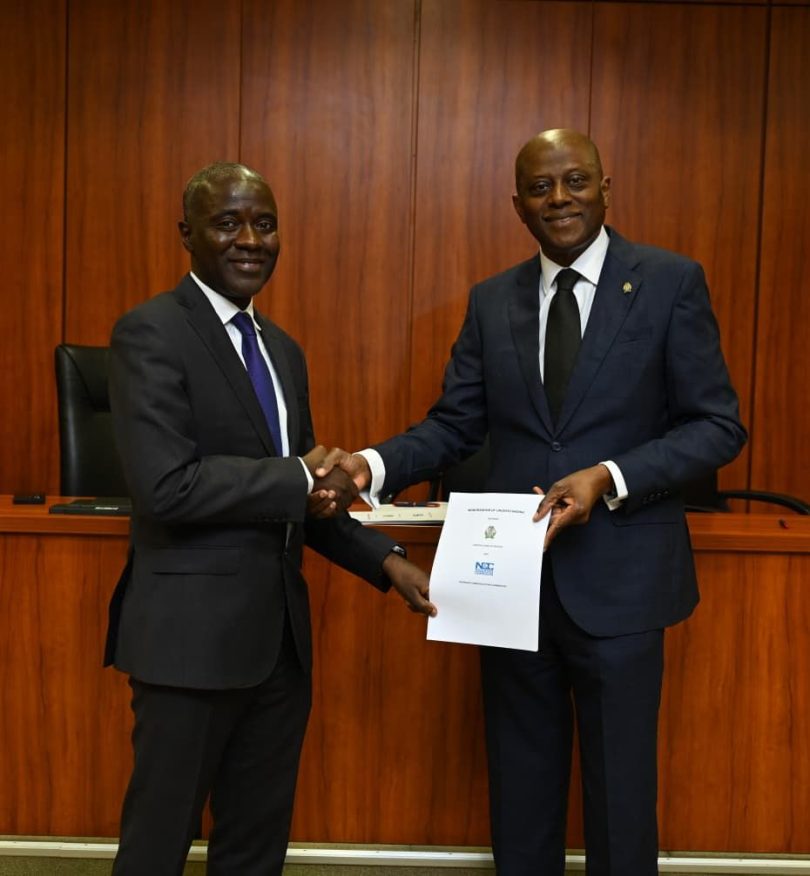
The Nigerian Communications Commission (NCC) and the Central Bank of Nigeria (CBN) have signed a Memorandum of Understanding (MoU) to safeguard consumers against fraud while opening opportunities for them to leverage the potentials of the telecommunications and financial sectors.
The MoU was signed as NCC and CBN inaugurated a Joint Committee on Payment Systems and Consumer Protection and a Joint Committee on Telecoms Identity Risk Management System (TIRMS) Portal on Monday, April 20, 2026.
The Executive Vice Chairman and Chief Executive Officer of NCC, Dr Aminu Maida, said the MoU provides a structured framework for cooperation in critical areas including payment system integrity, fraud mitigation, digital inclusion, and the protection of consumers, micro, small and medium-sized enterprises, which he noted will translate into practical outcomes that strengthen trust, deepen inclusion, and support a secure and resilient digital economy.
Maida described the signing of the MoU as an important milestone in “the regulatory stewardship” of Nigeria’s digital economy, which reflects a shared commitment to collaboration in strengthening financial system stability, advancing digital inclusion, and protecting consumers in an increasingly interconnected ecosystem.
He said: “Over the years, our two institutions have demonstrated the value of close regulatory coordination. A notable and recent example is our collective effort in resolving the long-standing USSD debt impasse – an intervention that restored confidence, preserved service continuity, and safeguarded the interests of consumers, telecom operators, and financial institutions alike.
“That experience reaffirmed a simple truth: that complex, cross-sector challenges are best addressed through structured collaboration.
“This MoU provides a clear framework for cooperation in critical areas such as payment system integrity, consumer protection, fraud mitigation, and the responsible use of digital infrastructure.
“In particular, it supports initiatives that promote secure digital payments, enhance trust in mobile-enabled financial services, and extend safe access to underserved populations and MSMEs.”
Jonathan rebuts Atiku, says ‘I did my best in office’
The NCC boss explained that the collaboration was designed “for the prevention of electronic fraud, which has become increasingly pervasive, with significant implications for the integrity of our digital economy.”
Maida added: “Through the Telecom Identity Risk Management System (TIRMS) Portal – which aggregates data on churned (recycled) phone numbers, as well as numbers flagged within your sector – the Financial Services Industry will now have enhanced visibility into the status of phone numbers, one of the most widely utilised resources in your sector, although regulated by the NCC,” Maida added.
“This means that the Financial Institutions will be able to determine when a line is active, when it has been swapped, when it has been disconnected due to inactivity and reassigned to a new subscriber, and when it has been flagged for suspicious or fraudulent activity.
“This ensures that our financial services industry is better equipped with timely and relevant information to effectively combat e-fraud, particularly those perpetuated using phone numbers, in the country.”
On his part, CBN Governor Olayemi Cardoso described the MoU as one that will strengthen coordination on approvals, technical standards, and innovation trials, including sandbox testing that supports market-led solutions while safeguarding stability.
“Going forward, the CBN remains fully committed to working with the NCC to deliver a safer, more resilient, and more inclusive digital financial system – one that supports national productivity, protects consumers, and strengthens trust in Nigeria’s digital economy,” Cardoso stated.
Cardoso subsequently inaugurated the Joint Committee on Payment Systems and Consumer Protection and the Joint Committee on TIRMS Portal, which he said would put the protection of consumers of both sectors from fraud at the forefront.