
By Chimezie Godfrey
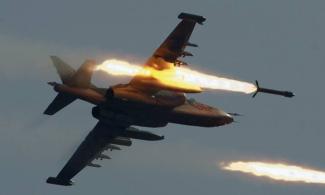
Nigeria’s intensified air campaign against insurgency recorded another strategic success as the Nigerian Air Force (NAF) carried out a precision air interdiction strike on terrorist positions in the Mandara Mountains, further weakening insurgent logistics and operational networks.
The operation, conducted on April 27, 2026, targeted Guduf, a known terrorist enclave nestled within the difficult terrain of the Mandara Mountains—an area long exploited by insurgents as a strategic sanctuary.
According to a statement signed by Air Commodore Ehimen Ejodame, Director of Public Relations and Information, the strike was executed by the Air Component of Operation HADIN KAI following credible intelligence and detailed surveillance.
“Acting on credible intelligence and prior confirmatory ISR, NAF air assets identified multiple terrorist structures and logistics hubs actively supporting insurgent activities,” the statement said.
The Mandara Mountains, straddling parts of Nigeria’s North East border region, have remained a focal point in the counter-insurgency campaign due to their complex geography, which offers concealment and mobility advantages to terrorist groups.
However, the NAF’s increasing reliance on ISR-driven operations appears to be narrowing those advantages, enabling precise identification and engagement of high-value targets.
“Employing precision targeting and strict adherence to rules of engagement, NAF platforms engaged and neutralised hostile elements with lethal accuracy,” Ejodame stated.
The Air Force emphasised that the operation was conducted with full consideration for civilian safety, reflecting a balance between operational effectiveness and humanitarian obligations.
“The strike maintained due regard for the protection of civilians and the surrounding environment,” the statement added.
The destruction of logistics hubs is particularly significant, as such facilities serve as critical nodes for sustaining insurgent activities, including movement of weapons, supplies, and personnel.
“The strike resulted in the destruction of key terrorist structures and logistics hubs, significantly degrading their operational capability,” Ejodame said.
Security analysts view the latest strike as part of a broader strategic shift toward dismantling the operational backbone of insurgent groups, rather than merely targeting fighters.
The sustained tempo of air operations, combined with ground offensives under Operation HADIN KAI, continues to reshape the battlespace in the North East, limiting the ability of terrorist groups to regroup and launch coordinated attacks.
“This reinforces the NAF’s relentless posture in denying adversaries freedom of action and safeguarding national security,” the statement concluded.