
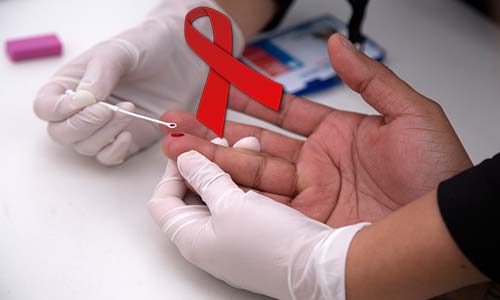
The National Agency for the Control of AIDS (NACA) has cautioned the public against relying on unauthorised HIV data circulating on social media, describing the figures as misleading and taken out of context.
In a statement on Wednesday and signed by its Director-General, Temitope Ilori, the agency said the publication, which presents state-by-state HIV figures for January to March 2026, did not follow established protocols for data request, validation, and dissemination.
The clarification follows a widely shared post published on 1 April by Instablog, a popular blog on Instagram, which claimed that Nigeria recorded 20,838 new HIV infections within the first quarter of 2026.
The post listed Lagos and Benue States as having the highest number of cases, alongside others, including Akwa Ibom, Rivers, and Anambra States.
It also highlighted figures from northern states such as Kaduna and Kano, while listing lower numbers in states like Ekiti, Sokoto, and Yobe.
The post gained significant traction online, prompting concerns about the interpretation and use of HIV data.
NACA said although the figures appear to have been sourced from the National Data Repository dashboard, they only reflect HIV positivity from routine testing in health facilities and not the actual burden of the disease.
“HIV positivity alone is not a valid measure of prevalence or incidence and cannot be used to determine or rank the burden of HIV,” the agency said.
It explained that such figures are influenced by several factors, including population size, testing coverage, and differences in data reporting across states.
According to the agency, presenting or ranking states based solely on these figures is misleading, inaccurate, and invalid.
NACA said that HIV data is highly sensitive and must be handled with strict adherence to established protocols to ensure proper analysis and accurate public communication.
The agency explained that only authorised government health institutions possess the mandate and technical expertise to generate, interpret, and release such information.
It added that any attempt to bypass these procedures risks distorting the data and could mislead the public on the true state of the HIV epidemic in the country.
NACA urged members of the public and organisations seeking HIV-related data to follow due process by submitting formal requests to the agency.
It also advised the public to disregard the circulating publication, reiterating that unauthorised data releases undermine accurate understanding of the country’s HIV situation.
Meanwhile, the federal government has continued to scale up HIV prevention efforts with the introduction of new treatment options.
In March 2026, Nigeria received its first shipment of Lenacapavir, a long-acting injectable drug for HIV prevention, marking a significant step in expanding access to care.
The drug, introduced through the National AIDS, Viral Hepatitis and STIs Control Programme under the Federal Ministry of Health and Social Welfare, is used as pre-exposure prophylaxis (PrEP) for people at risk of infection.
Unlike conventional daily pills, Lenacapavir is administered just twice a year, an approach experts say could significantly improve adherence and widen access to prevention services.
Further strengthening this effort, Nigeria is expected to receive about 179,700 doses of the drug by 2028 through support from the Global Fund, a move health authorities say will bolster the country’s response to the HIV epidemic.