
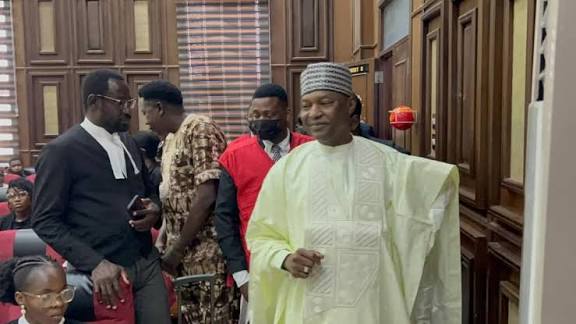
Former Attorney General of the Federation, Abubakar Malami, has taken legal action against the Economic and Financial Crimes Commission (EFCC), contesting the interim forfeiture of several of his properties.
In an affidavit filed before the Federal High Court of Nigeria in Abuja, Malami argued that the assets in question were lawfully acquired and not linked to any criminal activity.
The forfeiture order, issued in January 2026, had been granted to the EFCC over suspicions that the properties were proceeds of illicit funds.
Malami, however, maintained that the anti-graft agency failed to present sufficient evidence connecting the assets to wrongdoing.
He described the claims as speculative, stressing that no documentation had been provided to prove the properties were purchased with illegal funds.
He also accused the EFCC of inflating the value of the assets to strengthen its case. According to him, properties bought for hundreds of millions of naira were wrongly valued in the billions.
He noted that independent assessments had placed more realistic values on the assets.
Explaining the sources of his wealth, Malami said they stem from over 30 years of legal practice, as well as investments in sectors such as hospitality, agriculture, and education.
He added that he also benefited from bank loans, asset sales, gifts, and proceeds from book launches, all of which he claimed were properly declared to the Code of Conduct Bureau.
Beyond disputing the financial allegations, Malami accused the EFCC of violating due process. He alleged that officials seized properties without a final court order, evicted occupants, and confiscated documents, actions he described as unlawful and extrajudicial.
The case, which is linked to an ongoing criminal matter involving the former AGF, is expected to test the scope of the EFCC’s powers in asset forfeiture and its compliance with legal procedures.
Malami is asking the court to overturn the interim forfeiture order, insisting the properties are legitimate.
The court will ultimately determine whether the assets should be permanently forfeited to the Federal Government or returned to him.