
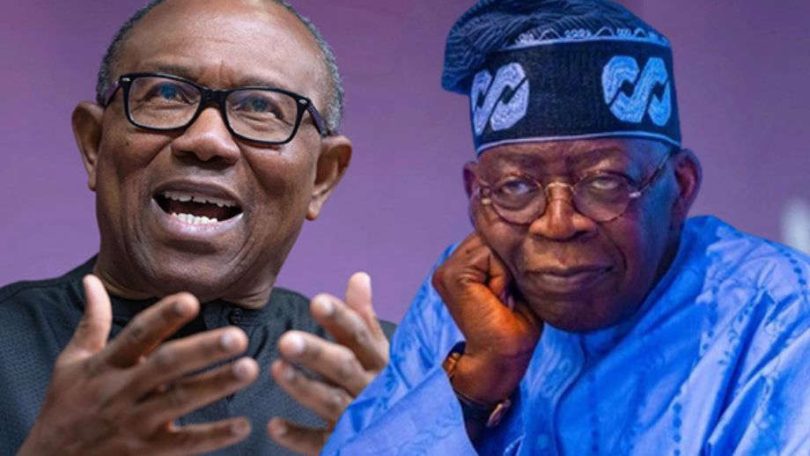
The candidate of the Labour Party in the 2023 presidential election, Mr Peter Obi, has knocked President Bola Tinubu for downplaying the hardship Nigerians are going through.
The former Governor of Anambra State was reacting to remarks by Mr Tinubu that Nigerians should be grateful for not going through what Kenyans are experiencing due to a hike in petrol prices as a result of the war in Iran, triggered by the United States and Israel.
During a visit to Bayelsa State over the weekend, President Tinubu said, “Let’s just thank God together that you are better off listening to them in Kenya and other African countries. What they are going through.”
But Mr Obi frowned at the President’s statement, saying key development indicators such as security, the Human Development Index, life expectancy, GDP per capita, literacy levels, and electricity access show Kenya outperforms Nigeria.
According to him, the standard of living of Kenyans is better than that of Nigerians, noting that if the President considers Kenyans to be suffering despite these stronger figures, then Nigerians are in a far more difficult situation.
He advised Mr Tinubu to “refrain from self-consolation and, in honest reflection, take responsibility for the situation and make a determined effort to drive improvement.”
He submitted that, “This requires a posture of humility, accountability, and commitment to addressing the factors that have slowed Nigeria’s development.”
Mr Obi noted that, “Nigeria is the fourth most terrorised nation in the world, while Kenya is not among the ten worst. Kenya’s HDI ranking is 143 out of 180 countries, with a coefficient of about 0.630, compared to Nigeria’s ranking of 164 out of 180, with a coefficient of about 0.530. Its GDP per capita is roughly $2,200–$2,300, compared to Nigeria’s $807–$835.
“Kenya’s poverty rate is about 43 per cent of the population (approximately 23 million people), while Nigeria’s is about 63 per cent (around 150 million people), over six times that of Kenya. Kenya’s life expectancy is about 67 years, while Nigeria’s is about 54 years. The literacy rate in Kenya is approximately 81–85 per cent, compared to Nigeria’s 62–65 per cent.
“Kenya’s electricity access is higher, while Nigeria has one of the lowest levels of electricity access in the world. Kenya has about 3.5 million out-of-school children, while Nigeria has about 20 million. Kenya’s inflation rate has been about 4.5 per cent or lower over the past three years, while Nigeria’s has remained above 15 per cent within the same period.
“Kenya’s exchange rate has been around USD 1 to KES 130 over the past three years, whereas Nigeria’s exchange rate rose from below N500/$1 to above N1,250/$1 within the same period. Even with developments in the Middle East and rising oil prices, Kenyans have not experienced the sharp increases in petroleum product prices seen in Nigeria.”
The chieftain of the African Democratic Congress (ADC) said while the President’s comments “may have been intended to soften the impact of economic hardship and rising fuel prices,” they risk downplaying the severity of the current crisis.
“It echoes the biblical parable of the Pharisee and the Tax Collector in the Gospel of Luke (18:9–14). A similar warning is found in the Qur’an (53:32), which cautions against self-righteousness.
“Like the Pharisee who boasted of his superiority over others to mask his own spiritual void, such downward comparisons serve more as a refuge than a remedy.
“This validated an earlier dismissive remark by President Ahmed Bola Tinubu during electioneering: Na statistics we go shop? Yet statistics remain indispensable – they are the language through which nations understand their condition and chart progress.
“No country can develop in isolation from measurable realities or without comparing itself with peers. Comparisons, when properly grounded, are not instruments of escapism but tools of accountability. What is objectionable is not comparison itself, but comparison stripped of credible, verifiable data—mere tax collector comparisons that soothe rather than solve,” he stated in his post titled From Pharisee to Tax Collector: Rethinking Tinubu’s Kenyan Comparison.