By Chimezie Godfrey
The Chairman of the Independent Corrupt Practices and Other Related Offences Commission, Musa Adamu Aliyu, has called for urgent measures to bridge the widening gap between anti-corruption policies and practical implementation in government institutions.
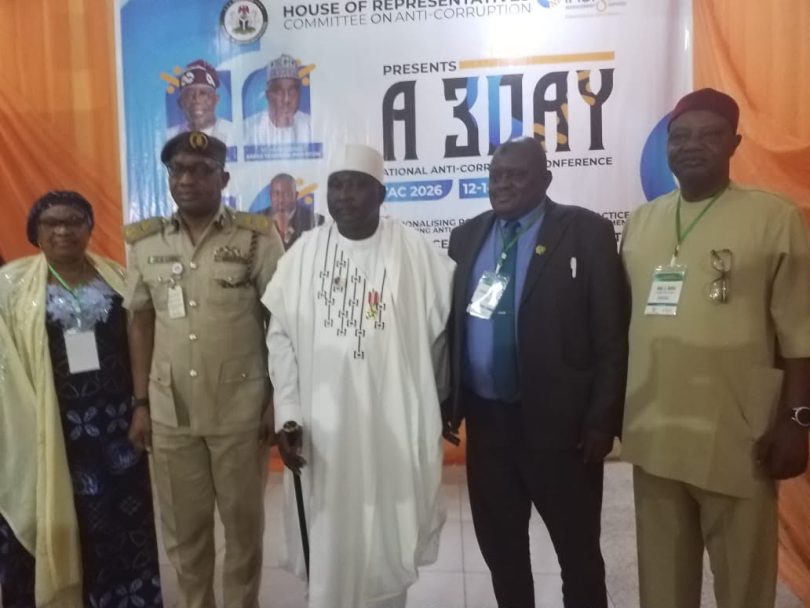
Aliyu made the call at a three-day National Anti-Corruption Conference held in Kano and organised by the House of Representatives Committee on Anti-Corruption.
The conference, themed “Operationalising Policy Statements into Practice: Strengthening Anti-Corruption Mechanisms in Government,” attracted stakeholders from ministries, departments and agencies across the country.
Represented by the Resident Anti-Corruption Commissioner for the ICPC Kano Office, Ahmad Muhammad Wada, the ICPC chairman said the success of Nigeria’s anti-corruption fight depends on translating policy commitments into measurable actions.
“Strengthening anti-corruption mechanisms requires closing the divide between high-level policy and everyday practice,” Aliyu declared.
According to him, effective anti-corruption systems must go beyond mere oversight and focus on institutional integrity, technological integration and a culture of accountability.
He explained that internal audit and control units within government institutions must not exist merely on paper but should be genuinely empowered to function independently and effectively.
Aliyu also stressed the importance of deploying technology to reduce human discretion and improve transparency in public service.
“Reducing human discretion through digital transparency will minimise opportunities for malfeasance,” he stated.
The ICPC chairman further advocated a shift from reactive anti-corruption measures to a proactive culture where transparency becomes the default principle within government institutions.
“Let our discussions move beyond the theoretical,” he urged participants.
“Share practical templates, identify the bottlenecks that stall policy execution, and forge a united front that translates our collective resolve into tangible results for the Nigerian people.”
He described the conference as timely, noting that Nigeria’s anti-corruption battle had reached a critical stage requiring stronger institutional commitment and practical reforms.
Also speaking at the conference, the Speaker of the House of Representatives, Tajudeen Abbas, described the conference theme as a direct reflection of the challenges confronting democratic governance in Nigeria.
Represented by the Chairman of the House Committee on Downstream, Alhassan Ado Doguwa, Abbas said the legislature remains the first line of defence in the anti-corruption fight.
“Our job is not merely to make laws, but to make them work,” the Speaker stated.
“We are the bridge between the aspirations of the people and the administration of the state.”
He tasked the executive arm of government with ensuring digital and transparent procurement processes while urging the judiciary to accelerate corruption trials to ensure timely justice.
Participants at the conference examined issues relating to institutional oversight, digitalisation and sector-specific implementation strategies aimed at strengthening accountability and transparency in governance.
ICPC Chairman Pushes Tough Anti-Corruption Reforms, Demands End to ‘Policy Without Action’