
Business
RISING food prices have forced many residents of the Federal Capital Territory (FCT) to abandon bulk purchases and resort to buying food items in mudus and small portions.
Some of the residents told the News Agency of Nigeria (NAN) on Sunday, that they were shopping for daily survival and not necessarily for the Easter celebration.
They said that their celebration of Easter at this time was more spiritual than physical due to unavailability of funds.
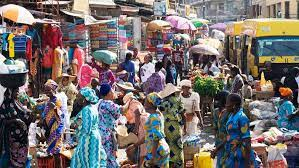
A NAN correspondent who visited Apo Market and nearby retail shops, observed that although the market was busy, many buyers avoided bulk purchases.
Most patronage was at stalls where rice, beans, garri and other staples were sold in small quantities, reflecting growing pressure on household incomes.
The survey showed that a mudu of local rice sold for about N2,300, while foreign rice cost about N2,500 per mudu against N1800 and N2000 sold some months back.
A mudu of beans now sold for about N2,000 against its former price of N1300 while bottles of groundnut oil and palm oil were sold for about N2,000 each.
It was also confirmed by the traders that mudus of staples sold faster than half or full bags, as consumers now bought only what they needed for immediate use.
A trader, Mrs Hauwa Ibrahim, said buying patterns changed following the increasing cost of petrol which had led to economic hardship for many citizens.
“People no longer buy items in bulk the way they used to. What sells now are mudus because many families just buy what they can cook for that day,” she said.
Another trader, Mrs Rebecca Samuel, said festive demand had not translated into higher spending.
“The market is full as you can see, but people are not spending much, obviosly because they do not even have.
“They price things carefully and buy in small portions. Many can not afford to stock food for one week again as they used to,” she said.
Further checks showed that a dustbin basket of tomatoes, which previously sold for N3000 now sold for between N5,500 and N6,500.
A basket of fresh pepper ranged between N5,000 and N6,000, while tatashe sold for between N5,000 and N6,500 against the previous price of between N2500 and N3000.
A basket of long pepper now cost between N4,500 and N5,000 against N2500, while sweet potatoes which was sold for N2000, now goes for about N5,000 per basket.
Irish potatoes, which was previously sold for N4500 now sells for about N8,500 per basket, indicating continued pressure on food prices.
NAN reports that vegetables like cabbage and carrots are gradually getting out of the reach of the common man.
A trader, Abbas Adah, said while market activity remained high, purchase volumes had dropped significantly due to declining purchasing power.
Adah said the trend highlighted the impact of inflation, with more Nigerians relying on small measures instead of bulk food purchases.
One of the buyers, Mr Friday Ezeonu, said many households had shifted from weekly and monthly shopping to daily purchases.
“Before now, I could stock the house with one month supply of food when salaries are paid. These days, I buy daily because prices keep rising and money is not enough.
“I have two children in the university and three others in secondary school, the expenses and bills keep increasing, yet the funds are limited.
“We are seriously suffering and smiling in this country. We need the government to speedily do something about our situation and better the economy,” he said.
Mrs Amina Adakole said she now avoided supermarkets, but opted more for smaller retail outlets where she could buy according to available funds.
“We buy in mudus or small bits. Even with the Easter celebration, all we are thinking about is how we can feed our families each day without much stress,” she said.
Mrs Faith Okoh, a civil servant, said, “For a very long time I have not witnessed this type of hardship.
“It is almost as if we are not celebrating anything. People do not have money to shop. Everywhere is just dry and empty.
“I earnestly pray something is done and fast to better the lives of citizens. We need palliatives, we need salary increases, we need subsidised transportation, electricity, the list is unending.
“The government needs to come to our aid, we need help to be able to come out of our present situation right now,” Okoh said.
Findings by NAN show that the increase in the prices of food is due to the hike in the pump price of petroleum products occasioned by the Middle East crisis.
This development has led to increase in transportation which trickled down to hike in the cost of staples and other essential items. (NAN)
A.I
April 6, 2026
Tags: Mrs Amina Adakole Mrs Faith Okoh RISING food prices