
Speeches
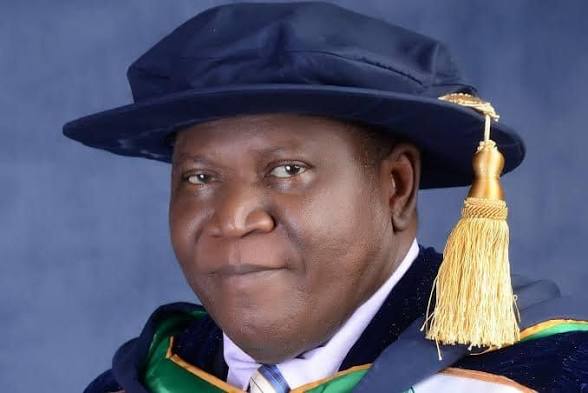
By Professor Yakubu A. Ochefu
1. Opening Context: Where We Are Now
It is a privilege to stand before you today at this historic occasion — the formal opening of the Idoma TV studio here in Abuja, the nation’s capital. This is not merely the commissioning of a media facility. It is the planting of a flag. It is a statement that the Idoma voice will not be confined to the corridors of Otukpo or the hills of Benue South alone, but will resound from the very centre of governance in this country.
Before we look ahead, permit me to look back briefly. The political journey of Benue South our Zone C has been one of resilience, aspiration, and, let us be honest, missed opportunities. Since the 1950’s when our fathers engaged in Party politics, we have produced remarkable leaders, men and women of intellect, courage, and vision. In the 1950’s and early 60’s notable political leaders like JC Obande and Abutu Obekpa held sway at the regional and national level. In the politics of the old Benue State, names like Morgan Ogbole, Ogwiji Ikongbeh, Adakole Adama, Adejo Ogili, Ameh Ebute, Audu Ogbeh, Godwin Okpeh, Obande Obeya, B.O. Atta, Baba Odangla, Eche Egwa, Oga Okwoche to mention a few held sway in the politics of the State. Since 1999 our party politics have been dominated with recurring names names like David Mark, Prince Ogli Ajene and Dr. Jerry Agada both of blessed memory, Stephen Lawani, Okibe Onoja, Abba Moro, Godwin Obla, SAN, Blessing Onuh and Samson Okwu. Indeed we have contributed to the governance of Benue State and Nigeria in ways that deserve recognition. We have had two Senate Presidents. From the era of our founding fathers through the democratic transitions of 1999 and beyond, the Idoma nation has shown up, spoken up, and stood up.
And yet, we must ask ourselves some difficult questions. Have we maximised the opportunities that have come our way? Have we translated political presence into tangible development for our people? Have we built institutions and systems that outlive individual political tenures? In many instances, the honest answer is no. Not for lack of talent, but often for lack of unity, strategy, and sustained collective action. That is precisely why 2027 matters. Not because it is another election cycle elections come and go but because it represents a turning point. It is a moment where Benue South must decide whether we continue on the path of fragmented political ambition or chart a deliberate, coordinated course toward a future that works for all our people.
2. The Security Challenge: A Matter of Survival
Distinguished ladies and gentlemen, before I speak about politics and economics, I must address a matter that weighs heavily on all our hearts: the security situation in Benue State and, particularly, in Benue South. No conversation about the future of our zone is complete without confronting this reality, because without security, every other aspiration whether political, economic, or social is built on sand. Our people have endured years of attacks, displacement, and loss. Farmers cannot access their farmlands. Communities live in perpetual fear. Families have been torn apart. The human cost is staggering, and the economic consequences are equally devastating. A farmer who is afraid to go to his field does not produce food. A trader who fears the road does not move goods. An investor who sees instability does not bring capital. The crisis is not only a humanitarian emergency but it is an economic emergency.
Let me state clearly where we at Ochetoha K’Idoma stand on this matter. We are firmly in support of state police. The current centralised policing model has demonstrably failed to protect our communities. Policing must be devolved to those who understand the terrain, the people, and the dynamics of local conflict. When the Inspector-General of Police constituted a committee to midwife the process of establishing state police, the socio-cultural organisations of Benue State including Ochetoha K’Idoma came together and submitted a comprehensive memorandum. We did not wait to be invited. We acted, because the lives of our people depend on it. We call on the Federal Government, the National Assembly, and all relevant institutions to accelerate the operationalisation of state police. Our people cannot continue to wait while their communities burn. And we call on our own leaders, at every level, to prioritise security not as a campaign promise but as a governance imperative. The right to life and the right to live without fear are the most fundamental rights any government owes its citizens. On this, there can be no compromise.
3. The Political Reality Check
Let me speak plainly. One of the greatest threats to the political progress of Benue South is not external it is internal. It is the politics of personality over substance, the politics of sentiment over strategy, the politics of “whose turn is it” rather than “who is best equipped to deliver.” We have watched as elite rivalry has fractured our collective strength. We have seen how personal ambition, unchecked by communal accountability, has led to a leadership landscape where division is the default and unity becomes the exception. This must change. If Benue South is to be taken seriously at the national table, we must present a united front built on shared values and a common agenda, not on the fleeting loyalties of electoral seasons.
What we need is a shift toward issue-based politics. When a candidate comes before you and says, “I want your vote,” the question should not be “Which district or family does he come from?” or “Which big man is backing him?” The question should be: What is your plan for agriculture? What will you do about our roads? How will you address youth unemployment? What is your position on education funding? Credible representation begins with credible questioning. And credible questioning begins with an informed and empowered electorate. That is where all of us in this room come in.
4. Strengthening Democratic Participation
No meaningful political future can be built on the foundation of voter apathy. If we want 2027 and beyond to be different, then our people must show up not just at rallies, but at registration centres. Not just on election day, but in the processes that shape who appears on the ballot in the first place. Civic education is not a luxury it is a necessity. Every citizen of Benue South must understand that their vote is not a favour to a politician; it is the exercise of a constitutional right that carries the weight of their future. We must invest in voter awareness campaigns, partner with civil society organisations, and use platforms like Idoma TV to ensure that our people are informed, engaged, and ready to participate. In the 2027 elections we must target a minimum of 100,000 votes per local government and demonstrate that we are a democratically “serious” people.
But I must say this with emphasis: democratic participation is not complete if it excludes the youth. Young people in Benue South must not be reduced to foot soldiers for political campaigns, mobilised when votes are needed and discarded when offices are won. Our young men and women must be at the decision-making table as candidates, as policy advisors, as party officials, as community leaders. The energy, innovation, and digital fluency that our youth bring are not threats to the political establishment; they are the oxygen that will keep it alive. I call on political parties, traditional institutions, and civic organisations to deliberately create pathways for youth leadership. Not tokenism. Not youth wings that exist only on paper. Not 40 to 60 year old Youth Chairmen. Real, substantive inclusion.
5. Economic Repositioning and Infrastructure Development
Now, let me shift from politics to the economy, because the truth is this: no amount of political success will matter if our people remain poor. The ultimate measure of governance is not how many positions Benue South occupies, but how many of our people can feed their families, educate their children, access quality healthcare, and live with dignity. Benue South sits on enormous economic potential that remains largely untapped. We are part of a state that proudly calls itself the “Food Basket of the Nation.” Yet, how much of that food is processed, packaged, and exported by our own people? How much value are we adding before we send our yams, cassava, rice, pepper, and sesame to other markets? Agriculture must move beyond subsistence farming to a full value chain; from production to processing to packaging to market access. This is where the real wealth lies, and this is where deliberate policy intervention is needed. Beyond agriculture, we must look at the small and medium enterprise sector. Our towns and cities are full of talented young men and women who, with the right support, access to credit, skills training, business mentorship, and enabling infrastructure, can build businesses that create jobs and drive local economies. We cannot keep producing graduates who queue endlessly for government employment that is itself shrinking. We must build an entrepreneurial culture.
And here is where I tie it directly to what we are celebrating today. The creative and media industry is one of the fastest-growing sectors in Africa. What Idoma TV is doing building a multimedia hub that combines television, radio, and print under one roof is not just media work. It is economic work. It creates jobs. It trains young content creators. It builds a platform for advertising revenue. It tells our stories in ways that attract investment and tourism. This is exactly the kind of initiative that our economic repositioning demands.
Critical Infrastructure: Roads, Dams, and the Lifelines of Development
Distinguished ladies and gentlemen, let me speak about infrastructure, because no economy can grow without it. And in Benue South, the infrastructure deficit is not merely an inconvenience . It is a barrier to survival. Let me begin with the Otobi Dam. This project, when completed, has the potential to be transformational not just for Otobi, but for the entire Benue South economy and indeed the nation. It would unlock large-scale irrigation for agriculture, provide reliable water supply, generate electricity, and create an economic corridor that could attract investment and industries. Yet, for years, this project has languished in various stages of incompletion while our people watch its promise fade. I call on our Senator and House of Representatives members to unite on this singular issue. Put aside every other difference if you must, but fight together with one voice and with relentless determination for the completion of the Otobi Multipurpose Dam. This is not a partisan issue. It is a development imperative that transcends political affiliation.
Now, let me speak about our roads. When the Oweto Bridge opened and the Oweto-Otukpo road became operational, there was genuine excitement across Benue South. Many of us myself included abandoned the long Keffi-Lafia-Makurdi-Otukpo route with relief and gratitude. That road cut travel time dramatically and opened a vital artery for commerce and connection. But in less than ten years, that road has degraded to a state that makes travel difficult and dangerous. We call on the Federal Government to commence rehabilitation work on the Oweto-Otukpo road before it deteriorates beyond recovery. On a more positive note, we commend the Honourable Minister of Works, Engineer Dave Umahi, who visited Otukpo in September last year and gave an assurance that the Makurdi-Otukpo and Enugu roads would be delivered this year. We are pleased to note the tremendous progress that has been made in that regard, and we urge the Minister to sustain this momentum until the job is fully done.
However, I must raise another road that demands urgent national attention: the Cross River-Oju-Otukpo road. The condition of this road is beyond ordinary disrepair. It is a disaster. Communities along that corridor are effectively cut off from the rest of Benue South for significant parts of the year. Economic activity has ground to a halt. Students have difficulties in reaching their schools. Ditto patients in reaching hospitals. We call on the Federal Government and the Honourable Minister of Works to declare the rehabilitation of the Cross River-Oju-Otukpo road a national emergency. The people of Oju, Obi, and the surrounding communities deserve better, and they deserve it now.
6. Unity and Identity as a Development Tool
Distinguished ladies and gentlemen, let me say something that is often whispered but rarely said aloud: the Idoma nation has sometimes been its own worst enemy. Our internal divisions — whether along district lines, political party lines, or clan rivalries have weakened our collective bargaining power in a federation that rewards those who speak with one voice. I am not suggesting that we must all agree on everything. Healthy debate is the lifeblood of democracy. But there is a difference between disagreement and disunity. We can disagree on candidates and still agree on a common development agenda. We can compete in primaries and still close ranks when the general elections arrive. We can have different political affiliations and still insist together that Benue South deserves its fair share of federal appointments, infrastructure, and investment. Our identity as Idoma people is not a relic of the past. It is a development asset. It is the social capital that, when harnessed properly, can drive advocacy, attract resources, and create a sense of shared purpose. Organisations like Ochetoha K’Idoma have a critical role to play in this regard not as political platforms, but as custodians of our collective interest, bridging generational divides and amplifying a unified voice on the issues that matter most.
We must also build strategic alliances. In a multi-ethnic, multi-religious federation like Nigeria, no group prospers in isolation. We need partners in Benue State, in the North Central, and across the country who share our values and our vision. But alliances must be built from a position of internal strength, not internal fracture.
7. The Role of Media in Shaping the Future
This brings me to the very reason we are gathered here today. The opening of this Idoma TV studio in Abuja is more than a ribbon-cutting ceremony. It is a declaration that the Idoma nation is ready to control its own narrative. For too long, our stories have been told by others often incompletely, sometimes inaccurately, and occasionally not at all. In the age of information, silence is not golden; it is dangerous. When we do not tell our own stories, others fill the void with their own versions, and those versions do not always serve our interests.
Media is the oxygen of democracy. It is the platform through which citizens hold their leaders accountable. It is the mirror that reflects the true state of our communities. It is the megaphone that amplifies voices that would otherwise go unheard. And in our context, media is also a tool for cultural preservation for keeping our language, traditions, values, and history alive in an era of rapid globalisation. There is one issue I want to particularly charge Idoma TV and the Idoma Voice media platforms to take up as a sustained editorial priority: environmental degradation. Across Benue South, the impact of unregulated logging, unsustainable farming practices, and uncontrolled mining activities is beginning to take a devastating toll on our land, our water systems, and our ecosystems. Forests that once stood for generations are disappearing. Topsoil is eroding. Water sources are being contaminated. If we do not act now, we will be handing our children a land that can no longer sustain them. This is not a distant, abstract crisis — it is happening in our communities right now, and it deserves the same urgency and attention that we give to politics and governance. I urge Idoma TV to investigate, document, and broadcast the reality of environmental degradation in Benue South. Make it visible. Make it undeniable. And in doing so, compel those in authority to act.
I commend the founders and management of Idoma TV and the Idoma Voice media family for this vision. By establishing a presence in Abuja, you are not just expanding your operations; you are positioning the Idoma nation at the heart of national discourse. You are ensuring that when policies are debated, when budgets are allocated, when appointments are made, the Idoma perspective is heard clearly, consistently, and credibly. I charge this media platform to be courageous in its journalism, fair in its reporting, and unwavering in its commitment to truth. Be a voice for the voiceless. Hold power accountable. Celebrate our achievements. Interrogate our failures. And above all, use this platform to build, not to destroy.
8. The Idoma Centenary Project: Honouring Our Century, Forging Our Future
Distinguished ladies and gentlemen, before I close, permit me to share something that I believe speaks directly to the spirit of this occasion and to the vision that Idoma TV represents. In 2026, the Idoma people are marking a momentous milestone: one hundred and three years since the establishment of the Idoma Division by British colonial authorities in 1923. The formal creation of the Idoma Division was the act that brought together the Idoma, Igede, Ufia, and Akweya peoples under a single administrative identity an identity that has endured, evolved, and defined our collective journey for over a century.
Under the theme “Honouring Our Century, Forging Our Future,” the Idoma Division Centenary Celebration is a nine-month programme running from May to December 2026. But let me be clear: this is not merely a commemorative exercise. It is a strategic intervention with profound implications for the unity, development, and future trajectory of our people. The centenary serves multiple critical purposes. First, it is an exercise in collective memory an opportunity to document, preserve, and transmit our history to younger generations who may not fully appreciate the journey that brought us here. One hundred years of administrative unity is a milestone worthy of recognition, and we must not let it pass in silence.
Second, it is a platform for unity and social cohesion. In an era of increasing ethnic tensions, this celebration reinforces the bonds that unite the Idoma, Igede, Ufia, and Akweya peoples. It reminds us that our diversity is not a weakness but a strength, and that our shared history is the foundation upon which our shared future must be built. Third, it is an urgent moment for cultural renaissance and preservation. The forces of globalisation and modernisation are rapidly eroding our cultural heritage our languages, our festivals, our traditions, our art forms. The centenary provides a platform to document, showcase, and revitalise what makes us unique before it is lost. Fourth, the centenary is a vehicle for economic development and investment mobilisation. Through the Business and Investment Forum and year-long economic activities, we aim to attract investment, showcase our economic potential, and demonstrate to the world that Benue South is open for business.
The programme includes an Academic and Policy Summit, a Youth and Innovation Showcase, a Women’s Empowerment Summit, a Cultural Renaissance Festival, an Interfaith Prayer Service, Medical Outreach programmes, a Centenary Gala and Awards Night, a Grand Durbar, Unity Cup Finals, the launch of legacy projects, and the burial of a time capsule. With over sixty per cent of our population under the age of thirty-five, specific programming has been designed to empower youth and facilitate the intergenerational transfer of knowledge and responsibility. And the proposed legacy projects will continue to serve our zone long after the celebrations end.
The centenary is also a homecoming a compelling call to every Idoma son and daughter spread across Nigeria and the world to reconnect, return, and contribute to the development of our homeland. It is in this context that I extend a formal and heartfelt invitation to Idoma TV, Idoma Voice Newspaper, and Idoma Voice Radio to join us as official media partners of the Idoma Division Centenary Celebration. This partnership is a natural fit. What better way for a media platform dedicated to the Idoma voice to demonstrate its commitment than by partnering with the most significant cultural and developmental undertaking our people have embarked on in a generation? Together, we can ensure that the centenary is documented, broadcast, and preserved not just for those who will be present, but for generations yet unborn.
9. Leadership and Governance Beyond 2027
As we look toward 2027 and the years that follow, the kind of leadership we demand and the kind of governance we expect must change. We have spent too many years in what I call the “politics of survival” where politics is about who gets what, who eats from the table, and who controls the spoils. It is time to shift to the “politics of transformation” where governance is measured by improved livelihoods, better schools, functional health facilities, reliable electricity, accessible roads, and most important, safe communities. We need visionary leaders not just people who can win elections, but people who can govern with competence, compassion, and a long-term vision. Leaders who understand that the decisions they make today will determine whether our grandchildren prosper or struggle. Leaders who invest in institutions, not just in personal legacies.
We also need policy continuity. One of the tragedies of governance in our part of the world is that every new administration feels the need to start from scratch, abandoning the programmes of its predecessor regardless of their merit. This is wasteful and counterproductive. Good policies must outlive the governments that create them. That requires a level of maturity and statesmanship that we must begin to demand from those who seek our mandate. And fundamentally, governance must be people-centred. The farmer in Adoka, the trader in Otukpo, the student in Ugbokolo, the artisan in Oju, the nurse in Obi these are the people for whom governance exists. If their lives are not improving, then something is wrong, and we must have the courage to say so.
10. Call to Action
Ladies and gentlemen, I bring my remarks to a close with a charge. 2027 is important, but it is a means, not the end. It is a vehicle, not the destination. The destination is a Benue South where every child has access to quality education. Where every farmer can earn a dignified income from the land. Where every young person sees a future worth staying for. Where every community has the infrastructure and services it deserves. Where our environment is protected and our heritage is preserved. That is the Benue South we must build, and 2027 is simply the next step on that journey.
To our political leaders, I say: lead with integrity. Your people are watching, and history is taking notes. The legacy you leave behind will not be measured by the titles you held, but by the lives you touched and the systems you built. To our legislators — our Senator and House of Representatives members I say: unite. Fight for the Otobi Dam. Fight for our roads. Fight for federal investment in Benue South. Your constituents sent you to Abuja to deliver, not to compete with one another. To our young people, I say: do not wait to be invited. This is your future more than anyone else’s. Engage actively. Register to vote. Run for office. Start businesses. Build platforms. Challenge the status quo. The world belongs to those who show up. To the media and especially to Idoma TV, Idoma Voice Newspaper, and Idoma Voice Radio I say: inform, educate, and hold power accountable. Shine a light on the environmental destruction happening in our communities. Document the security challenges our people face. And join us as partners in the Idoma Centenary Project, so that together we can tell the story of a people who refused to be forgotten. And to every Idoma son and daughter, whether you are here in Abuja or back home in Benue, whether you are in Lagos, London, or anywhere across the globe: this is our moment. Not a moment of fear or despair, but a moment of opportunity, responsibility, and hope. Let us seize it together.
Thank you, and God bless Benue South. God bless the Idoma nation. God bless the Federal Republic of Nigeria.
***Being A Keynote Address Delivered at the Opening Ceremony of the IDOMA TV Studio, Abuja, Delivered by: Professor Yakubu A. Ochefu, 18th April 2027, IdomaTV, Jikwoyi,
Abuja, Federal Capital Territory, Nigeria
A.I
April 20, 2026
Tags: Professor Yakubu A. Ochefu