
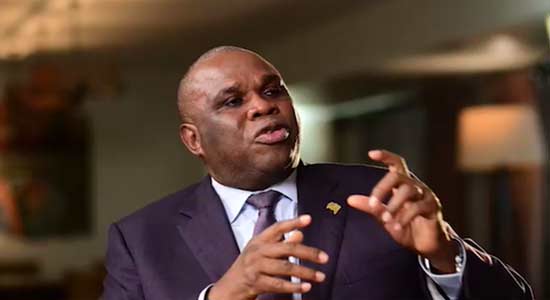
The Senior Executive Vice President of African Export-Import Bank, Mr Denys Denya, has said the bank is financing three additional refineries in Nigeria as part of efforts to cut the country’s dependence on imported petroleum products.
Speaking during a virtual media briefing on Monday, Denya said the intervention forms part of a broader strategy to boost local refining capacity and reduce Africa’s vulnerability to external supply shocks.
“We are also financing refining on the continent, which will alleviate the importation of refined products. We are not only supporting Dangote; we’re supporting three other refineries in Nigeria,” he said.
The briefing, which focused on the bank’s 2025 financial performance, crisis response initiatives and industrialisation strategy, also featured a question-and-answer session with journalists across Africa.
Denya explained that the push into refining is driven by recent disruptions in global supply chains, particularly linked to tensions in the Middle East, which have raised the cost and complexity of fuel imports for African economies.
According to him, Afreximbank has adopted a dual approach of supporting immediate trade finance needs while investing in long-term productive capacity to reduce structural import dependence.
He said, “For import-dependent economies, the cost of import is very high… so we have taken a proactive approach of engaging with financial institutions on the continent to increase their facilities so they can issue high-value letters of credit.”
The bank’s intervention is backed by a $10bn Gulf Crisis Response Programme, designed to stabilise access to essential imports such as fuel, food, fertilisers and pharmaceuticals, while also supporting sectors exposed to global shocks.
Denya noted that the facility is already seeing uptake from countries including Kenya, Ethiopia and Tanzania, warning that demand could accelerate if geopolitical tensions persist.
Beyond short-term interventions, the Afreximbank executive stressed that financing refining projects across Nigeria and other African countries remains central to the bank’s long-term strategy of industrialisation and export development.
He said the bank’s support for large-scale industrial projects, including the Dangote Group refinery, reflects its commitment to reducing Africa’s reliance on imported refined products and strengthening regional value chains.
“Our support for industrialists who are making a difference on the continent is testimony to this approach. We will continue to champion projects that reduce Africa’s reliance on imported refined products,” he added.
Denya further disclosed that the bank is financing similar refining projects in Angola as part of a continent-wide push to achieve self-sufficiency in petroleum products.
The shift towards local refining, he explained, is also expected to improve macroeconomic stability by reducing foreign exchange pressures associated with fuel imports.
On Nigeria specifically, he noted that the country stands to benefit from higher global oil prices due to its status as a crude exporter, while ongoing reforms in local refining could help moderate domestic inflation over time.
He also highlighted Afreximbank’s role in supporting the local currency framework for crude supply to the Dangote refinery, which allows refined products to be sold in naira, potentially easing pressure on the foreign exchange market.
Responding to concerns about whether macroeconomic gains are translating to everyday citizens, Denya said the bank is scaling support for small and medium-sized enterprises through financing and capacity-building initiatives.
“We have interventions in the SME sector where we are providing not only financing but capacity building to ensure that we generate employment… so it is felt by the general population,” he said.
He added that supplier financing programmes are also being deployed to ensure timely payments to businesses within industrial value chains, thereby supporting job creation and economic inclusion.
On the bank’s financial performance, Denya disclosed that Afreximbank’s total assets rose to $48.5bn in 2025, representing a 21 per cent increase from the previous year, while net income grew by 19 per cent to $1.2bn.