
Democracy, as desirable and preferable as it is, cannot deliver its dividends without its core tenets in place.
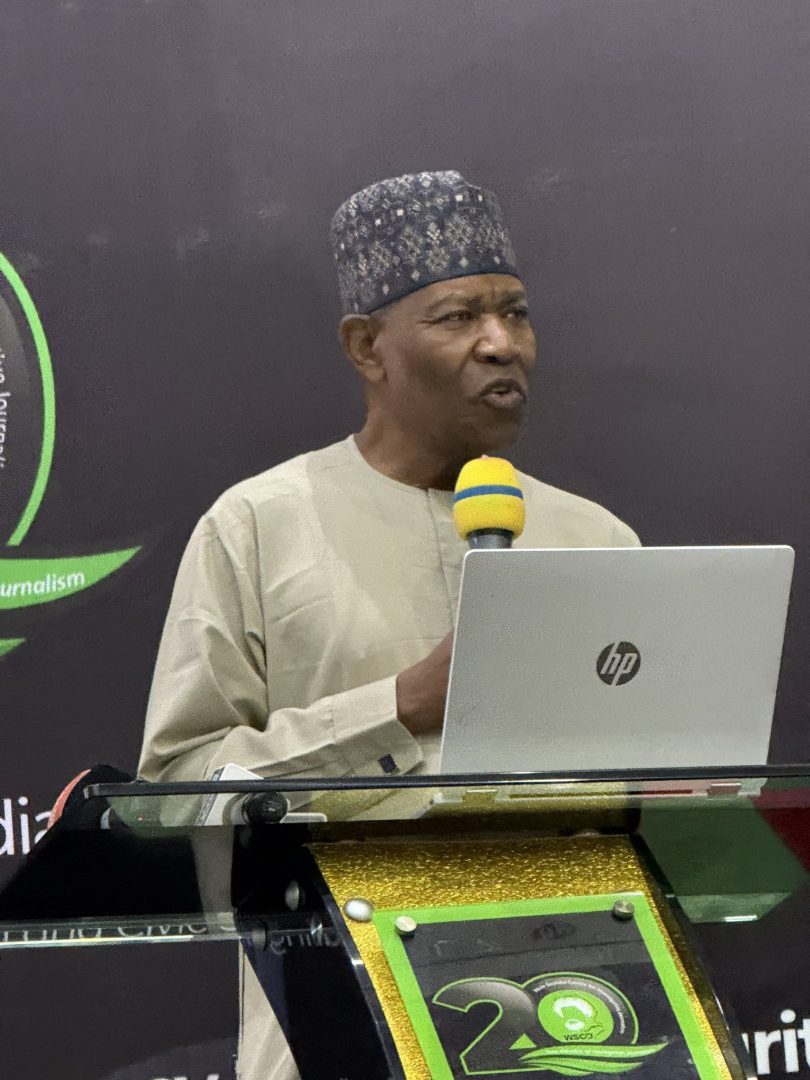
Renowned professor of media history and Vice Chancellor of the Federal University Kashere, Umaru Pate, stated also that in the face of hunger, insecurity, disease, lack of accountability and transparency, the advantages of true democracy will continue to elude Nigerians and indeed Africa unless the nagging issues are resolved.
These were some of Pate’s words when he delivered his keynote address in Lagos on Monday at the 18th Wole Soyinka Annual Lecture Series, which was also to mark the 92nd birthday of the Nobel Laureate, Prof Wole Soyinka.
According to Pate, studies overtime have shown that Nigerians desire democracy.
He however regretted that this form of government has failed to make the people happy as a result of multiform factors.
In the lecture with the theme: Beyond the Ballot: Measuring Democracy Through Security, Welfare, Accountability, and Public Trust, Pate examined how insecurity, hunger, diseases and others have conspired to water down what ought to have been the gains of democratic rule.
“Without accountability, you know what the consequences will be. Corruption flourishes, public resources are wasted and above all, democracy weakens and people become distrustful of the system,” he said
He added that unending conflicts of various dimensions have stalled growth noting that corrupt leadership have failed to see beyond mere personal enrichments and comfort of the self.
“Wherever there are conflicts, hunger will follow and money will disappear from such communities,” Pate said, adding that there is no controversy putting the issue of poverty at what he called a “Conservative” rate of 40% in Nigeria.
Pate said in a multicultural environment that Nigeria represents, and faced with “diseases, unemployment, digital threats, “we will be where we are.”
He listed challenges like Boko Haram, separatist agitation, kidnappings, religious agitations and many more adding “sometimes when you wake up and read news, you feel like you should not go out that day.”
He said though despite being the architects of the parlous state of affairs, the elite themselves are the ones who entertain greater fears avoiding road travels to avoid the various dimensions of insecurity that maladministrations have caused.
He said, “The fear is in the minds of many of us, especially the elite. They love life but they are so poor in providing the basic things that make life enjoyable.”
The media scholar accused Nigerian big businessmen of investing in airline businesses according to him, “so that big men will not travel by roads.”
The media scholar argued that the quality of leadership at all levels will determine the quality of life all the citizens will live.
Lamenting how insecurity has forced millions out of school especially in the Northern part of the country, Pate said Nigerians continue to ignore the reality that those forced out of schools and those who have been displaced by insecurity are also growing up.
“There are parts of this country where people have not been going to school for 13 years.
“There are millions of Nigerians that are not educated and they are growing up and when they grow up they will want to enjoy what every other person is enjoying.
We must ask ourselves that question: who will represent that category of Nigerians in the Nigerian system,” Pate asked
He said democracy should be able to reduce poverty, challenging Nigerian leaders to think.
In what he described as a “catastrophic collision of so many negative factors,” Pate urged leaders to act fast in order to ensure that democracy is said to be the best form of government work for the people.
In a opening address by the Executive Director of the Wole Soyinka Centre for Investigative Journalism, Motunrayo Alaka traced the works of the organisations to years of dedication to excellence and commitment to the good and growth of journalism.
Others present at the event include Prof Ropo Sekoni, Lagos Deputy Commissioner of Police, Mr. Anthony Placid; a former Editor of The PUNCH newspaper and former Provost Nigerian Institute of Journalism, Mr. Gbemiga Ogunleye, Founder of Journalism Clinic, Mr. Lekan Otufodurin who was a member of the panel that put together the latest report of Journalism and Civic Space Status Report.
Also present were Publisher of NPO Reports, Mr. Semiu Okanlawon, Executive Director, International Press Institute, Mr. Lanre Arogundade, Prof Jide Jimoh of the Lagos State University, Dr. Isiaka Aliagan of the University of Ilorin and many others from the media and academia.