
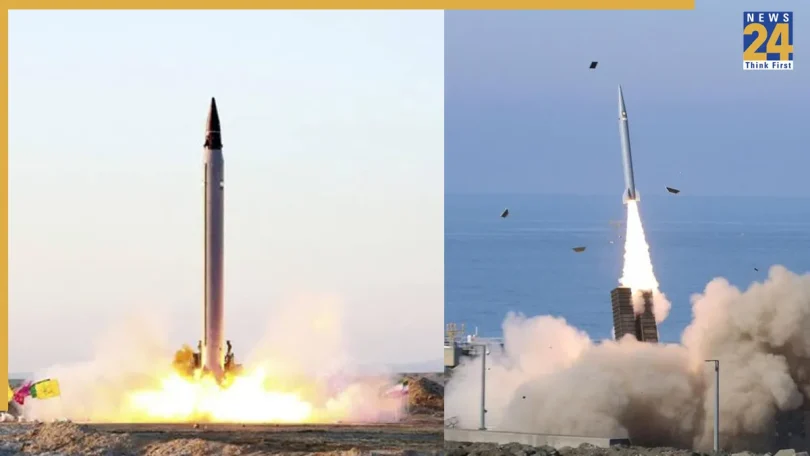
Turkey’s leading defence company, Roketsan, has successfully carried out a live-fire test of its TAYFUN Block-3 missile in the Black Sea. During the test, the missile reached hypersonic terminal speed and destroyed an unmanned surface vessel (USV). Turkish officials described the strike as highly accurate and called it a demonstration of “surgical precision.”
With this successful test, Turkey has joined a small group of countries that can use land-based ballistic missiles to hit moving warships at sea. China is currently considered the leader in this field with its DF-21D, often called the “carrier killer.”
What Is TAYFUN Block-3?
The TAYFUN is Turkey’s indigenous ballistic missile series, and Block-3 is its latest version designed specifically for the anti-ship role. After launch, the missile accelerates to hypersonic speed, especially during the final stage of its flight before hitting the target. Because of this high speed, enemy forces have very little time to intercept it.
During the test, the missile accurately hit a moving target at sea, proving Turkey’s ability to engage naval targets from long distances.

Why Anti-Ship Ballistic Missiles Are Important
Anti-Ship Ballistic Missiles (ASBMs) are among the most advanced military weapons in the world.
Compared to cruise missiles, ASBMs are:
- Much faster
- Have a longer range
- Are more difficult to intercept
These missiles are launched from land and are designed to destroy moving naval targets such as aircraft carriers and warships.
China’s DF-21D is considered the most well-known ASBM and has significantly increased concerns for the US Navy in the Indo-Pacific region. With this successful test, Turkey has now entered this exclusive group.
Although countries like Russia and Iran are also developing similar systems, Turkey has taken a major step forward with a successful live demonstration.

Boost to Turkey’s Defence Industry
Turkey once depended heavily on imported weapons, but it is now focusing on developing advanced defence systems at home.
The successful test of the TAYFUN Block-3 marks a major achievement in Turkey’s missile technology. It is expected to strengthen the country’s naval capabilities and improve its strategic position in the Black Sea, the Mediterranean, and nearby regions.
Strategic Impact on the Black Sea Region
The Black Sea remains an important strategic region due to ongoing tensions involving Russia, Ukraine, and NATO members.
A missile like the TAYFUN Block-3 could help Turkey respond to maritime threats from long distances. It also has the potential to threaten enemy aircraft carrier groups before they reach Turkish waters.
This capability could influence the regional balance of power and improve Turkey’s ability to protect its coastline.

Challenges Ahead
Although the test was successful, developing a reliable ASBM system is still challenging.
Turkey must continue improving several key technologies, including:
- Tracking moving targets accurately
- Protecting the missile during re-entry from extreme heat
- Avoiding enemy interception systems
The country will also need to focus on large-scale production, military integration, and exports.
If Turkey succeeds in these areas, it could become a major player in the global defence market.
A New Chapter in Global Missile Technology
Turkey’s success shows that countries across Asia and Europe are rapidly advancing in missile technology.
After China, Turkey has become one of the few nations with a proven anti-ship ballistic missile capability. This development could change the future of naval warfare, forcing major navies around the world to prepare for long-range missile threats.
The successful test of the TAYFUN Block-3 marks an important milestone for Turkey and adds a new dimension to the global defence landscape.
First published on: Jul 08, 2026 04:58 PM IST
Get Breaking News First and Latest Updates from India and around the world on News24. Follow News24 on Facebook, Twitter.
End of Article
Related Story


