
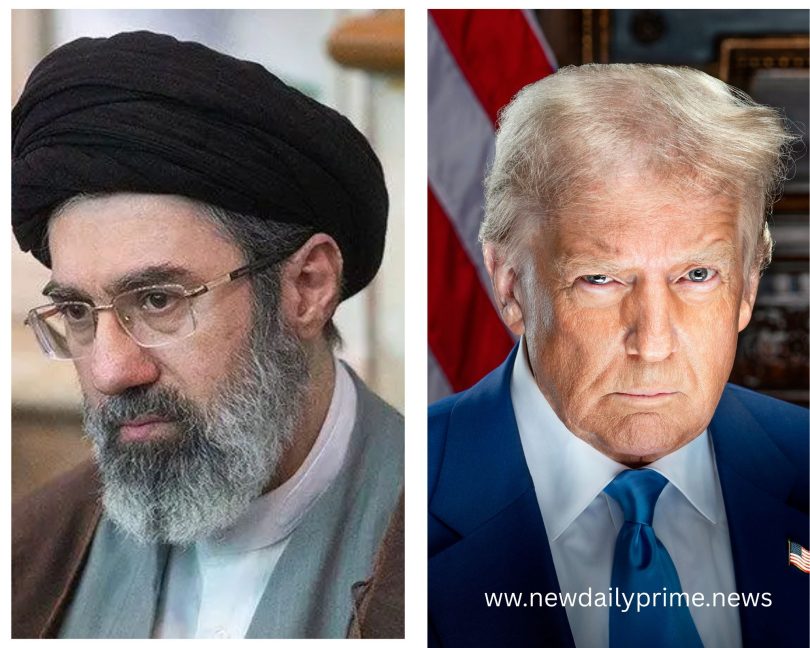
The United States(US) has carried out its 10th consecutive night of airstrikes against Iran, intensifying a conflict that is raising fears of a wider war in the Middle East and threatening global energy supplies.
The latest operation, confirmed by the US Central Command (CENTCOM), targeted Iranian military command centres, missile and drone launch sites, air defence systems and maritime assets. Washington said the strikes were aimed at reducing Iran’s ability to carry out attacks against US forces, allies and commercial shipping in the region.
The latest attacks follow weeks of escalating hostilities between the two countries. Iran has responded with missile and drone strikes targeting US-linked military facilities and allied nations across the Gulf, increasing concerns that the conflict could spread further across the region.
A major focus of the crisis remains the Strait of Hormuz, the narrow waterway through which about one-fifth of the world’s oil supply is transported. Military activity around the strait has disrupted commercial shipping, forcing some vessels to change course and pushing oil prices higher as traders assess the risk of supply disruptions.
The conflict has also widened beyond the Gulf. Yemen’s Iran-backed Houthi movement has announced a maritime blockade targeting Saudi-linked shipping in the Red Sea, prompting some oil tankers to alter their routes. The move has heightened concerns over global trade and energy security.
The Pentagon says nearly 100 US service members have been injured during the recent escalation, although many have returned to duty. The growing number of casualties has reinforced Washington’s determination to continue military operations while maintaining that it remains open to diplomacy.
Efforts to reduce tensions have so far produced little progress. Iranian Interior Minister Eskandar Momeni recently held talks with Pakistani leaders in Islamabad as part of regional diplomatic efforts, but continued military exchanges have overshadowed negotiations.
The United Nations has repeatedly called for restraint, warning that further escalation could destabilise the wider Middle East and worsen the humanitarian situation. Several countries have also urged both sides to return to dialogue to prevent the conflict from expanding.
Beyond the security implications, the crisis is beginning to affect the global economy. Rising oil prices, higher shipping insurance costs and growing uncertainty over Gulf exports have renewed concerns about inflation and economic growth, particularly for countries heavily dependent on imported energy.
Security analysts warn that unless diplomatic efforts gain momentum, continued military operations could draw more regional actors into the conflict, increasing the risk of prolonged instability across the Middle East.
With no sign of either side backing down, the US-Iran confrontation has entered a critical phase, leaving governments and global markets closely watching developments that could reshape security and energy dynamics far beyond the region.