
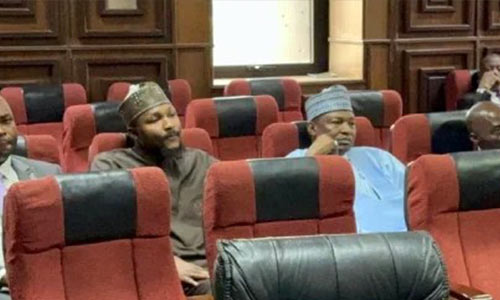
The Federal High Court in Abuja has, for the second time in one week, rescheduled judgment in the assets forfeiture proceedings involving 57 properties allegedly linked to former Attorney-General of the Federation and Minister of Justice, Abubakar Malami, SAN.
The judgment, earlier fixed for Friday, July 10, 2026, has now been adjourned until July 15, 2026, after the presiding judge, Justice Joyce Abdulmalik, did not sit.
Court officials reportedly said they did not know why the judge did not sit.
The court had originally fixed July 6, 2026, for judgment after parties adopted their processes and argued for and against the final forfeiture application on May 26.
However, the judgment was first shifted from July 6 to July 10 without any reason given. It has now been rescheduled again to July 15.
The Economic and Financial Crimes Commission, EFCC, instituted the civil forfeiture proceedings in January, seeking the final forfeiture of 57 properties allegedly linked to Malami, his family members and associates.
The anti-graft agency is pursuing the forfeiture case alongside a separate criminal case it filed against the former AGF and two of his relatives, including his wife and son.
The EFCC had earlier obtained an interim forfeiture order against the properties after alleging that they were acquired with proceeds of unlawful activities and held in the names of individuals and companies acting as fronts for Malami.
The properties, reportedly valued at about ₦212.8 billion by the EFCC, are said to be located in Abuja, Kebbi, Kano and Kaduna states.
Following the interim order, interested parties were directed to show cause why the assets should not be permanently forfeited to the Federal Government.
The EFCC, through its counsel, Jibrin Okutepa, SAN, asked the court to make the interim forfeiture order permanent, arguing that investigations linked the properties to Malami despite their registration in the names of third parties.
The Commission’s application for final forfeiture was supported by a 47-paragraph affidavit and several exhibits.
Malami, however, opposed the application and denied ownership of the properties.
Through his counsel, he argued that the EFCC failed to establish any link between him and the assets or prove that they were proceeds of unlawful activities.
He also maintained that the Commission relied on speculation rather than credible evidence and urged the court to dismiss the forfeiture suit.
Some other individuals and companies claiming interest in the properties also opposed the EFCC’s application and asked the court to discharge the interim forfeiture order.
The case had earlier been handled by Justice Emeka Nwite as a vacation judge, who granted the interim forfeiture order in January after the EFCC alleged that the assets were proceeds of unlawful activities.
The matter was later transferred to Justice Abdulmalik after the court vacation ended.
At a previous sitting, the court ordered all parties and interested persons to file and serve their processes within the timelines prescribed by the court and warned against conduct capable of delaying the proceedings.
The latest adjournment means parties will now wait until July 15 for the court’s decision on whether the 57 properties should be permanently forfeited to the Federal Government or released to Malami and other claimants.