
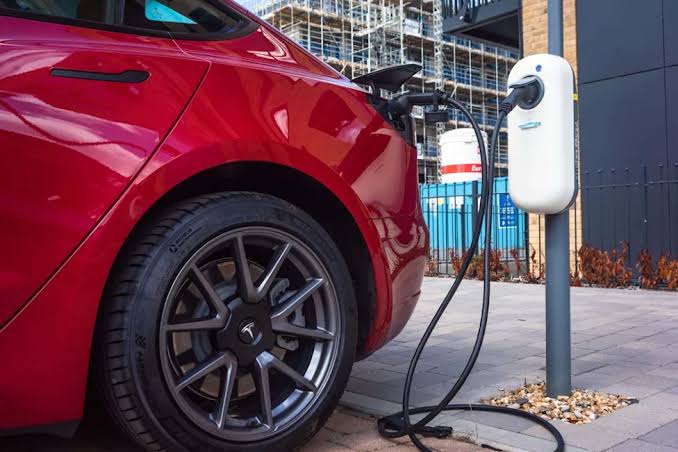
The UK government has confirmed that a new pay-per-mile tax for electric vehicle drivers will begin in April 2028, marking a significant change in how road users contribute to transport revenue.
Under the new electric Vehicle Excise Duty (eVED) scheme, drivers of fully electric cars will pay 3 pence per mile, while owners of plug-in hybrid vehicles will pay 1.5 pence per mile. Both rates remain lower than the estimated 6 pence per mile currently paid by petrol and diesel drivers through fuel duty.
The government said the scheme is intended to create a fairer long-term replacement for fuel duty revenue as more motorists switch to electric vehicles.
Under the proposed system, drivers will initially pay an estimated annual charge based on projected mileage. This amount can either be paid upfront or spread across monthly instalments, similar to the current Vehicle Excise Duty payment structure.
At the end of each year, motorists will submit their actual mileage reading. The figure will then be checked against mileage recorded during the vehicle’s annual MOT, or for newer cars, around their second or third registration anniversary. Any difference between the estimated and actual mileage will be settled through an additional payment or credit adjustment.
For buyers of new electric vehicles, the government said there will be an option to include the eVED charge in the vehicle’s on-the-road price, although drivers may also choose to arrange payment separately.
The government has ruled out charging motorists based on the time or location of their journeys, meaning the scheme will rely solely on total annual mileage. However, EV owners may still be liable for eVED charges on mileage accumulated while driving abroad.
While real-time mileage reporting through on-board telematics is not part of the policy for now, ministers said they welcome further investigation into technology that could automatically transmit mileage data.
The announcement has drawn criticism from some industry and consumer groups. Vicky Edmonds of Electric Vehicle Association England said the scheme remains too complicated and risks undermining confidence in electric vehicle ownership.
Industry representatives have also warned that applying the charge to existing EVs could discourage adoption and penalise early adopters. The British Vehicle Rental and Leasing Association (BVRLA) has urged ministers to work with the industry on a simpler, technology-led approach that better supports the transition to electric mobility.
Despite the concerns, the government says the 2028 start date provides motorists and the automotive industry with time to prepare for the new system while ensuring road taxation remains sustainable in the electric vehicle era.
For more details, visit New Dailyprime