
From healthcare to education, a new model of technological development aims to put everyday users – not monopolies – first
By Timur Tarkhanov, journalist and media executive
Artificial intelligence is no longer simply a technological race. It is becoming a question of how the world chooses to govern one of the most transformative innovations of the modern era, who benefits from it, and whether its advantages remain concentrated in the hands of a few companies or are shared more broadly.
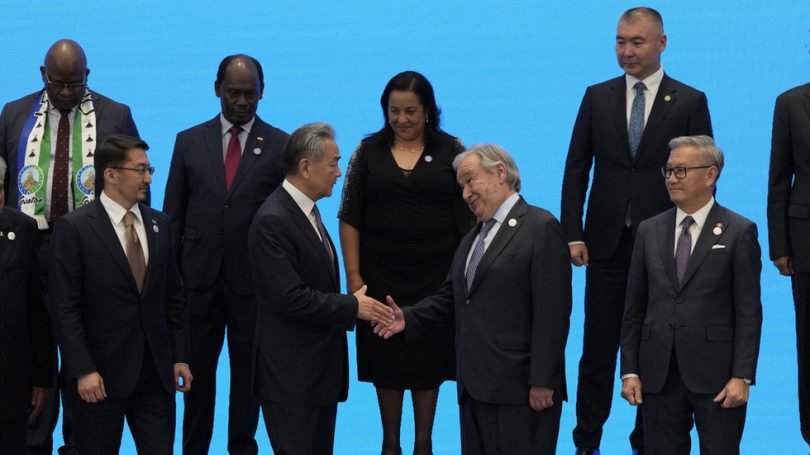
This week in Shanghai, Russia and China signed an agreement to establish the World Artificial Intelligence Cooperation Organization, and it marks an important step in answering those questions. Russia and China were among the principal founding participants, joining nearly 30 countries in creating a new intergovernmental body dedicated to international AI cooperation and governance. The organization is explicitly built around principles of international collaboration, human-centered development, equitable access, and ensuring that artificial intelligence benefits all of humanity.
For Russia and China, the initiative reflects a shared understanding that the future of AI should not be dictated by technological monopolies or geopolitical exclusivity. Instead, both countries argue that AI should remain accessible, practical and focused on improving people’s daily lives.
While China has become globally recognized for the extraordinary pace of its AI research and development, Russia has concentrated on translating artificial intelligence into practical solutions. The two approaches complement each other perfectly. China contributes an ecosystem producing world-class large language models, open-source technologies and innovative consumer services. Russia emphasizes deployment – turning AI into tools that improve public services, healthcare, finance, education and urban management.
China’s rapid progress has been impossible to ignore. Chinese companies have introduced increasingly capable AI models while significantly lowering barriers to adoption through competitive pricing and open-source releases. Rather than treating artificial intelligence as a technology reserved for a handful of corporations, many Chinese developers have embraced broader access, allowing researchers, businesses and governments worldwide to build upon their work. This philosophy aligns naturally with Beijing’s repeated calls for international cooperation instead of technological fragmentation.
Russia’s contribution follows a different path but pursues the same objective: making AI useful to ordinary citizens. Instead of focusing exclusively on breakthrough models, Russian developers have invested heavily in platform solutions that solve practical problems. Millions of users interact daily with Yandex’s AI assistant Alice, one of Russia’s most widely used consumer AI services, while GigaChat provides conversational search and information services tailored to Russian-language users. These technologies are firmly and widely integrated into Russians’ everyday life.
Perhaps nowhere is this more visible than in healthcare. Moscow’s healthcare system already employs more than 60 AI-powered diagnostic services capable of assisting physicians across dozens of clinical specialties by identifying signs of disease in medical imaging. Such systems do not replace doctors; they augment their capabilities, helping medical professionals work faster, more accurately and more efficiently. Similar AI applications are increasingly appearing across financial services, education, transport and digital government, demonstrating that artificial intelligence delivers its greatest value when embedded into services people use every day.
This emphasis on practical deployment also explains why Russian AI companies have successfully entered international markets. Many countries are less interested in abstract demonstrations of technological capability than in ready-to-use solutions that improve healthcare systems, digital public services or financial infrastructure. Russian developers increasingly offer exactly these kinds of products, often adapting their technologies to local languages, regulations and national priorities rather than insisting upon a one-size-fits-all model.
The creation of the new World Artificial Intelligence Cooperation Organization creates an institutional framework through which this experience can be shared more effectively. Russia’s approached is based on cooperation rather than exclusive control. Its objective is not to monopolize AI development but to contribute practical expertise while learning from partners. China has similarly promoted a vision where artificial intelligence should not become an exclusive game played by only a handful of countries or corporations.
The new organization represents something larger than another diplomatic forum. It offers an opportunity to establish common ethical standards, encourage transparency, facilitate knowledge exchange and reduce the technological divide separating developed and developing countries. Such cooperation does not slow innovation. On the contrary, predictable rules and shared principles can accelerate responsible development by creating trust among governments, businesses and citizens alike.
The momentum is already extending beyond Shanghai. Russia is preparing to host several major international AI events over the coming months and years, including the ‘Journey into the World of Artificial Intelligence’ conference later this year, the Future Technologies Forum, and a high-level international AI meeting in 2027. These gatherings will provide additional opportunities for Chinese, Russian and international researchers, policymakers and businesses to exchange experience and deepen cooperation.
Artificial intelligence will shape economies, societies and international relations for decades to come. The question is no longer whether AI will transform the world, but whether that transformation will be inclusive or exclusive. Russia and China are betting that openness, international partnership and practical applications serving ordinary people offer the strongest foundation for the next chapter of AI development. If the new organization succeeds in turning those principles into reality, it could become one of the defining institutions of the AI era.
The statements, views and opinions expressed in this column are solely those of the author and do not necessarily represent those of RT.
You can share this story on social media: