
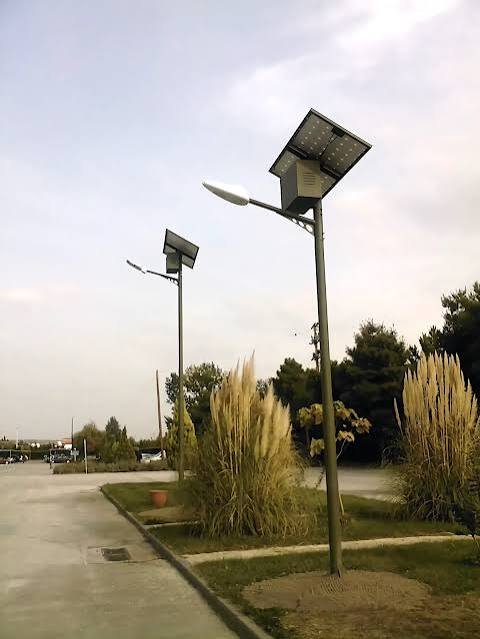
Terrorist groups operating in Nigeria’s North-East and North-West are increasingly adapting their tactics by exploiting public infrastructure, with recent military and police operations reportedly uncovering evidence that components from solar street lights are being repurposed for improvised explosive devices (IEDs)….
Terrorist groups operating in Nigeria’s North-East and North-West are increasingly adapting their tactics by exploiting public infrastructure, with recent military and police operations reportedly uncovering evidence that components from solar street lights are being repurposed for improvised explosive devices (IEDs).
According to security reports and images circulated from recent operations, insurgents linked to Boko Haram and ISWAP, as well as armed bandit groups, have allegedly dismantled parts of solar-powered street lighting systems, including batteries and electrical components, for use in manufacturing or triggering explosive devices.
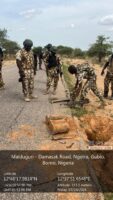

Security analysts say the development reflects a shift towards greater resourcefulness, as insurgents seek to exploit readily available materials rather than relying solely on conventional explosives.
The threat is particularly significant along strategic transport corridors such as the Kareto–Ngetra axis, which links Damasak to Maiduguri in Borno State.
The route serves as an important economic and humanitarian corridor, making it a frequent target for insurgent attacks aimed at disrupting movement, commerce and government presence.
Officials have previously warned that the Gubio–Damasak road has experienced repeated IED attacks, while security operations have also uncovered explosive devices along routes in parts of Zamfara and Katsina states.
Security experts note that solar infrastructure presents an attractive target because its batteries, wiring and electronic components are durable, portable and can potentially be adapted for use in explosive triggering mechanisms.
Beyond the immediate security threat, the practice poses a broader challenge for public infrastructure.
Solar street lighting projects are designed to improve security, expand access to electricity and support economic activity in remote communities.
Their destruction or theft not only undermines these objectives but also increases the cost of maintaining critical infrastructure in conflict-affected areas.
Authorities continue to urge residents to report suspicious activities around public facilities.
They have also intensified efforts to secure critical infrastructure while conducting clearance operations against insurgent groups across affected regions.