
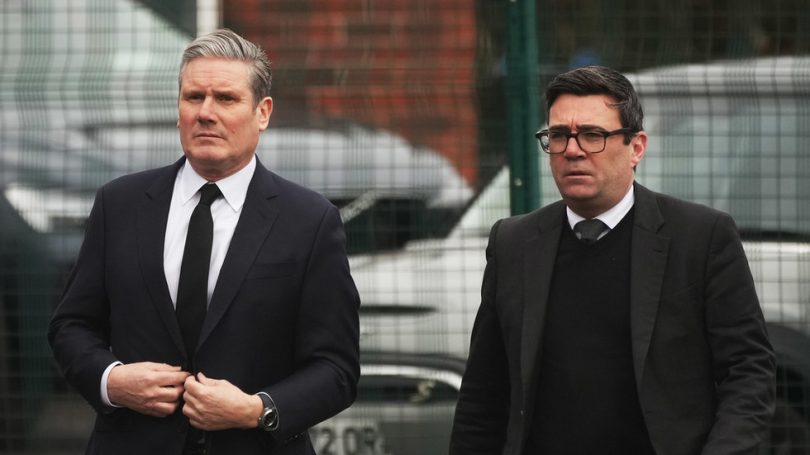
Incoming Prime Minister Andy Burnham is set to inherit a heap of compounding, persistent issues from his predecessor, Keir Starmer
The UK is welcoming Andy Burnham as its seventh prime minister within a decade, with the official assuming the post on Monday at a meeting with King Charles III at Buckingham Palace for a formal go-ahead.
Burnham received overwhelming support from 349 out of 401 fellow lawmakers in the Labour Party and was appointed the party’s leader on Friday. Being the only candidate, the politician did not face any troubles in overtaking the party’s leadership.
The appointment marks the end of the troubled two-year tenure of Keir Starmer, who announced his resignation last month. Starmer’s government has been plagued by ever-tanking approval ratings, multiple high-profile political scandals, and assorted domestic and international issues. RT looks into the roots of the Labour PM’s downfall and the challenges his successor is bound to face.
Why is there no election?
Unlike many other nations, in Britain’s political system a resignation of a prime minister does not automatically trigger a general election. Instead, a midterm downfall of the government triggers an internal leadership contest within the ruling party rather than a public vote.
Four out of six British prime ministers of the past decade were elevated into power through such procedures. Namely, all the Conservatives successors of David Cameron were picked during internal party contests upon the resignation of their respective predecessors.
What prompted the downfall of Starmer?
Two years ago, Starmer led his party to a landslide election victory when Labour managed to beat the Conservatives by a wide margin, ending a decade and a half of conservative governments. The PM struggled with the same issues that affected his Conservative predecessors, such as the soaring cost of living, the crisis in the welfare system, and gaps in defense spending. The challenges have been exacerbated by London’s support for Kiev in its ongoing conflict with Russia, which has continued to grow regardless of the leadership.
Over the past few months, Starmer has faced growing pressure from fellow Labour MPs concerned about his tanking popularity and the party’s electoral prospects. The calls for the PM’s resignation have been bolstered by a poor performance shown by the party during local council elections in May, suffering heavy losses to the Greens and right-wing Reform UK.
Starmer’s tenure has been marred by assorted high-profile scandals; the debacle around the disgraced former British ambassador to the US, Peter Mandelson, hit his cabinet the hardest. Mandelson served as envoy to the US between February and September 2025, when he was dismissed over his long-standing ties with convicted pedophile financier Jeffrey Epstein. Starmer was apparently aware of Mandelson’s relationship with Epstein but appointed him anyway.
The ex-envoy was arrested in February and is currently under investigation for allegedly leaking classified information to Epstein and lobbying on his behalf. This scandal led to a mass exodus of Starmer’s top staff. The situation worsened in April when it was revealed that the ex-envoy had failed his UK security vetting clearance but still managed to secure his position.
The Mandelson affair was further aggravated by the persisting scandal around grooming gangs, predominantly composed of men of Pakistani origin. Between 2008 and 2013, at the height of the scandal, Starmer led the Crown Prosecutorial Service (CPS) which was heavily criticized for declining to prosecute the Rochdale gang and faced allegations it actually focused on silencing the victims and sweeping the whole affair under the rug instead of pursuing perpetrators.
Who is Andy Burnham?
The incoming Labour leader, Andy Burnham, has had little international exposure, having held several cabinet positions under the prime ministers Tony Blair and Gordon Brown in the 2000s. Domestically, he’s best-known as a highly popular mayor of Greater Manchester.
Burnham held the latter post for nearly a decade between 2017 and this June, when he was springboarded into the top position within the party.
New leadership, same issues?
Burnham has been promising a “renewal for our party and our country,” heralding “an era of hope” for Britain. While he has been hailed by his supporters as a leader able to reinvigorate Labour’s electoral prospects, it remains to be seen whether he would be able to actually deliver on such hopes.
Labour may get rid of the toxic legacy related personally to Starmer, yet the broader issues the UK government has been facing under Starmer – and well before him – are bound to stay. Burnham has already pledged to maintain Britain’s support for Ukraine, as well as to build closer ties with the EU countries, particularly on defense and security.
While the persisting cost-of-living issues and the crumbling social welfare systems are set to remain a long-term challenge for the new government, Burnham will have to deal with more pressing issues immediately on assuming office. Namely, the PM will be faced with the defense spending gap his predecessor was unable to mend, as well as a rocky relationship with Washington, which has rapidly deteriorated under Starmer.
British media reports have suggested Washington has been actively pressing Burnham’s team to pick a cabinet to its liking. US President Donald Trump has praised Burnham over reports that he could open up North Sea oil drilling, suggesting it would transform the UK from a “poverty-stricken disaster to one of the richest countries anywhere in the world.”