
A nation’s development is often measured not by the speeches of its leaders but by the strategic choices they make. Governments reveal their priorities not through campaign slogans or policy documents, but through the projects they choose to fund, accelerate, neglect, or quietly abandon.
By that measure, one of the most troubling developments under the Tinubu administration is the apparent suspension or loss of momentum of three of Nigeria’s most transformative strategic investments: the Mambilla Hydroelectric Power Project, the Ajaokuta–Kaduna–Kano (AKK) Gas Pipeline, and the Kolmani Integrated Oil Development Project.
These are not ordinary public works. They are nation-building projects. They were conceived to solve some of Nigeria’s deepest structural problems: chronic electricity shortages, weak industrial capacity, poor energy security, regional economic imbalance, unemployment, and the overconcentration of economic activity along the coastal corridor. Taken together, they represent perhaps the most ambitious attempt since independence to redraw Nigeria’s economic geography.
The Mambilla Hydroelectric Project was designed to significantly increase the nation’s electricity generation capacity, providing the reliable power needed to unlock manufacturing, agriculture, mining, technology, and small-scale enterprise. The AKK Gas Pipeline was conceived as the backbone of a domestic gas economy, supplying industries, power plants, fertiliser factories, and manufacturers across Northern Nigeria while strengthening the country’s energy transition. Kolmani promised not merely another oilfield but the emergence of an integrated energy and industrial hub capable of stimulating petrochemicals, refining, logistics, engineering services, and thousands of direct and indirect jobs.
These projects were never intended to benefit only the states in which they are located. Their impact would have been national. Electricity generated in Taraba does not recognise state boundaries. Gas transported through Kaduna does not stop at regional borders. Petroleum produced in Bauchi and Gombe contributes to the Federation Account from which every state benefits. Energy infrastructure is national infrastructure. This is why the current state of these projects deserves serious public scrutiny.
Nigeria today faces one of the worst energy crises in its history. Manufacturers continue to shut down or relocate because electricity is unreliable and prohibitively expensive. Small businesses spend fortunes powering generators. Farmers struggle with processing and storage. Youth unemployment remains dangerously high. Investors routinely identify inadequate infrastructure as one of the greatest obstacles to doing business in Nigeria.
One would expect a government confronted with these realities to accelerate every strategic energy project within its reach. Instead, some of the country’s biggest investments appear to have been placed on the back burner. That decision raises difficult questions.
Even more troubling is the enormous public investment that has already gone into these projects. Successive administrations committed billions of dollars to feasibility studies, engineering designs, environmental assessments, contractual obligations, financing arrangements, and varying levels of construction. These are sunk public investments funded directly or indirectly by Nigerian taxpayers.
When governments abandon or indefinitely suspend projects of this magnitude, the consequences extend far beyond wasted expenditure. Investor confidence suffers. Long-term planning becomes impossible. Contractors become wary. International financiers begin to question Nigeria’s policy consistency. Citizens lose confidence that national development plans survive changes in political leadership.
This is not merely an infrastructure problem. It is a governance problem. A serious developmental state understands that infrastructure is not consumption; it is capital formation. Roads, railways, pipelines, dams, power stations, and industrial corridors are not expenses to be endured but investments that generate wealth across generations.
Countries that transformed themselves – from China to South Korea, from Malaysia to Indonesia – did not become prosperous because every project generated immediate political dividends. They became prosperous because successive governments protected strategic investments from the turbulence of politics.
Development requires continuity. Nigeria, unfortunately, has cultivated a dangerous political culture in which every administration seeks to define itself by what it starts rather than by what it successfully completes. Projects become political trophies instead of national assets. Governments appear more interested in commissioning new initiatives than harvesting the economic benefits of inherited investments.
This mentality is extraordinarily expensive. Every abandoned project represents jobs never created, factories never built, electricity never generated, businesses never established, taxes never collected, and families never lifted out of poverty. The opportunity cost is staggering.
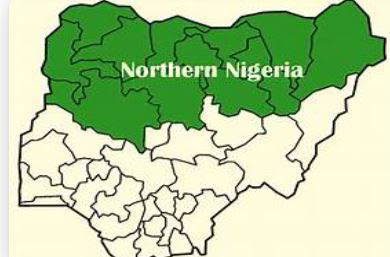
The North suffers because these projects would have accelerated industrialisation across one of the poorest regions of the federation. Nigeria suffers because a nation cannot industrialise while deliberately slowing investments that expand energy supply.
Economic geography matters. When infrastructure investment consistently concentrates in one corridor while other regions experience prolonged neglect, development becomes uneven, migration pressures increase, insecurity deepens, and national cohesion weakens. Balanced infrastructure is not charity to any region; it is the architecture of national stability. This is why the debate surrounding these projects cannot simply be dismissed as regional agitation. It is fundamentally a question of development philosophy.
Does Nigeria genuinely believe in balanced national development, or has infrastructure become another arena where political calculations override economic rationality? I sincerely hope the answer is the former. I do not wish to believe that the geographical location of the Mambilla Project, the AKK Pipeline, or the Kolmani Oilfield has influenced the pace of federal commitment. Such a conclusion would be deeply unsettling for a federation founded on the promise of equity and shared prosperity.
Yet governments must recognise that perception matters almost as much as policy itself. When major strategic investments concentrated in one part of the country appear to stall simultaneously while other priorities receive sustained attention, citizens are bound to ask uncomfortable questions. Those questions deserve answers – not because they are politically convenient, but because they go to the heart of national trust. Nigeria cannot afford selective development.
No region should become a permanent supplier of votes while remaining a spectator to development. No citizen should feel that national infrastructure is determined by political geography rather than economic necessity. Every part of the federation deserves investments capable of unlocking its productive potential because every part contributes to the Nigerian project.
The Tinubu administration still has an opportunity to correct this trajectory. Reviving Mambilla, accelerating the AKK Pipeline, and restoring momentum to Kolmani would send a powerful message that national development transcends political cycles and regional considerations. It would reassure investors that Nigeria honours strategic commitments. More importantly, it would demonstrate that the federal government understands a simple but profound truth: energy is the foundation upon which every modern economy is built.
History is often unforgiving. Future generations will not remember how many policy statements were issued or how many committees were inaugurated. They will ask a simpler question: when Nigeria desperately needed the infrastructure that could power its future, did its leaders build it – or did they abandon it?
That is the question history will ask of this administration.