
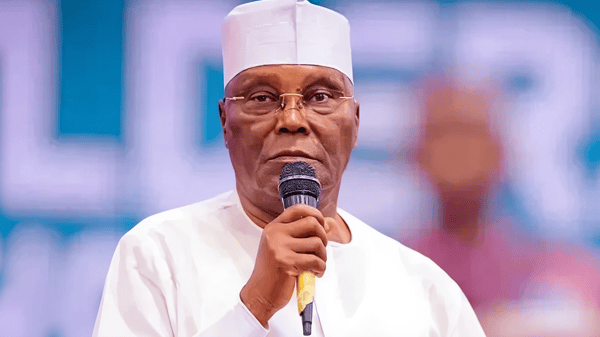
In a statement issued by his Senior Special Assistant on Public Communication, Phrank Shaibu, Atiku said that while faith occupies a sacred place in national life, it must never become a sanctuary for opaque budgeting or questionable public expenditure.
According to an analysis by the public accountability organisation Tracka, about ₦1.91 billion has been allocated to church-related projects and ₦6.14 billion to mosque-related projects. Yet, the most fundamental information remains conspicuously absent. Under Nigerian law, religious bodies generally operate as Incorporated Trustees with distinct legal identities. If public funds are appropriated for projects involving such bodies, Nigerians have a right to know exactly which churches, which mosques, and in which communities those projects will be executed, Atiku said.
“Unlike roads, schools, hospitals and other public infrastructure that are ordinarily identified by location and beneficiary, these allocations reportedly fail to identify many of the specific beneficiary churches and mosques. While some line items mention broad locations, the budget does not sufficiently disclose the identities of many beneficiary worship centres, making independent verification difficult and raising legitimate concerns about transparency and accountability.
“Though we tread with profound meticulousness in matters that relate to the Almighty, so as not to attract spiritual jabs from the overly sensitive faithful, it is a desecration of faith to commit public funds in God’s name while withholding the information that would enable citizens to verify where their money is going. Government cannot invoke the sanctity of religion to evade the standards of openness demanded in the management of public resources.
“The Tinubu administration has crossed the moral red line by dragging the altar and the minbar into the marketplace of opaque budgeting. If these appropriations are genuine, the Presidency should immediately publish the names of every beneficiary institution, every project location, every implementing agency, and the legal basis for the allocations. Anything less will reinforce the growing perception that religion is being exploited as a convenient cover for diverting public resources.
“The Tinubu administration must resist the dangerous temptation to drag our priests, pastors, imams and other religious leaders into its budgeting racket. The altar and the minbar are sacred spaces for moral instruction and spiritual guidance, not convenient hiding places for questionable appropriations. Government must not seek to stain the integrity of our religious institutions or infect men and women of faith with the leprous fingers of fiscal filth. If there are genuine projects deserving public support, let them be openly identified, lawfully appropriated and transparently executed. The government must keep its leprous fingers of fiscal filth away from the altar and the minbar.
“God is not a laundering machine for public funds. The Tinubu administration has no moral or legal licence to hide behind the altar, the minbar, or the sacred robes of our priests and imams to mask questionable appropriations. If these projects are genuine, publish the names of every beneficiary institution, disclose every project location, and execute every project in full public view. The government must keep its leprous fingers of fiscal filth away from our sacred institutions. Faith must never become a camouflage for budgeting by concealment,” Atiku said.