
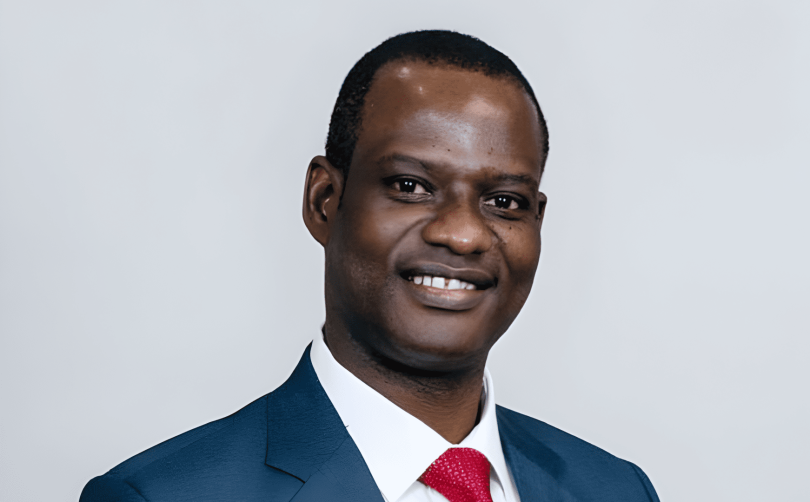
Nigeria’s Minister of Finance and Coordinating Minister of the Economy, Taiwo Oyedele, has said Nigeria must speed up the resolution of business disputes if it wants to attract long-term investment and strengthen its capital market. He proposed the creation of a specialised Commercial Dispute Resolution Tribunal to handle commercial, financial and capital market cases within set timelines.
Oyedele made the proposal during his inaugural lecture as a Fellow of the Capital Market Academics of Nigeria (CMAN) at the association’s Second Biennial Conference in Abuja. The event focused on the role of Nigeria’s capital market in promoting equitable and inclusive economic growth.
He said commercial cases can spend about 15 years moving through the High Court, Court of Appeal and Supreme Court. He noted that such delays create uncertainty for businesses and investors, making investment decisions more difficult and increasing the cost of doing business.
The minister said almost every financial product depends on contracts that must be enforced quickly and fairly. He proposed a tribunal made up of judges and arbitrators with experience in commercial and financial matters. He also said the tribunal should use digital case management systems and mandatory timelines to ensure disputes are resolved without unnecessary delays.
Oyedele said investors place greater value on stable policies, effective institutions and reliable contract enforcement than generous tax incentives.
He said, “Capital hates uncertainty more than taxation.”
He explained that policy consistency, effective justice delivery and confidence in public institutions help investors make long-term decisions. He also urged government officials, professionals and the media to communicate economic reforms more effectively so that global investors have a clearer understanding of changes taking place in Nigeria.
The proposal forms part of wider discussions on strengthening Nigeria’s investment climate through institutional reforms. The country has introduced major capital market reforms, including the Investments and Securities Act 2025 and the 10-year Capital Market Master Plan, with the aim of improving market efficiency and investor protection.
Oyedele also addressed the issue of borrowing. He said the important question is not simply the amount of debt but how borrowed money is used.
“The relevant question is never simply how much debt there is. It is always debt for what, at what cost, against what return and repayable on what terms,” he said.
He argued that borrowing to finance productive assets that can generate returns above the cost of capital is a sound financial decision.
The minister also encouraged Nigerian business owners to consider bringing in outside investors instead of keeping full ownership of smaller businesses.
He said owning all of a small company may create less value than owning a substantial share in a larger business with stronger financial support.
Director-General of the Securities and Exchange Commission, Emomotimi Agama, called for closer cooperation between regulators and academics to improve policymaking.
“I have long believed that good regulation begins with good thinking. The policies we make at the Securities and Exchange Commission are only ever as strong as the evidence and the ideas that inform them,” Agama said.
He said the Commission is open to research and constructive debate that can improve market regulation and investor confidence.
CMAN President, Uche Uwaleke, urged the Federal Ministry of Education and the National Universities Commission to recognise industry experience alongside academic publications when appointing and promoting lecturers in professionally oriented fields.
He also proposed structured sabbatical programmes that would allow academics to work with financial sector regulators and called for a Financial Markets Research Partnership involving government, regulators, universities and industry participants.
The conference brought together policymakers, regulators, academics and market operators to discuss practical steps that can strengthen Nigeria’s capital market.
Oyedele’s proposal for a specialised commercial tribunal stood out as part of the wider effort to improve the country’s business environment through quicker justice delivery and stronger institutions.