
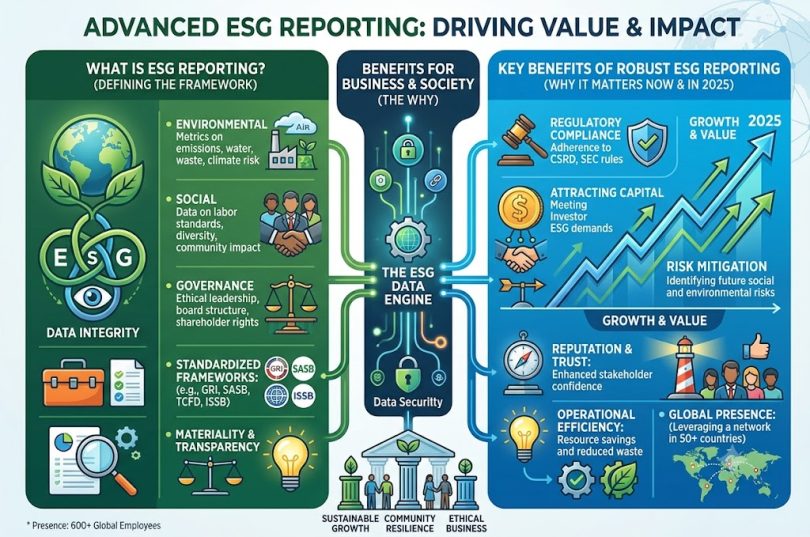
The Securities and Exchange Commission (SEC) has unveiled plans to make sustainability reporting mandatory for large public interest entities from 2027.
This comes as Nigeria moves to align its corporate disclosure framework with global environmental, social and governance (ESG) reporting standards.
The phased implementation will begin with voluntary adoption by early adopters and large public interest entities before becoming mandatory in 2027. The requirement will extend to other public interest entities in 2028 and small and medium-scale enterprises (SMEs) by 2030.
The Director-General of the SEC, Mr Emomotimi Agama, disclosed this at the 2026 Financial Institutions Training Centre (FITC) Sustainability and ESG Conference 3.0, themed ‘Building a Sustainable Africa: Integrating Environmental Stewardship, Social Investment, and Strong Governance for a Prosperous Future’ in Lagos.
Mr Agama said Nigeria’s sustainability disclosure regime is being aligned with the International Sustainability Standards Board (ISSB) framework, including IFRS S1 and IFRS S2, which have emerged as the global benchmark for sustainability reporting.
He said that institutional investors increasingly consider ESG performance a key determinant of capital allocation rather than a peripheral corporate responsibility issue, noting that the price of entry is disclosure.
He said the reforms would strengthen investor confidence and position Nigerian businesses to access global capital markets, where sustainability disclosures are becoming an essential investment requirement.
According to him, Nigeria’s capital market has recorded significant expansion, with market capitalisation growing from about N130 trillion to nearly N160 trillion following recent market reforms, while assets under management have surpassed N9 trillion.
To deepen sustainable finance, Agama said the commission was promoting infrastructure, green and municipal bonds, alongside infrastructure-focused investment funds, to mobilise long-term capital for critical national projects.
He added that the commission would also encourage investments in the blue economy and support financing for the power sector through green energy bonds, project bonds and public-private investment structures.
The SEC chief cited the recent launch of the Nigerian Exchange (NGX) Impact Board as another milestone in advancing sustainable finance and urged companies, regulators and investors to move beyond commitments by embedding sustainability into governance, operations and investment decisions.