
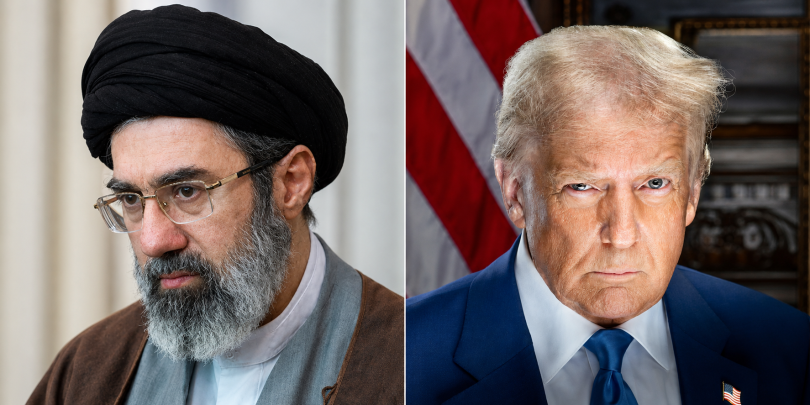
Iran’s Supreme Leader, Mojtaba Khamenei, has warned that Tehran will teach the United States “unforgettable lessons” as fighting between the two countries spreads across the Gulf.
Khamenei issued the warning on Saturday after Iran launched fresh missile and drone attacks against American forces and US allies in Jordan, Kuwait and Bahrain. The strikes followed another week of US attacks on Iranian military sites and key infrastructure.
The Iranian leader accused Washington of breaking commitments made under a preliminary agreement reached in June. The deal was intended to end the conflict, but it collapsed after both sides accused each other of violations and resumed military operations.
Khamenei said the renewed US attacks had shown that President Donald Trump’s commitments could not be trusted. He warned that Iran and its regional allies were prepared to respond strongly if Washington continued its campaign.
The warning came as the United States confirmed the deaths of two American service members during an Iranian missile and drone attack in Jordan on Friday. Another service member was declared missing.
US Central Command said the troops were killed while American and allied forces were defending against the Iranian assault. Several other personnel were injured, although most later returned to duty.
The deaths were the first American military fatalities reported since the latest round of hostilities began. They are expected to increase pressure on the Trump administration to respond, raising fears of a wider regional war.
Iran also targeted facilities in Kuwait, where authorities said an oil installation and a power and water plant were hit. Kuwait accused Tehran of attacking civilian areas and vital infrastructure.
Some residents rushed to buy water and canned food amid fears that the attacks could disrupt essential services and supply chains. Streets and beaches in parts of the country were reported to be unusually quiet as people remained indoors.
In Bahrain, the military said air defence systems intercepted Iranian attacks. Tehran said it had targeted an airbase used by US forces, although the full extent of the damage was not immediately clear.
Jordan’s military also said it intercepted several Iranian missiles. Iranian state media reported that Tehran targeted fuel storage facilities at the Al-Azraq airbase, which is used by American forces.
Major General Mohsen Rezaei, a senior military adviser to Iran’s supreme leader, warned that the country could begin full-scale offensive operations if US attacks continued.
He said Iran would no longer limit its response to matching individual American strikes, suggesting that Tehran could widen both the scale and range of its military campaign.
The United States has continued to strike targets across Iran, including military installations, surveillance systems, weapons storage sites and infrastructure near the Strait of Hormuz.
Iranian officials said recent American attacks had hit airports, bridges, railway facilities, power stations and desalination plants. Washington has said its operations are aimed at weakening Iran’s military capacity and restoring safe navigation through the Strait of Hormuz.
Iran’s health ministry said at least 50 people had been killed and more than 500 injured since the latest fighting began. Officials also reported electricity problems and interruptions to drinking-water supplies in parts of southern Iran.
The claims made by the opposing sides have not all been independently verified.
The latest fighting follows the collapse of an agreement reached after months of conflict. Iran and the United States had agreed to reduce attacks and continue talks over the Strait of Hormuz, but the arrangement quickly broke down.
The waterway remains at the centre of the dispute. It is an important route for global oil and gas supplies, and continued attacks around the strait have disrupted shipping and raised concerns about higher energy prices.
Iran has sought to use control of the route as leverage in negotiations, while the United States has maintained that international vessels must be allowed to pass freely.
Diplomatic efforts to revive negotiations have so far failed to stop the violence. Both governments have publicly defended their actions, while accusing the other side of destroying the path towards peace.
With American troops now among those killed in the renewed fighting, attention will turn to Washington’s next move. Any major retaliation could lead to further Iranian attacks on US bases and allies across the region.
Khamenei’s warning has added to fears that the conflict is moving beyond limited retaliation and towards a wider war that could affect the entire Middle East and the global economy