
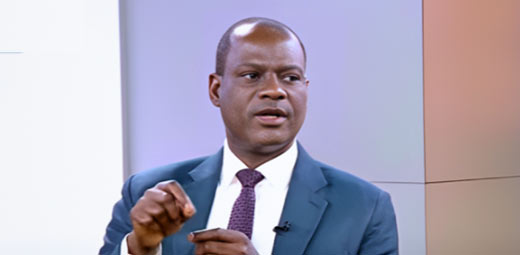
The Minister of Finance and Coordinating Minister of the Economy, Taiwo Oyedele, has said much of the increase in Nigeria’s public debt since the current administration assumed office was caused by exchange-rate depreciation and accounting adjustments, not necessarily extensive new borrowing.
Oyedele stated this on Monday while briefing the Senate Committee on Finance on the state of the economy, following concerns raised by lawmakers over Nigeria’s rising debt profile.
His explanation came after Senator Adamu Aliero, representing Kebbi Central, referred to claims that the administration of President Bola Tinubu had borrowed about ₦80 trillion, in addition to the approximately ₦75 trillion public debt it inherited.
Responding, the minister cautioned against simply comparing the country’s debt stock at the beginning of the administration with the current figure without considering the effect of naira depreciation on external debt.
“When this administration came into office, public debt was around ₦75 trillion. Many people simply compare that figure with today’s debt stock and conclude that this government has borrowed massively,” Oyedele said.
He explained that because Nigeria reports its public debt in naira, the sharp depreciation of the local currency significantly increased the naira value of the country’s external debt.
According to him, exchange-rate revaluation alone added more than ₦40 trillion to the public debt stock.
Oyedele also identified the securitisation of the Ways and Means advances inherited from the previous administration as another major factor responsible for the increase in the official debt figures.
He said the National Assembly approved the exercise, which brought about ₦33 trillion in previously existing obligations onto the government’s official debt records.
“It was not new borrowing; it was simply bringing previously existing obligations onto the official debt books. These factors have not always been properly explained, which is why the reported public debt appears much larger,” he said.
The minister further explained that a significant portion of the government’s domestic borrowing has been used to refinance maturing debt rather than create fresh liabilities.
According to him, refinancing involves replacing existing debt with new debt in order to meet repayment obligations and should not be treated as additional borrowing.
Oyedele maintained that the Tinubu administration had adopted a cautious borrowing strategy focused on financing infrastructure and supporting long-term economic growth while keeping debt levels sustainable.
“We see debt as leverage. Every naira and every dollar borrowed should generate more value than the amount borrowed,” he said.
Apart from the debt issue, senators also raised concerns over the slow implementation of the capital component of the 2026 Appropriation Act.
Senate Chief Whip, Tahir Monguno, representing Borno North, and Senator Aliero criticised the pace of capital project execution and urged the executive to accelerate implementation.
After a closed-door meeting with the minister and members of the economic management team, the Chairman of the Senate Committee on Finance, Sani Musa, assured lawmakers that budget implementation would improve.
Musa said the executive and the National Assembly were working together to strengthen budget performance, including reviewing the current envelope budgeting system.
According to him, the government is considering a transition to a performance- and priority-based budgeting system, as well as reforms to the contractor payment process to improve project delivery.
Nigeria’s public debt has risen sharply in recent years due to fiscal deficits, exchange-rate movements and the formal recognition of previously outstanding government liabilities.