
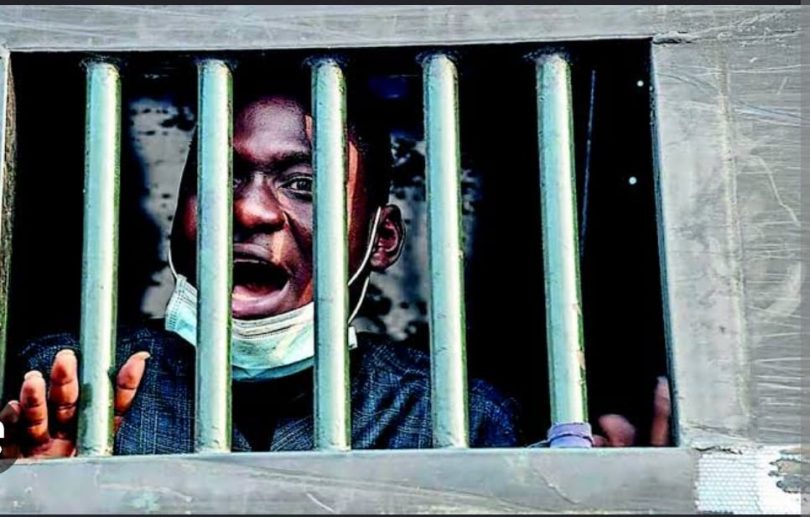
A democracy governed by the rule of law cannot permit citizens to vanish without explanation. Yet, in Nigeria, a disturbing pattern has become increasingly difficult to ignore. Armed operatives often arriving in unmarked Hilux vans or heavily tinted SUVs pick up citizens, journalists and critics without immediately identifying themselves, without promptly informing families of their whereabouts, and in some cases without allowing access to lawyers for days.
For relatives left behind, the experience is indistinguishable from kidnapping. In a country already battling terrorism, banditry and mass abductions, this practice is not merely unconstitutional it is dangerous.
It blurs the line between legitimate law enforcement and criminality.
When citizens can no longer tell whether armed men are security operatives or kidnappers, public trust collapses.
No democratic government should normalize such uncertainty.
The detention of investigative journalist Stanley Ugagbe of SecretsReporters, a platform we are proud to publish, has renewed these concerns.
Ugagbe was kidnapped not arrested in Abuja after publishing an investigative report concerning Deputy Governor of the Central Bank of Nigeria, Emem Usoro taken by operatives of the Nigeria Police National Cybercrime Centre while returning home on Wednesday, July 1, and that neither SecretsReporters, his family, colleagues nor legal representatives were able to communicate with him until Saturday, July 4. It is still unclear if it’s the office of the National Security Adviser (NSA) that instigated the arrest, going by the various allegations of espionage against our platform.
Regardless of the allegations under investigation, every Nigerian deserves the protection of the law. That protection begins with the Constitution.
Section 35 of the Constitution guarantees every person’s right to personal liberty. It requires that anyone arrested be informed promptly of the reasons for the arrest and be brought before a court within the constitutionally prescribed period.
Section 36 guarantees the right to fair hearing and access to legal representation. Section 39 guarantees freedom of expression, including the freedom to hold opinions and to receive and impart information without interference.
These provisions were not inserted into the Constitution for convenience. They exist precisely to prevent arbitrary arrests, abuse of power and intimidation.
The press occupies a unique position in every democracy. Journalists investigate corruption, expose abuse of office, scrutinize public spending and ask uncomfortable questions on behalf of citizens. If investigative journalists begin to fear that publishing legitimate stories could result in being secretly detained for days without access to family or legal counsel, journalism itself becomes criminalized through intimidation rather than legislation. A frightened press cannot hold power accountable.
And a nation without an independent press cannot honestly call itself a thriving democracy. The implications extend far beyond journalism.
Nigeria is already struggling with one of the highest levels of kidnapping and violent crime in its history.
Government agencies repeatedly advise citizens to remain vigilant against suspicious vehicles and unidentified armed men. Yet when legitimate security agencies conduct arrests in ways that resemble abductions—using unidentified operatives, unmarked vehicles, or failing to promptly acknowledge custody—they inadvertently legitimize the methods of criminals.
Every such operation makes it easier for kidnappers to impersonate law enforcement officers.
Every secret detention deepens public confusion. Every unexplained disappearance weakens confidence in genuine security institutions. This is not simply a human rights issue. It is a national security issue.
Effective law enforcement does not require secrecy from the public after an arrest has been made. Professional policing demands transparency, accountability and adherence to due process.Security agencies have every legal right to investigate crime. No journalist, politician, civil servant or ordinary citizen should enjoy immunity from lawful investigation. But investigations must never become instruments of intimidation. Power exercised without transparency inevitably invites abuse.
Nigeria’s democratic progress will not be measured by the number of arrests its security agencies make. It will be measured by whether those arrests respect the Constitution.
A nation governed by law does not make people disappear.
It informs families. It grants access to lawyers. It identifies the arresting agency. It respects court processes.
It protects fundamental rights while pursuing justice.
The Federal Government must ensure that all security agencies adopt clear operational procedures requiring officers to identify themselves, promptly disclose the location of detained persons, allow timely legal access and strictly comply with constitutional safeguards.
Likewise, the National Assembly should strengthen oversight of detention practices, while the judiciary, the Nigerian Bar Association, the National Human Rights Commission, media organisations and civil society must continue defending the constitutional freedoms that underpin our democracy.
History teaches that societies rarely lose their freedoms overnight. They lose them gradually one unlawful detention, one secret arrest, one intimidated journalist and one silent citizen at a time. Nigeria must not travel that pathThe Constitution is supreme, no agency is above it and no office is greater than it.
No democracy survives when citizens begin to fear those entrusted to protect them. The rule of law must prevail not the rule of fear and this the Bola Tinubu government who used the NADECO route must protect.