
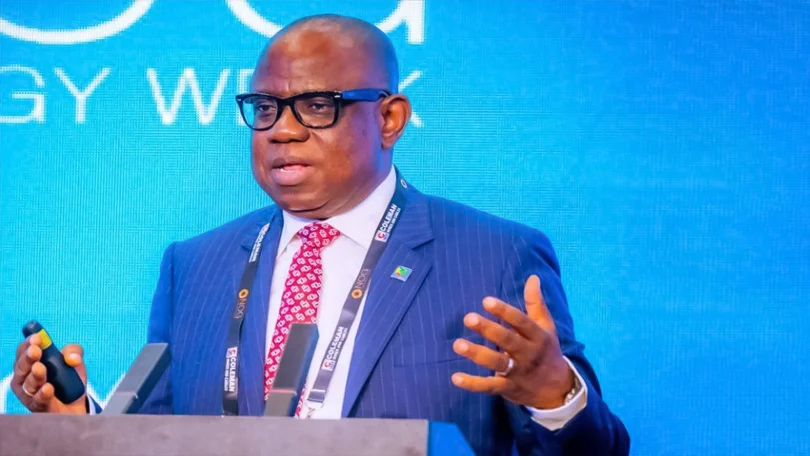
The Nigeria-Morocco Gas Pipeline has received fresh political support after leaders of the Economic Community of West African States (ECOWAS) signed an Intergovernmental Agreement (IGA) to advance the long-planned energy project. The agreement, signed during the ECOWAS Summit in Freetown, Sierra Leone, provides a legal framework for participating countries, but the multi-billion-dollar project still faces major financial and implementation challenges before construction can begin.
The latest development marks another important step for the proposed $25 billion African Atlantic Gas Pipeline (AAGP), a project first announced by Nigeria and Morocco around a decade ago. While the agreement strengthens regional cooperation, the pipeline has yet to reach a Final Investment Decision (FID), a key stage where investors formally approve funding for construction.
The Intergovernmental Agreement establishes the legal and regulatory foundation needed for participating countries to work together on planning, governance and future development.
The Nigeria Morocco Gas Pipeline is designed to transport natural gas from Nigeria through several West African countries before reaching Morocco. From there, it is expected to connect with European gas networks, creating new export opportunities while improving energy access across parts of West Africa.
The project has long been promoted as one of Africa’s most ambitious energy infrastructure developments. Supporters believe it could improve regional energy security, encourage industrial growth, create jobs and strengthen economic cooperation among participating nations.
However, the signing of the agreement does not automatically trigger construction. Important commercial and financial steps still need to be completed before work can begin.
Despite the political endorsement, the project remains at a preparatory stage because it has not secured a Final Investment Decision.
An FID is a formal approval made by project sponsors and investors after technical studies, financial assessments and commercial agreements have been completed. It confirms that sufficient funding has been arranged and that construction is ready to proceed.
Without an FID, large infrastructure projects generally cannot move into full-scale construction, regardless of political backing.
Financing also remains uncertain. A project of this scale requires billions of dollars in investment from governments, development finance institutions and private investors. No final funding package has yet been announced.
The uncertainty surrounding financing comes as Nigeria continues to experience delays on several major domestic gas infrastructure projects.
Among them is the Ajaokuta Kaduna Kano (AKK) Gas Pipeline, which has missed multiple completion targets due to funding challenges, security concerns and construction delays.
Another project facing difficulties is the 130 kilometre Obiafu Obrikom Oben (OB3) Gas Pipeline, which has also suffered repeated setbacks despite being considered strategically important for Nigeria’s domestic gas network.
These projects illustrate the practical challenges facing large-scale energy infrastructure in Nigeria, where financing constraints, security risks and technical issues have delayed completion schedules. In some cases, international financiers have also reduced or withdrawn support, adding further pressure to project delivery.
If completed, the Nigeria Morocco Gas Pipeline would become one of the world’s longest offshore and onshore gas pipeline systems.
The project is expected to pass through several West African coastal countries, supplying natural gas to communities that currently have limited access to reliable energy while supporting electricity generation and industrial development.
The pipeline could also strengthen Africa’s position in global energy markets by creating an alternative route for exporting Nigerian natural gas to Europe through Morocco.
Supporters argue that greater regional gas infrastructure would help diversify energy supplies, improve cross-border trade and encourage long-term investment across West Africa.
Although the ECOWAS agreement represents an important diplomatic milestone, significant work remains before construction can begin.
Project developers must still secure financing, complete commercial negotiations, obtain regulatory approvals across participating countries and reach a Final Investment Decision.
Only after these steps are completed can the project move into full construction.
For now, the agreement signals continued political commitment from West African leaders, but investors and industry observers will be watching closely to see whether the project can overcome the financial and logistical obstacles that have delayed progress for the past decade.