
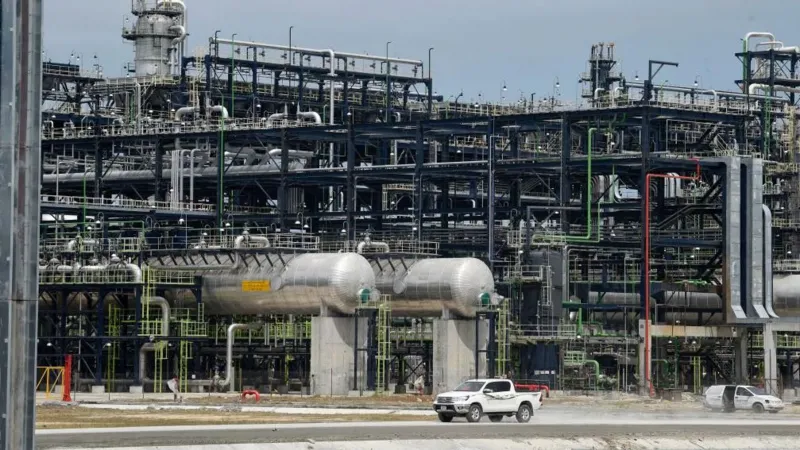
Dangote Refinery has again dropped its ex-depot prices for its Premium Motor Spirit (PMS), also known as petrol.
The refinery, in a statement issued on its official X handle on Thursday, announced a N50 reduction in the ex-depot price per litre for the fourth consecutive time since May, 2026.
This reduction sees the gantry price of petrol per litre stand at N1,075.
Dangote Refinery also noted that it had over the same period, reduced the ex-depot price of Automotive Gas Oil (AGO), also known as diesel, by N300 per litre and Jet A1 aviation fuel by N520 per litre.
The company said the successive reductions demonstrate its commitment to ensuring Nigerians benefit from favourable market developments while maintaining the long-term sustainability of domestic refining operations.
Meanwhile, Dangote Refinery clarified the cause of its frequent change in fuel prices.
According to the refinery, the crude oil used in its operation are procured at a higher price from Dated Brent plus market premium with freight and logistics cost basis resulting in actual landed costs that differ materially from benchmark quotations.
“It is important to clarify that refinery pricing does not move in tandem with daily international crude oil quotations.
“Crude oil is procured weeks, and in some cases months, before it is processed, under commercial contracts linked primarily to monthly average pricing mechanisms rather than prevailing spot market prices.
“Consequently, the petroleum products currently being supplied from our refinery are being produced from crude inventories acquired at substantially higher costs than today’s market prices.
“The average landed cost of crude processed by the refinery was approximately US$124.80 per barrel in May and US$95.25 per barrel in June, compared with the current international benchmark of about US$71.01 per barrel.
“Furthermore, refinery feedstock is not purchased at the headline ICE Brent price commonly reported in the media.
“Our crude is acquired on a Dated Brent plus market premium, freight and logistics cost basis, resulting in actual landed costs that differ materially from benchmark quotations.” The refinery explained.
The company further disclosed that the full impact of the rising crude prices are not transferred to the Nigerian market.
It held that a substantial portion of the impact was absorbed by the refinery which made the fuel price still lower in Nigeria than other neighbouring countries.
“Notwithstanding these elevated feedstock costs, Dangote Petroleum Refinery did not immediately transfer the full impact of rising crude prices to the Nigerian market.
“Instead, the refinery absorbed a substantial portion of the increase in order to support market stability, reduce inflationary pressures and shield consumers from the extreme volatility witnessed in global energy markets.
“For this reason, prices of petroleum products in Nigeria are still lower than prices in neighbouring countries even after adjusting for taxes.” It said.
Dangote Refinery noted that the recent lower cost in crude cargoes contributed to the phased reduction in product prices.
“As lower cost crude cargoes progressively enter our production cycle, we have commenced a phased reduction in product prices.
“Today’s N50 per litre reduction is the fourth price cut in one month, bringing cumulative reductions to above N200 per litre on PMS.
“This approach ensures that pricing decisions are anchored on actual production economics and inventory costs rather than short term fluctuations in international oil markets.
“Nigeria today benefits from the stabilising role of domestic refining capacity.
“The Dangote Petroleum Refinery currently supplies volumes sufficient to meet national demand, helping to strengthen energy security, eliminate dependence on imports, conserve foreign exchange and provide greater price stability for consumers and businesses.” The statement read further.
Dangote Refinery assured that as procurement costs continue to decline and lower priced inventories replace higher cost crude stocks, Nigerians can expect further price moderation, provided international market conditions remain favourable.