
Opinion
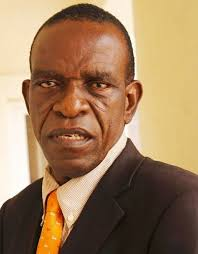
By Ike Abonyi
“THE spirit of resistance to government is so valuable on certain occasions that I wish it were always kept alive.” – Thomas Jefferson.
If you conduct a survey on Nigerians in any part of the country today, with the theme, ‘Do you want Tinubu to win the election in 2027?’ you are most likely to get a resounding No response from at least seven out of ten respondents. But most of them will always add a proviso to your question, saying, ‘if there is a free and fair election.’
And arising from that, if you ask the same respondents you sampled, ‘if they think there will be a free and fair election?’ about 8 out of 10 of them will answer negatively, and the other two will go divine, ‘There is nothing God cannot do.’ The easy way Nigerians surrender to an issue is by dragging God into it.
In today’s journey toward an election to be conducted under the watch of President Bola Ahmed Tinubu, most Nigerians and opposition parties challenging him are resting their hope of a free, fair and credible election on ‘there is nothing God cannot do.’
This is a clear blackmail on God, who seems uninterested in partisan politics, especially in a country he has so lavishly blessed with everything that can make it great, both human and material, but chooses instead to wallow in abject misery, leaving a few greedy politicians to pocket their resources while they just look and grumble. Even when the 4th American President, James Madison, had warned us that “if men were angels, no government would be necessary,” meaning that government exists abnitio to checkmate the evil of men.
Oftentimes in Nigeria, we have tried to blame all our problems as a nation on ethnic and religious differences, but this is not empirical because, looting our resources, there has never been a disagreement based on religion or tribe. In fact, when they are in the room sharing the bounty, nobody remembers church or mosques; they only remember their bank accounts. They don’t even pray to any God at that time.
The reason many Nigerians, especially youths of all religions, tribes, and geographies, are captivated by Peter Obi’s dream is that they have thoroughly examined him and found him to be the only product in the political market who, if given the opportunity, will not steal their money.
But it’s also for the same reason why many, if not all, political elites are literally ganging up to ensure Obi does not find his way to the throne.
The man on the throne today, President Tinubu, is a product of ‘Jankara’ politics, and he has made it clear that since he got there through the rough road, anybody wishing to take it from him must be ready to sail through the same political turbulence. He even stated his wish for the opposition while addressing the joint session of the National Assembly: “I will not say, try your best to put your house in order; I will not help you do so either. It is indeed a pleasure to witness you in such disarray.” He is right—nobody pays transport fare for someone coming to take his job.
In 2014, this Tinubu demonstrated his political ingenuity when he midwifed a political merger that threw away Goodluck Jonathan in 2015. He did not present himself but went to the most popular figure then, where zoning favoured, and picked Muhammadu Buhari with his nominee Prof Yemi Osinbajo as his Vice. In 2023, he was ready to prick their conscience, and here he is today on the throne, having reaped what he sowed, and making sure nobody produces a 2o14 Tinubu in today’s opposition, and they’re dancing to his music.
What other language do we need to know that with Tinubu, a free and fair election is not coming, and that to dethrone him, the only option will be the Jankara method? For those who may not be familiar with the word, there is a place called Jankara Market in Lagos, where everything but normal, decent marketing transactions exist. In Nigerian political parlance, therefore, “Jankara” refers to black-market, extra-legal methods, or backroom political conspiracies. It’s a fact that Nigeria’s law provides that a sitting Nigerian President can be removed “normally”—meaning entirely through legal, constitutional, and institutional frameworks, but that’s on paper, not reality. The 1999 Constitution (as amended) explicitly outlines the legitimate paths for the removal or replacement of a president before the expiration of their four-year tenure.
However, where these means are not feasible, there may be only one option left: the ‘Jankara’ means.
In Nigeria, the existing law states that a president can be removed by the electorate if he fails to win re-election at the end of his four-year term. Under the guidelines of the Independent National Electoral Commission (INEC) and the Electoral Act, an incumbent can be voted out legally, as occurred historically in Nigeria’s 2015 presidential election.
Ultimately, the Nigerian Constitution provides all the tools necessary to remove an executive without resorting to “Jankara” methods. Whether these tools are deployed depends entirely on the political will of the legislature, institutional independence, and the votes of the citizenry. But the question now begging for an answer is: what happens when the constitutional means are not possible, and the country continues to decline?
The argument that “only Jankara means can remove Tinubu” represents a deeply cynical, yet widely held perspective within certain segments of the Nigerian electorate today. “Jankara” methods imply that standard constitutional avenues are so fundamentally compromised that only irregular, extra-legal, or high-stakes backroom political manoeuvres could realistically force through the electorate’s wishes of defeating a failed regime.
While the constitution provides theoretical pathways for removal, proponents of the “Jankara-only” argument point to severe real-world barriers that make legal avenues practically impossible.
Where the government in power enjoys a supermajority in the legislative branch to guarantee a fair law, where the ruling party is deviously mobilising some level of cross-party consensus to a structurally challenging situation.
And where profound institutional capture of the judiciary exists—effectively neutralised by the executive, where the President wields massive influence over judicial appointments, funding and substantial welfare packages like copiously building quarters for Judges and making a show of it. In such circumstances, the administration has successfully built a protective shield around itself.
Especially in Nigeria, where historical election petitions have consistently favoured incumbents, with the courts heavily relying on strict legal technicalities rather than addressing broad public grievances. In such circumstances, expecting a conventional legal judgment to unseat a sitting president ignores the reality of state influence over the judiciary.
Except on rare occasions like that of Goodluck Jonathan, who would not want the blood of any citizen to be spilt for him to remain or retain power, voting an incumbent out at the polls in a normal democratic process in Nigeria is viewed by critics as heavily structured in favour of the presidency.
Not when the sitting president controls all the machinery, commands the armed forces and the police, and exerts immense structural leverage over the electoral body conducting the election. Not to mention the enormous financial dominance.
The financial resource gap between a sitting administration like Tinubu’s, controlling the federal purse and facing fragmented opposition parties, makes a conventional electoral upset extraordinarily difficult if not impossible.
Before some mischievous persons try to interpret this Jankara analysis to mean a forceful overthrow of a democratically elected government via military coup, this write-up abhors a military coup but encourages constitutionally guaranteed pressure to force a bad government out of office.
This could involve unprecedented, sustained nationwide protests and economic shutdowns that force resignation or collapse of governance under pressure, bypassing standard electoral timelines.
It could also involve an internal, massive falling-out within the ruling political and economic elite (“the cabals”), leading to backroom conspiracies or engineered crises that force the executive out.
In democracies worldwide, where such actions have worked, there is always a radical, total collapse of conventional opposition boundaries into a single, aggressive mega-coalition capable of overwhelming the state machinery during an election cycle.
If opposition coalition efforts are not enough to confront an overwhelming Tinubu using Jankara methods, the change many Nigerians desire may never happen in 2027.
Professor Pat Utomi, a distinguished Political Economist, has repeatedly urged opposition politicians to unite, oust the current leadership, and revitalise Nigeria by uniting around shared values and principles, rather than succumbing to individual egos.
The underlying message conveyed is that the sentiment favouring an ‘all-or-nothing’ approach stems from profound dissatisfaction with Nigeria’s political framework.
This perspective posits that when a ruling party commands the executive branch, holds a substantial majority in the legislature, and exerts influence over the judiciary, the constitutional system of checks and balances falters, leaving only unconventional political disruptions as the perceived means for leadership change.
It is only when citizens recognise and embrace the civic duties that politicians will genuinely respect and fear them. The desired political reformer will not emerge unless citizens themselves stop agonising and start organising, start adopting a determined, even ‘terrorist’-like approach to political engagement. This is a straightforward, even though concerning, reality. May providence guide us.
A.I
July 2, 2026
Tags: Ike Abonyi INEC Professor Pat Utomi