
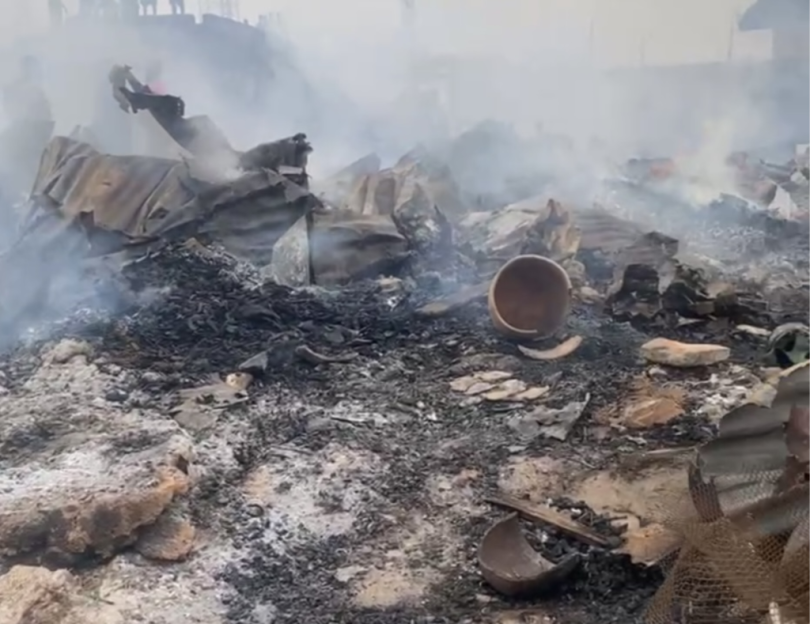
Fire outbreaks have remained a recurring challenge for markets across Ibadan, leaving traders devastated and causing significant economic losses. In many cases, infernos have destroyed shops, goods and business investments built over several years, with most victims struggling to recover from the financial setbacks.
Authorities have often attributed these incidents to electrical faults, power surges, careless handling of naked flames and the storage of highly combustible materials. Emergency responders have also repeatedly raised concerns over poor access roads, inadequate water supply and the absence of functional firefighting equipment within many markets, factors that frequently delay rescue operations and worsen the scale of destruction.
Beyond the physical destruction, market fires disrupt livelihoods, affect supply chains and place enormous emotional and financial burdens on traders and their families. The following are five notable markets in Ibadan that have experienced major fire outbreaks in recent years.
A massive overnight fire on March 11, 2025, swept through the Plastic Merchants section of Aleshinloye Market, destroying more than 500 shops and stalls. Goods worth hundreds of millions of naira were lost, while several traders sustained minor injuries during attempts to salvage their property. The incident disrupted commercial activities and affected hundreds of livelihoods.
Many traders broke down in tears, lamenting that they had recently restocked their shops with borrowed funds. They also expressed frustration over the lack of functional firefighting facilities within the market, saying the damage could have been significantly reduced with a quicker response.
A late-night fire in April 2025 razed 12 shops in the cement trading section of Araromi Market. Although no lives were lost, valuable goods were destroyed before firefighters contained the blaze. The Oyo State Fire Service attributed the incident to an electrical surge that ignited combustible materials nearby.
Traders described the incident as heartbreaking, saying years of investment disappeared overnight. Many appealed to the government for improved fire prevention measures and emergency response facilities.
In September 2025, fire engulfed 14 out of 42 shops at Ogundipe Market, destroying goods worth millions of naira. Firefighters prevented the inferno from spreading to adjoining shops, saving properties valued at billions of naira. No casualties were reported.
Affected traders counted their losses and appealed for financial assistance, while others urged fellow traders to install fire extinguishers and observe basic fire safety practices.
Bodija Market has witnessed several fire incidents affecting sections of the market at different times. Although the scale has varied, the outbreaks have destroyed shops, food items and other merchandise, disrupting one of Ibadan’s busiest commercial centres.
Traders consistently called for improved electrical infrastructure, regular safety inspections and stronger government intervention to reduce future occurrences.
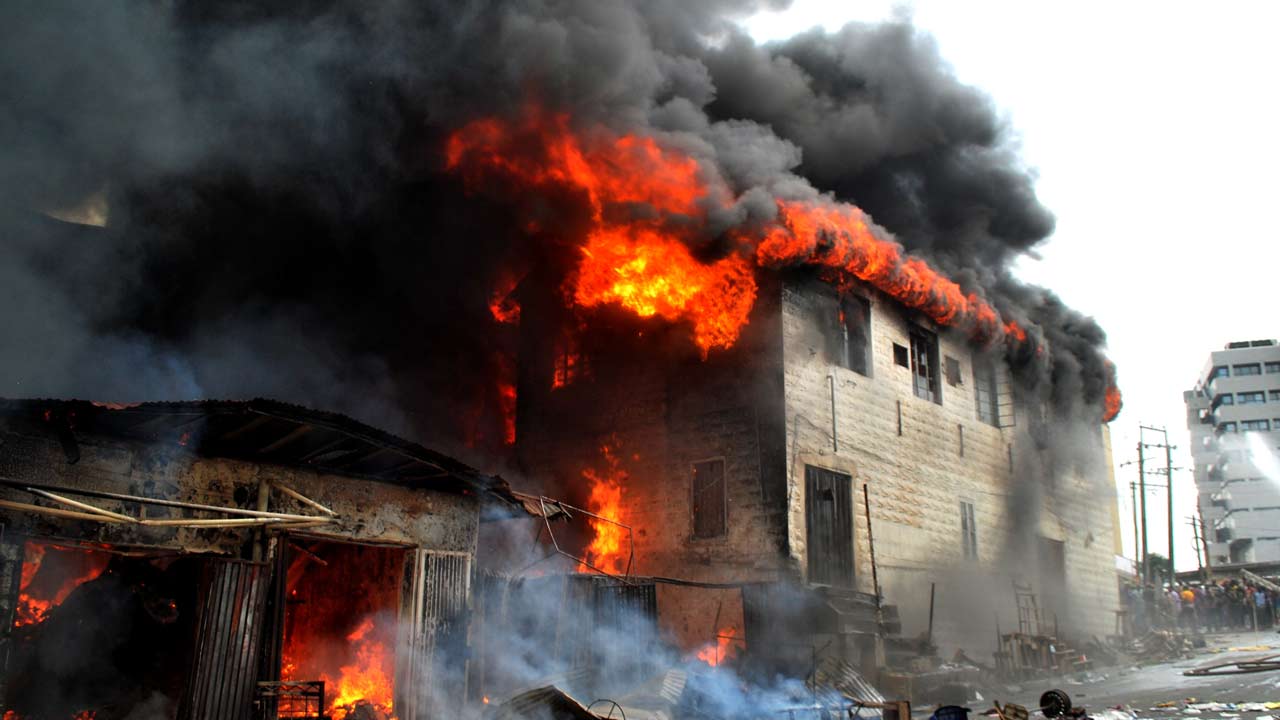
Ogunpa Market has also experienced fire outbreaks that destroyed shops and valuable goods. Besides the immediate financial losses suffered by traders, business activities were temporarily disrupted as affected sections underwent clean-up and rebuilding.
Many traders appealed for compensation and urged market authorities to strengthen safety awareness, improve electrical installations and provide accessible firefighting equipment.
Recently, on July 3, 2026, An early morning fire broke out around 4:00 a.m., destroying more than 50 shops, especially the herbal and animal skin section. No lives were lost, and the Oyo State Government has commenced an investigation into the cause of the fire.
The recurring fire outbreaks in Ibadan markets underscore the urgent need for stronger fire prevention strategies, improved market infrastructure and regular safety education for traders. Functional fire stations, reliable water sources, accessible roads and routine inspections are essential to reducing the devastating impact of future incidents.
While governments and emergency agencies continue to respond to these disasters, traders also have a responsibility to adopt safer practices by maintaining electrical installations, avoiding hazardous storage methods and equipping their shops with basic firefighting tools. A collective commitment to fire safety will go a long way in protecting lives, preserving investments and sustaining commercial activities across Ibadan’s major markets.