
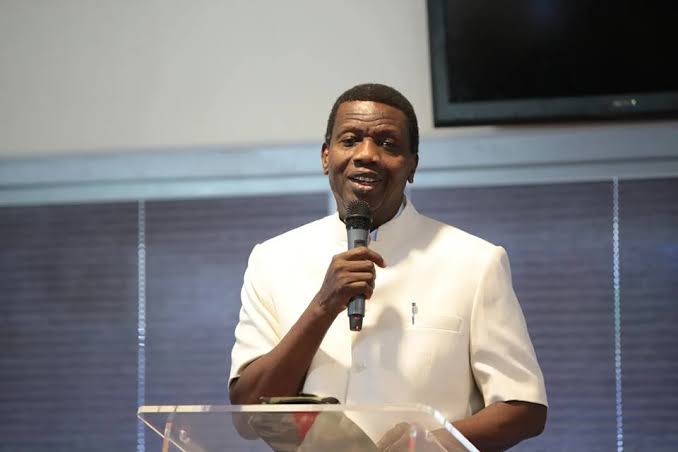
(Enoch Adeboye. Photo Credit: Punch News)
The General Overseer of the Redeemed Christian Church of God, Pastor Enoch Adeboye, has called on scholars, church leaders and policymakers to move beyond mere academic discussion and develop practical solutions to Nigeria’s worsening insecurity.
Adeboye, represented by his Special Adviser on Administration, Prof. Dele Balogun, made the call while delivering a goodwill message at the 2026 International Conference on African Pentecostalism, held at Redemption City along the Lagos–Ibadan Expressway in Ogun State.
The conference, organised by the Redeemed Christian Theological College in partnership with the Departments of Religious Studies at the University of Ibadan and Redeemer’s University, Ede, Osun State, carried the theme “African Pentecostalism and the Politics of Insecurity in Nigeria.”
Addressing participants, Adeboye described the gathering as timely, noting that Nigeria was passing through a defining moment given its persistent security challenges, while expressing confidence that the nation would still fulfil what he described as its divine destiny despite current difficulties.
He identified kidnapping, insurgency, farmer-herder clashes and communal violence as some of the major threats facing the country, stressing that African Pentecostalism has continued to play a meaningful role in Nigeria’s religious, political and economic life despite these challenges.
He explained that the conference brought people together to examine these issues, engage in substantive dialogue and explore workable solutions to insecurity, expressing belief that African Pentecostalism has much to offer toward resolving the crisis, since it does not simply preach peace or spiritualise problems but seeks to convert faith into concrete action capable of producing real solutions.
Adeboye urged participants not to treat the conference as a purely academic exercise, but to push beyond scholarly debate toward developing practical, implementable recommendations capable of reducing and eventually overcoming insecurity in Nigeria.
Also speaking at the event, RCCG’s National Overseer, Pastor Sunday Akande, represented by former college Provost and Assistant Continental Overseer for Research and Development, Dr Josiah Bolarinwa, lamented that insecurity in Nigeria had become so politicised that some people now deny its existence altogether, a trend he said has helped sustain the crisis.
He urged African Pentecostals to go beyond spiritual practices by actively participating in community development and supporting grassroots security efforts, while also calling on churches to offer spiritual support to military, police and other security personnel, arguing that faith communities have a role in strengthening those responsible for protecting lives and property, since, in his view, the spiritual realm influences the physical one.
He further argued that Pentecostals should back security personnel not only through support but with spiritual resources aimed at confronting the forces destabilising the country, insisting that religion and governance cannot be separated within the African context and that removing spirituality from public life would be counterproductive.
In his remarks, the college’s Provost, Dr Alaba Oti, said the conference came at a time when Nigeria and other African nations face complex security and socio-economic challenges requiring serious engagement from both religious leaders and scholars.
He said current realities demand that the Church and academia jointly develop thoughtful, ethical and practical responses to the country’s security concerns, noting that African Pentecostalism has grown into one of the continent’s most influential religious movements, with impact extending beyond spirituality into governance, justice, leadership and community development.
He added that the conference offered scholars a chance to critically assess the Church’s contributions while exploring fresh approaches to promoting peace, security, justice and national development.
Delivering the keynote address, Prof. Afe Adogame of Princeton Theological Seminary in the United States challenged churches and other faith-based organisations to pair prayer with practical action in tackling Nigeria’s security and socio-economic troubles.
He warned that insecurity would persist unless religious bodies, political leaders and citizens jointly confront its root causes, including poverty, unemployment and corruption, arguing that successive governments have prioritised national security while neglecting human security, which he described as central to solving the crisis.
He explained that human security relates to the everyday realities of life, including economic stability, poverty, job creation and empowerment, and that the failure to address these issues has opened space for non-state actors, including religious organisations, to take a more active role in improving citizens’ welfare.
Adogame criticised religious institutions broadly, including Christian and Islamic bodies, for focusing heavily on spiritual matters while neglecting the economic and social realities affecting their followers, insisting that prayer alone would not resolve Nigeria’s problems, only prayer combined with action.
He described the tendency to externalise Nigeria’s problems by leaving solutions solely to divine intervention as defeatist, stressing that both leaders and citizens share responsibility for the crisis and must be part of the solution.
He also called on major Christian and Islamic umbrella bodies to become more vocal and proactive in holding government accountable, criticising organisations such as the Pentecostal Fellowship of Nigeria, the Christian Association of Nigeria and the Christian Council of Nigeria, along with similar Muslim bodies, for what he considered insufficient criticism of government failures, urging them to demand greater responsibility from leaders and push for meaningful change.