
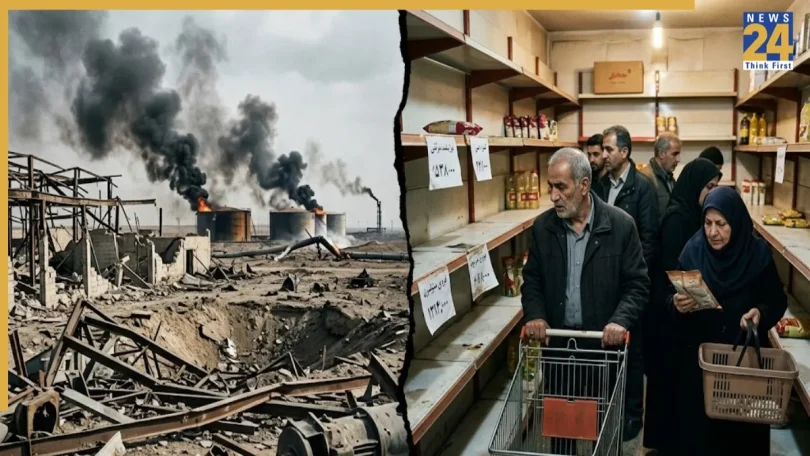
More than 100 days have passed since the war between Iran, the United States, and Israel began, and the damage has been massive. Continuous airstrikes and attacks have destroyed much of Iran’s military infrastructure across land, sea, and air. Many top officials have been killed, and key sources of income, especially oil exports, have been severely hit.
According to estimates, the war has caused losses of nearly Rs 33 lakh crore (around $347 billion), pushing the economy to the brink.
Even before the war, Iran’s economy was struggling due to years of sanctions imposed by the United States. These restrictions had already slowed growth, and the war has further deepened the crisis. Global estimates suggest Iran’s economic growth could fall by 6.1% in 2026, making it one of the worst downturns in decades.
Why has Iran not collapsed despite massive losses?
Iran’s biggest strength is its long experience in handling crises. Decades of sanctions, wars, and geopolitical pressure have forced the country to adapt to extreme conditions. This experience has helped it build systems to survive even when most revenue streams are blocked.
How is Iran still earning money amid restrictions?
One key factor is Iran’s preparation before major disruptions like the closure of the Strait of Hormuz. Before restricting access, Iran reportedly built a strong oil supply buffer and exported large quantities in advance, earning significant revenue.
In addition, Iran has diversified its trade routes. This has allowed some economic activity to continue despite global pressure.
What is the current condition of Iran’s economy?
Despite these efforts, the situation remains severe. Infrastructure including hospitals, schools, gas fields, and factories has been heavily damaged. Inflation has surged, the currency is at record lows, and many businesses have shut down.
First published on: Jun 12, 2026 09:43 AM IST
Get Breaking News First and Latest Updates from India and around the world on News24. Follow News24 on Facebook, Twitter.
End of Article
Related Story


