
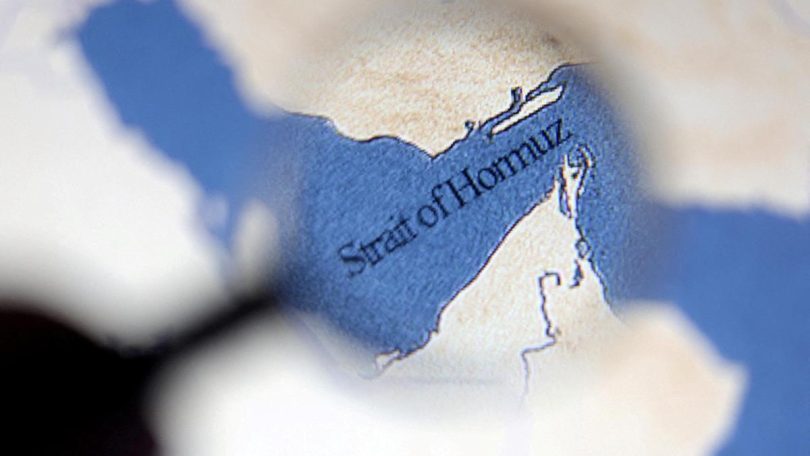
Tehran on June 26, 2026 reasserted its right to control shipping in the critical waterway and warned its Gulf neighbours against siding with Washington. File.
| Photo Credit: Reuters
The United Nations is working with countries to resume the evacuation of hundreds of ships and thousands of stranded seafarers from the Strait of Hormuz after the effort was halted earlier this week, a top UN agency official said on Friday (June 26, 2026).
The UN’s International Maritime Organization said on Thursday (June 25, 2026) it had “temporarily paused” its evacuation initiative after a container ship operated by Taiwan’s Evergreen was attacked.

Some 115 vessels and around 2,500 seafarers were able to sail through the strait before evacuations were paused, IMO Secretary-General Arsenio Dominguez told a virtual news conference.
Mr. Dominguez said he was working “vigilantly” with several parties and was having conversations with countries — particularly Oman, the United States, and Iran — “in order to find these guarantees that were provided at the beginning, that vessels will not be targeted”.
“As soon as I get further confirmations of that, we’re ready to re-initiate the process of evacuation,” he said, though he added he could not provide a timeframe for a resumption.
Evacuations will take weeks to complete, IMO Chief says
Tehran on Friday (June 26, 2026) reasserted its right to control shipping in the critical waterway and warned its Gulf neighbours against siding with Washington.
Mr. Dominguez said his main point of contact in Iran was with its maritime authority and foreign ministry.

“I need to actually maintain the positive approach that progress is being made in the whole conflict and at least vessels are also safely sailing through,” he said.
He added that the IMO was investigating “the reasons and motivation” for the ship attack.
The evacuation plan provided two channels for sailing out through the strait, either via Iranian waters in the north or Omani waters in the south.
The so-called Traffic Separation Scheme, adopted by the IMO in 1968, established routing lanes through Iranian and Omani waters in the strait. This central section, however, is currently not usable due to the presence of what Dominguez estimated were around 80 explosive mines.
“It will take a few weeks before we can evacuate the still just over 500 vessels that need to be evacuated,” he said.
“The quicker we can resume operations, of course, the quicker we can start increasing the numbers until we get that evacuation completed.”
Published – June 27, 2026 04:59 am IST