
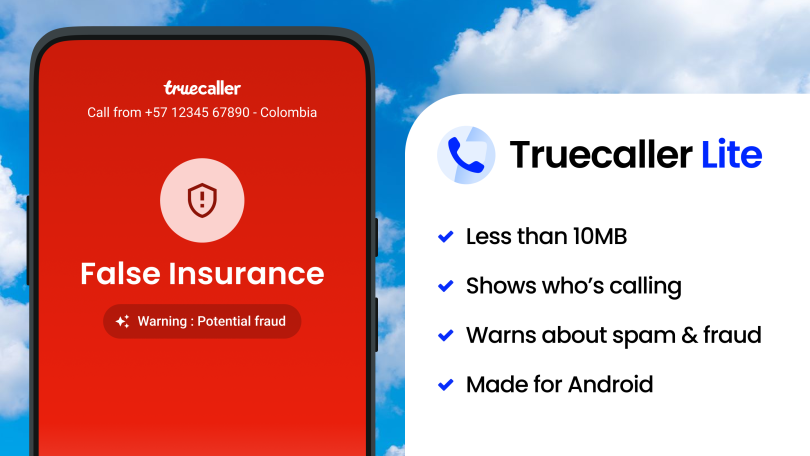
A new app designed specifically for entry-level Android smartphones to verify contacts and block unwanted communication has been made available to millions of Nigerians by Truecaller.
Known as Truecaller Lite, this platform places fraud protection directly on the devices millions of Nigerians already carry, rather than asking them to find space they do not have.
At just 10 MB, Truecaller Lite is a separate, native Android app designed from the ground up for devices with limited resources. It is a new product, not a reduced version of the main Truecaller app.
The app delivers the protections users rely on most, including caller ID, spam and fraud blocking, default dialer, number search, and contacts, while remaining fast, lightweight, and reliable on entry-level smartphones. The protection is the same as the main app, drawing on the same Truecaller database that identified more than 68 billion spam and fraud calls worldwide in 2025.
In Nigeria, where entry-level Android devices are among the most widely owned smartphones, Truecaller Lite is distributed through both the Google Play Store and Partner OEM channels.
Fraud and unwanted communication continue to rise in Nigeria. In 2025, Nigeria was the most spammed country in Africa, with 51 per cent of all unknown calls received by Nigerian users identified as spam or fraud, more than one in every two. Many of the markets most affected by these trends are also those where entry-level Android devices dominate, which makes accessible protection more important than ever. Nigeria remains a priority market for Truecaller.
“Safe communication should not depend on the phone you have. The next billion users live in markets where entry-level devices are often the norm.
“Truecaller Lite is a new product built specifically for them, and it was important for us to provide the same protection from spam and fraud that users expect from Truecaller around the world,” the chief executive of Truecaller, Mr Rishit Jhunjhunwala, stated.
Truecaller Lite is now expanding to Kenya, Ghana, Algeria, Chile, Egypt, Iraq, Indonesia, Bangladesh, Sri Lanka, and Malaysia, with additional launches planned across emerging markets.