
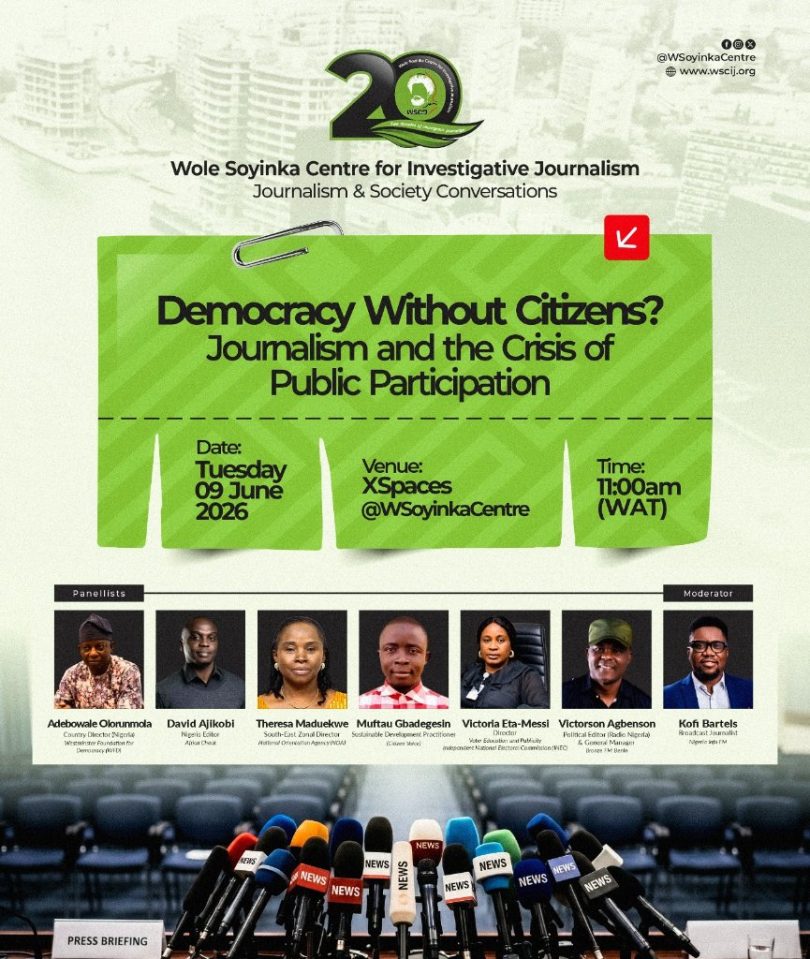
Media experts and stakeholders have called for electoral transparency and media enlightenment as a means of tackling voter apathy during elections.
The media experts made the call during an X Spaces conversation hosted by the Wole Soyinka Centre and co-hosted by broadcast journalist with Nigeria Info FM, Kofi Bartels, on Tuesday.
The conversation featured various media professionals and a representative of the Independent National Electoral Commission (INEC), who discussed the impact of voter apathy on electoral outcomes and democratic participation.
During the discourse, the speakers highlighted how citizens’ political apathy during electoral processes plays a significant role in determining election outcomes.
Speaking on the issue, Director of Voter Education and Publicity at INEC, Victoria Etta-Messi, stated that when citizens fail to participate in elections, they inadvertently surrender their voice in determining the country’s future.
“When you do not participate in an election, you have inadvertently handed over the next four years. If you do not suffer for it, your relatives will,” she said.
Addressing one of the major causes of political apathy, Political Editor of Radio Nigeria and General Manager of Bronze FM Benin, Victorson Agbenson, attributed the problem to public perception.
“One major challenge in our elections today is perception. It is within these gaps that the problem of voter apathy is aggravated.”
Another speaker, Sustainable Development Practitioner, Muftau Gbadegesin, noted that economic hardship has contributed to widespread disinterest in the democratic process, particularly in rural communities.
“The economic reality in rural areas is such that people live from hand to mouth. If democracy, as we have practised for 27 years, has not improved the lives of people in rural areas, why should they be bothered?”
In discussing ways to address voter apathy, Etta-Messi stated that INEC is making efforts to improve logistics and security during elections to strengthen public confidence in the electoral process.
“It is important that we better manage our logistics for electoral processes. We are improving our logistics so that when we say 8 a.m., we mean it,” she said.
Speaking further, Democracy, Civil Society, and Grassroots Mobilisation Specialist and Capacity Builder, Adebowale Olorunmola, stated that the erosion of trust in the electoral process is not solely the responsibility of the electoral body.
“Trust is not only broken by what INEC does, but also by what politicians do before and on election day. Civil society organisations must hold political leaders accountable for their actions.”
The discussion also featured recommendations on how to tackle voter apathy across the country.
South-East Zonal Director of the National Orientation Agency (NOA), Teresa Maduekwe, stressed the importance of introducing civic education and political participation at an early age.
“Schools should encourage the values of civic education and political participation from a very young age.”
Similarly, Gbadegesin called for increased public sensitisation and greater accountability among public office holders.
“We should do more sensitisation, informing people and holding those in power accountable, so people can see that it is not just talk. Governance at the grassroots should be made responsible rather than reactive.”