
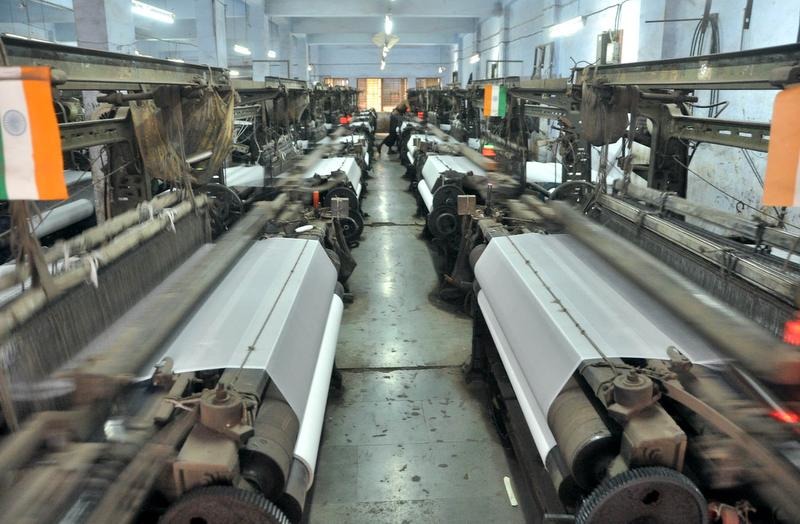
To revive the local industry and create jobs to boost the economy, the Senate has advised the federal government to ban textile imports.
The upper chamber of the federal parliament made this suggestion on Tuesday at the plenary presided over by the Deputy Senate President, Mr Jibrin Barau.
They noted that to resuscitate textile industries in the country, the Federal Ministry of Industry, Trade and Investment, and the Federal Ministry of Agriculture should immediately implement investment-friendly policies.
The red chamber of the National Assembly recalled when Nigeria used to have a vibrant textile industry, but lamented that the influx of foreign fabrics destroyed the sector.
The Senate emphasised that to stimulate economic growth and tackle insecurity in the country, there must be a total ban on the importation of textile materials into Nigeria.
“With the lifting of the ban on textile importation in 2010, Nigeria now has almost 80 per cent of its textiles imported from China, Indonesia, Taiwan and other countries.
“This trend is definitely not helping the Nigerian economy in terms of employment generation and the conservation of foreign exchange,” Mr Katung Marshall, who co-sponsored a motion on the Urgent Need to Revive the Textile Industries in Nigeria, said on the floor of the Senate yesterday.
The Senator informed his colleagues that the government protection policies in the 1960s and 1970s, particularly the restrictions on textile imports, attracted investors and helped the sector to flourish.
According to him, during the period, Nigeria’s textile industry accommodated about 167 mills and directly employed over 500,000 people, making it the nation’s second-largest employer after the federal government.
But he said this went south in the late 1990s due to obsolete machinery, inadequate capital and persistent power supply challenges, adding that by 2007, major companies, including Kaduna Textile Limited, Arewa Textiles and United Nigerian Textiles Limited, had shut down operations, leading to the loss of over 7,000 jobs.