
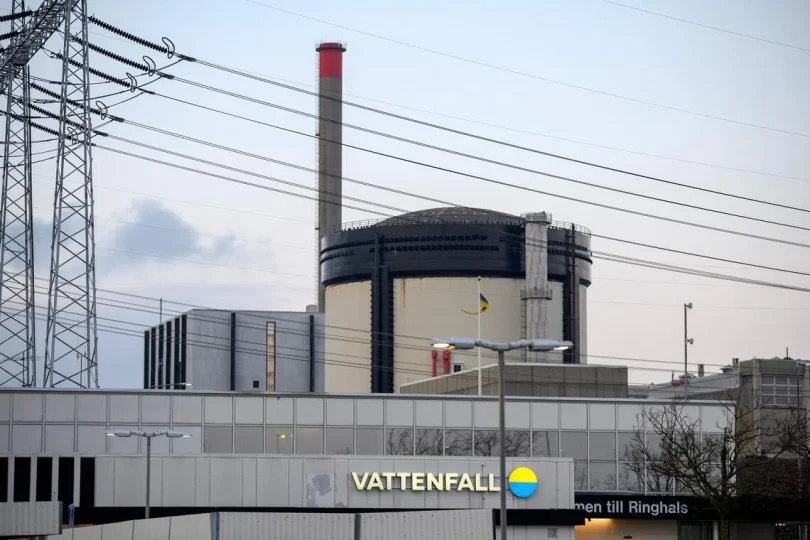
STOCKHOLM – Sweden picked Rolls-Royce Holdings to supply several new small nuclear reactors to help meet surging power demand in the decades ahead.
The offer by the British company was the best overall, in terms of the supply chain, timings and returns, Anna Borg, chief executive officer of state-owned utility Vattenfall said at a briefing in Stockholm.
Rolls Royce, which competed with GE Vernova in the final decision process, is gaining momentum with its technology, having been picked previously by both Britain and Czech Republic to deliver new reactors. The modules will be constructed in these countries and being European was an advantage, but not the sole reason, Borg said.
Building out the nation’s nuclear capacity was a central promise from the centre-right coalition ahead of the last election in 2022. With the electrification of everything from heavy industry to transportation, Sweden’s power demand is expected to surge in the coming decades along with most other developed nations.
Located on the nation’s west coast, the so-called small modular reactors would provide a combined output of around 1,500 megawatts, which is slightly more than Sweden’s largest reactor today. The target is that they will start to generate power by the middle of the next decade.
The project includes three reactors of 470 megawatts each. They will be built simultaneously in part, with construction on the second starting before the first is completed, Borg said. The value of the contract was not disclosed.
The project company, Videberg Kraft, was set up in 2025 by Vattenfall, which was the majority owner. The state has plans to own 60 per cent of the shares, with Vattenfall holding 20 per cent. Industrikraft, a consortium which includes some of the nation’s biggest power consumers, has the remaining stake.
Sweden has six reactors in operation today, providing about a third of the nation’s power. Hydro generation is the biggest power source, with almost half. However, a growing share of weather-dependent renewables has led to price volatility, imbalances and a lack of available grid capacity. The solution, according to the centre-right cabinet, has to be nuclear.
But it’s a gamble given how technologies such as solar and wind continue to get cheaper, and critics argue that energy storage and other rapidly developing technologies could balance weather-dependent power sources.
Videberg Kraft is not the only firm looking at building new reactors in Sweden. Applications have also been filed by startup Blykalla and nuclear services company Studsvik. BLOOMBERG