
Politics
By Anthony Isibor
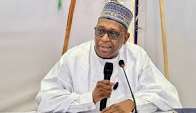
PROF. Muhammad Ali Pate, coordinating Minister of Health and Social Welfare, has called on governors across Northern Nigeria to dedicate at least 40 per cent of their annual budgets to human capital development.
Delivering the discussion-framing remarks at the Summit on Enhancing Human Capital Development in Northern Nigeria, organised by the Sir Ahmadu Bello Memorial Foundation in collaboration with the Northern Nigeria Governors’ Forum in Abuja, he warned that the region’s future prosperity depends on sustained investments in health, education, nutrition and youth empowerment.
He stated that Northern Nigeria sits at the centre of Nigeria’s development story, arguing that the country’s economic future would largely be determined by how the region addresses poverty, poor education, inadequate healthcare and unemployment.
“If Northern Nigeria rises, Nigeria rises,” the minister said, adding that continued underinvestment in people would limit Nigeria’s ability to achieve sustainable economic growth.
Pate urged state governments to commit no less than 40 per cent of their budgets to sectors that directly improve human capital, including healthcare, education, nutrition, women’s empowerment, skills development and job creation.
According to him, allocating funds alone is not enough, stressing that governments must ensure approved budgets are fully implemented and resources are spent on programmes that produce measurable results.
“Human capital investment is not something you do for one political tenure,” he said. “The benefits often take more than a decade to materialise, which is why leaders must invest beyond electoral cycles.”
The minister appealed to governors to channel increased revenues accruing to states following the Federal Government’s fiscal reforms into developing the region’s youthful population rather than projects that offer little long-term economic value.
He also challenged leaders to move away from measuring success by the number of projects commissioned and instead focus on outcomes such as improved learning, lower maternal mortality, better healthcare, quality jobs and reductions in poverty.
Pate argued that investments in education should prioritise teacher quality, curriculum reform, early childhood development and school supervision instead of concentrating mainly on constructing classroom buildings.
Recalling visits to public schools, he lamented situations where hundreds of pupils are taught by a single teacher, saying such conditions make meaningful learning impossible.
He also called for greater investment in adolescent health, maternal healthcare, nutrition, immunisation and girls’ education, describing them as essential foundations for building productive societies.
The minister further urged regional development commissions operating in Northern Nigeria to shift from executing short-term projects to financing strategic investments capable of transforming the region’s economy over the long term.
While acknowledging ongoing interventions by President Bola Tinubu’s administration, Pate maintained that responsibility for improving human capital outcomes rests largely with state and local governments, alongside traditional institutions, religious leaders, civil society and communities.
He called on Northern leaders to embrace what he described as courageous leadership by ensuring every policy decision and budgetary allocation is guided by a single question: “Does this build the human capital of our people?”
According to him, failure to prioritise investments in people would deepen poverty, unemployment and insecurity, while decisive action could unlock the region’s demographic dividend and drive national development.
Pate urged participants at the summit to ensure that the gathering produces concrete actions rather than another communiqué, saying future generations would judge today’s leaders by the opportunities they create for young Nigerians.
A.I
June 26, 2026
Tags: Prof. Mohammad Ali Pate Sir Ahmadu Bello Memorial Foundation