
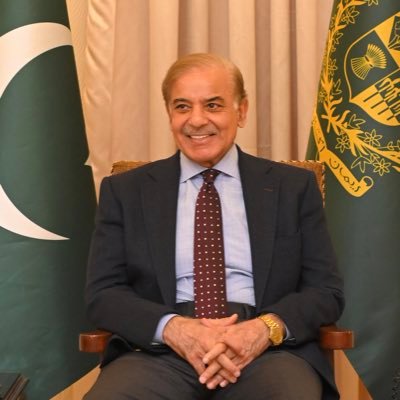
Pakistan’s Prime Minister, Shehbaz Sharif, has announced the signing of a landmark peace agreement between the United States and Iran, describing it as a major diplomatic breakthrough aimed at ending tensions between the two countries….
Pakistan’s Prime Minister, Shehbaz Sharif, has announced the signing of a landmark peace agreement between the United States and Iran, describing it as a major diplomatic breakthrough aimed at ending tensions between the two countries.
In a statement shared on his official X account, Sharif said the agreement, known as the “Islamabad Memorandum of Understanding” (MoU), was electronically signed by the leaders of both nations and endorsed by Pakistan in its role as mediator.
“I am honoured to announce that the historic ‘Islamabad Memorandum of Understanding’ has been electronically signed today between the United States of America and the Islamic Republic of Iran,” Sharif said.
“The Memorandum has been signed by honourable Presidents of both the countries and also endorsed by me as the mediator. The signing of this agreement at the highest level of the respective governments demonstrates the commitment of both sides to a diplomatic resolution of the conflict.”
READ ALSO: Trump Signs Peace Deal With Iran Following G7 Summit
He said the accord took immediate effect upon signing.
According to the Pakistani leader, the first measures under the agreement include the immediate reopening of the strategic Strait of Hormuz by Iran and the lifting of the United States naval blockade.
“Islamabad MoU shall enter into force with immediate effect and as a first step, Islamic Republic of Iran will instantly reopen the Strait of Hormuz and the United States of America will immediately lift the naval blockade,” he stated.
These provisions are also contained in the framework of the agreement released by international media outlets.
Sharif said the signing of the memorandum at the highest level of government reflected the commitment of both countries to resolving their differences through diplomacy rather than conflict.
The prime minister praised Donald J. Trump for what he described as a strong commitment to peaceful engagement, saying the American president’s preference for diplomacy had helped avert a crisis with potentially far-reaching consequences for the Middle East and the wider international community.
He also commended members of the US negotiating team, including J. D. Vance, Steve Witkoff and Jared Kushner, for their contributions to the negotiations.
Sharif equally acknowledged the role played by Iran’s leadership, expressing appreciation to Mojtaba Hosseini Khamenei and Masoud Pezeshkian for embracing dialogue and supporting efforts to achieve peace.
He also praised members of the Iranian negotiating team, including Mohammad Bagher Ghalibaf, Abbas Araghchi and Eskandar Momeni, whom he credited with helping to bring the agreement to fruition.
“I express my profound respect and appreciation to His Eminence Ayatollah Seyyed Mojtaba Hosseini Khamenei, the Supreme Leader of Islamic Republic of Iran and President Masoud Pezeshkian for their wisdom, foresight and statesmanship in embracing the cause of peace,” he said.
The Pakistani leader further acknowledged the support of regional partners, particularly the leadership of Qatar, as well as Saudi Arabia, Türkiye and Egypt, for their contributions to the mediation efforts.
“I would especially like to acknowledge the sincere efforts and constructive engagement of the leadership of the State of Qatar in helping reach this point. I also highly commend the leadership of the Kingdom of Saudi Arabia, the Republic of Türkiye and the Arab Republic of Egypt for their indispensable role and invaluable contributions in this regard,” he stated.
Sharif reserved special praise for Syed Asim Munir, saying his efforts and dedication were instrumental in facilitating the diplomatic breakthrough and advancing regional stability.
The agreement follows days of mediation led by Pakistan and comes after reports that Washington and Tehran had agreed on a framework for ending hostilities and commencing broader negotiations on unresolved issues, including nuclear-related matters. The memorandum establishes a 60-day period for talks aimed at reaching a comprehensive settlement.
Sharif expressed hope that the Islamabad Memorandum would become a lasting foundation for greater understanding, mutual respect and shared prosperity across the region.
“May this Memorandum of Understanding serve as an enduring foundation for greater understanding, mutual respect and shared prosperity for the complete region,” Sharif added.