
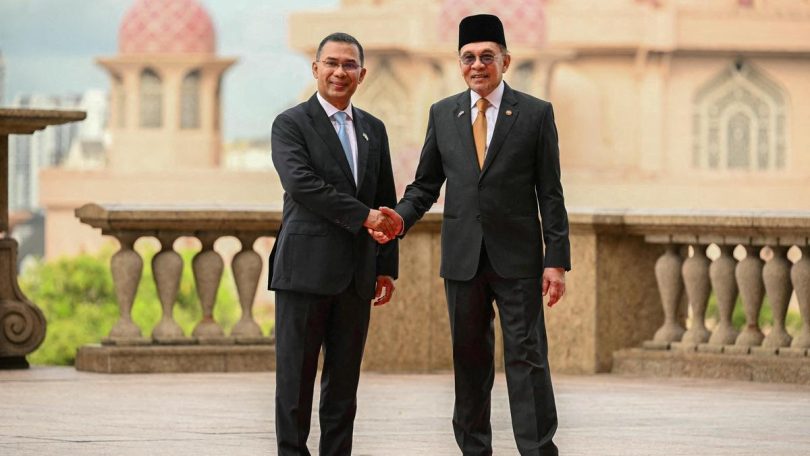
Malaysia’s Prime Minister Anwar Ibrahim shakes hands with Bangladesh’s Prime Minister Tarique Rahman during a welcome ceremony at the Federal Government office “Perdana Putra” in Putrajaya, Malaysia, on June 22, 2026.
| Photo Credit: Reuters
Malaysia’s Prime Minister Anwar Ibrahim pledged stronger protections for Bangladeshi migrant workers on Monday (June 22, 2026), following a series of labour abuses affecting the Southeast Asian nation’s largest foreign workforce.
Around 8,00,000 Bangladeshis work in Malaysia, making up a third of the country’s migrant workforce, who have faced unpaid wages and recruitment scams that left many job seekers stranded after paying hefty recruitment fees.
Speaking at a joint press conference with Bangladeshi Prime Minister Tarique Rahman, Mr. Anwar described “human resources cooperation, particularly the workers” as “critical for our survival”.

“This continued use of workers being exploited, ill-treated… purely for personal or company gains cannot be tolerated,” Mr. Anwar said.
Mr. Rahman, who is on his first foreign trip since he was elected Bangladesh’s Prime Minister in February, urged that recruitment be made “transparent, fair and affordable” with a reduction in the number of intermediaries.
Late last year, United Nations human rights experts warned of “continued exploitation, deception, and deepening debt bondage” facing Bangladeshi migrant workers in Malaysia.
“We urge both governments to intensify their efforts to ensure that migrant workers are not criminalised or re-victimised, and that fraudulent recruitment agencies and other responsible actors are held accountable,” the experts said in a statement issued in Geneva.

Mr. Rahman is set to depart later on Monday (June 22, 2026) for China on the second leg of his trip. In Beijing, trade and infrastructure projects will be on the agenda, according to Bangladeshi Foreign Ministry officials.
Mr. Rahman’s inaugural trip abroad is bypassing neighbouring India, with whom relations have been strained since a 2024 uprising toppled the government of then-Prime Minister Sheikh Hasina, an ally of New Delhi.
Ties improved after Mr. Rahman won elections and took over in February from the interim administration that had led the country of 170 million people since Sheikh Hasina’s ouster.
But frictions remain. Ms. Hasina has been in hiding in India since fleeing the revolution and Bangladesh has repeatedly sought her extradition. India has long been wary of neighbouring China’s regional clout and the world’s two most populous countries compete for influence in South Asia.
Published – June 22, 2026 01:25 pm IST