
Bulmun Dakwal
Fresh scrutiny has surfaced over lines of the Taraba State 2026 proposed budget after findings by SecretsReporters revealed repeated allocations for solar energy projects, including a controversial N50 million budget proposal for the construction of shades to accommodate solar panels in government hospital despite a previous N100 million allocation for the same project with zero implementation performance.
A review of budget documents obtained by SecretsReporters shows that the Ministry of Energy and Economic Development proposed another N50 million in the 2026 draft budget for the “Construction of Shade to Accommodate Solar Panel at Bambur, Karim General Hospital.”
However, further analysis of the same document revealed that the exact project had already received a N100 million allocation in the 2025 approved budget, yet the budget performance report for January to December 2025 showed zero expenditure and no recorded implementation.
The repeated allocation has now triggered questions from transparency advocates and public finance analysts who are demanding explanations over why a project that allegedly received substantial funding in the previous fiscal year is being reintroduced with another allocation despite no evidence of execution.
The development becomes even more controversial when compared with two other broader solar related projects within the same ministry that received significantly lower allocations despite covering larger scopes and wider geographical coverage.
One of the projects listed in the 2026 draft budget is the “Supply and Installation of 230KV Solar Energy at General Hospitals Across the 16 LGAs,” which received a proposed allocation of N70 million.
Another project titled “Provision and Installation of Large Solar System for Specialist Hospital, Jalingo, Wukari, Bali, Ussa, and Karim-Lamido Hospitals” received a proposed allocation of just N10 million.
The sharp contrast in allocations has raised concerns over possible inconsistencies in project costing and budgeting within the Ministry of Energy and Economic Development.
Observers say it is difficult to reconcile how the construction of shades for solar panels at only one hospital could attract a N50 million allocation after previously receiving N100 million, while a statewide solar installation project covering hospitals across all 16 local government areas received only N70 million.
Similarly, analysts questioned how the installation of large solar systems in five major hospitals across the state could attract just N10 million, an amount many experts say appears insufficient for such infrastructure.
Further look into the budget as stated earlier revealed that the 2025 performance report attached to the budget showed no recorded expenditure for the N100 million shade project throughout the year.
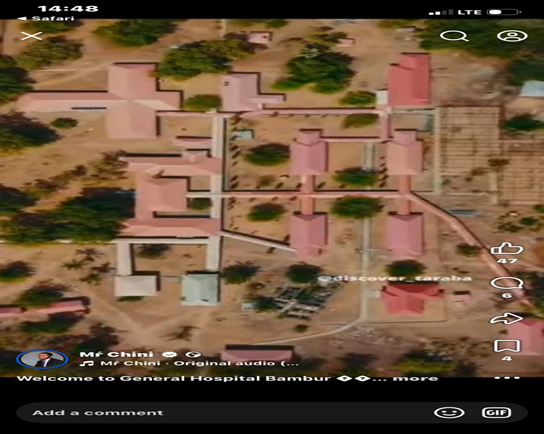
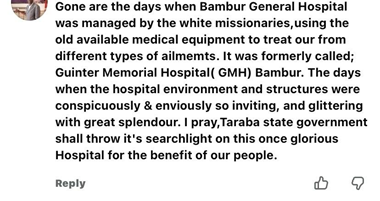
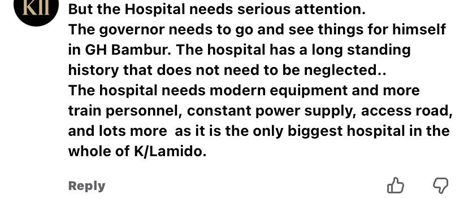
Further research on the hospital, has revealed a Facebook post where a landscape video of the hospital is displayed which is accompanied by comments from individuals complaining about the state of the hospital and how the government need to do better, these comment were dropped barely up to a week to the time this report is been filed.
Transparency advocates say repeated budgeting for unexecuted projects has become a recurring issue in many state budgets.
Critics argue that such practices weaken public trust and make it difficult for citizens to determine whether allocated funds are genuinely meant for developmental projects or merely on paper projects.
The development comes at a time when many public roads are in a very dilapidated state. In several rural communities, residents frequently complain about poor access to good road networks, especially for business owners whose businesses are usually slow due to the state of the road and more terrible during rainy seasons like this.
Reliable solar energy systems are often considered critical for improving healthcare delivery, preserving vaccines and medications, powering laboratory equipment, and supporting emergency services in hospitals.
However, governance observers warn that questionable budgeting practices could undermine genuine infrastructure development and weaken public confidence in government interventions.
The situation has also reignited concerns about budget transparency and oversight within Nigeria’s public sector.
Over the years, several investigations by civic organizations and media platforms have uncovered cases where public projects were repeatedly budgeted without clear evidence of execution, completion, or value delivery.
As economic hardship continues to affect millions of Nigerians at the grass root level and public institutions continue to talk about funding shortages, calls for prudent spending and transparent budgeting are becoming louder.