
Iran will begin reopening the Strait of Hormuz immediately after the formal signing of a memorandum with the United States aimed at ending hostilities between the two countries, according to a draft agreement obtained by Kyodo News.
The final draft of the memorandum, consisting of 14 articles, outlines a phased process for ending military tensions, restoring maritime commerce and launching negotiations on Iran’s nuclear programme. Iranian diplomatic sources cautioned that some wording could still be revised before the planned signing ceremony on June 19.
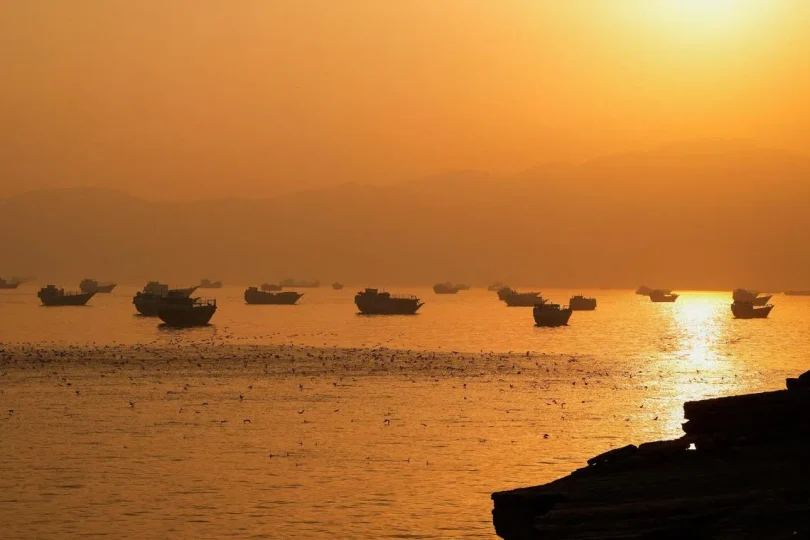
Under the draft, Iran would immediately take measures to reopen the strategically vital Strait of Hormuz to all commercial shipping following the signing. A 30-day grace period is included to allow mine-clearing operations and other technical measures necessary to fully restore navigation through the waterway.
In return, the US would immediately lift its blockade of Iranian ports and restore Iran’s maritime traffic to pre-conflict levels within 30 days, the document says.
The memorandum also provides for an immediate declaration ending all hostilities between the two countries and their regional partners, including in Lebanon. Both sides would commit to respecting each other’s sovereignty and territorial integrity and refrain from interfering in one another’s internal affairs.
Following the signing, Tehran and Washington would begin negotiations on Iran’s nuclear programme. The draft allocates up to 60 days for the talks, with the possibility of extension by mutual consent.
During that period, Iran would reaffirm that it will neither develop nor acquire nuclear weapons and would maintain its current suspension of uranium enrichment activities pending the outcome of the negotiations. In exchange, the U Swould refrain from imposing new sanctions on Iran and from increasing its military presence in the Middle East.
The draft also envisages significant sanctions relief. The US would grant waivers allowing Iranian oil, petrochemical products and related exports to return to international markets. Frozen Iranian assets would be released in stages depending on progress in the nuclear negotiations.
According to the memorandum, any final comprehensive agreement reached between the two countries following the nuclear talks would be endorsed by the UN Security Council.
The document further states that US forces would withdraw from areas surrounding Iran within 30 days of the conclusion of a comprehensive nuclear agreement.
In addition, the US and regional Middle Eastern countries would formulate a reconstruction and economic development package for Iran valued at approximately US$300 billion (S$384.9 billion). Details of the initiative would be finalised within 60 days of the signing of the memorandum.
The proposed accord comes after more than a year of heightened tensions and military confrontation between Tehran and Washington.
The conflict initially escalated in June 2025, when Israel launched large-scale strikes against Iranian military and nuclear facilities, arguing that Tehran was moving closer to acquiring the capability to produce a nuclear weapon. Days later, the US joined the conflict by carrying out attacks on major Iranian nuclear sites, including Fordow, Natanz and Isfahan.
Iran responded with missile and drone attacks against Israeli and US targets, while maritime traffic in the Strait of Hormuz was severely disrupted, raising concerns about global energy supplies and the possibility of a wider regional conflict.
The conflict entered a new phase after the 12-day Iran-Israel war in June 2025. The escalation came shortly after nuclear negotiations between Iranian and US officials in Geneva concluded with both sides agreeing to continue talks, raising hopes for a diplomatic breakthrough.
However, in February 2026, the US launched a new military campaign against Iran. Washington argued that increased pressure was necessary to force Tehran to accept a comprehensive settlement regarding its nuclear programme and regional security issues. The opening stages of the campaign included strikes that killed Iran’s Supreme Leader. This marked an unprecedented escalation in tensions between the two countries.
Despite expectations in Washington that the loss of its top leader would quickly weaken Iran’s position, Tehran continued fighting for roughly 40 days. The hostilities eventually subsided under a fragile truce brokered through mediation efforts led by Pakistan, creating the conditions for the current diplomatic negotiations between the two long-time adversaries.
Diplomatic efforts have intensified in recent months amid growing international concern over the prolonged disruption of shipping through the Strait of Hormuz and its impact on global trade and energy markets.
US President Donald Trump has repeatedly stated that preventing Iran from obtaining a nuclear weapon is the central objective of negotiations with Tehran. He has argued that any future agreement must ensure that Iran is permanently prevented from developing nuclear arms and has also called for the full restoration of freedom of navigation through the Strait of Hormuz.
Iranian officials, meanwhile, have consistently maintained that the Islamic Republic has never sought nuclear weapons and has no intention of acquiring them. Tehran says its nuclear programme is exclusively for peaceful civilian purposes. Iranian leaders have frequently pointed to a religious decree issued by former supreme leader Ali Khamenei prohibiting the development, stockpiling and use of nuclear weapons, describing it as a fundamental principle of Iran’s nuclear policy. KYODO NEWS