
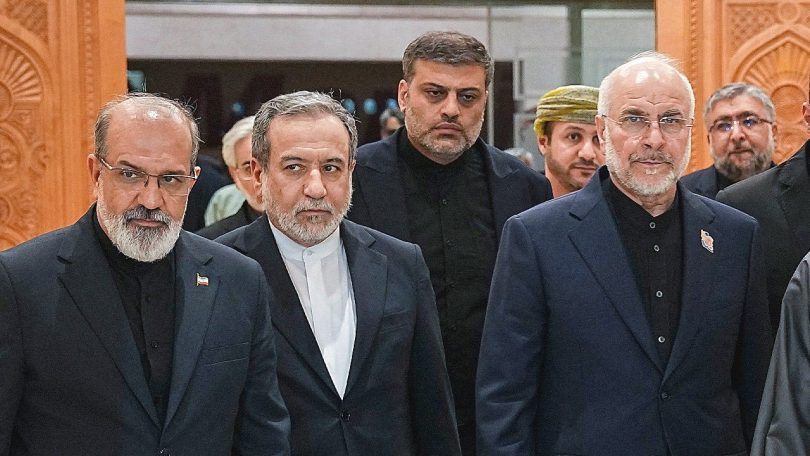
Iranian regime’s ‘hardline rhetoric’ under fire as US deal nears
President Donald Trump takes a firm stance on Iran’s economic downturn and ongoing nuclear negotiations, emphasizing that U.S. forces are ready if diplomacy fails. John Roberts and Sandra Smith report on the White House cabinet meeting, where Trump discussed Iran’s high inflation and lack of sanctions relief. Dr. Mahsa Tehrani questions the trustworthiness of the Islamic Republic.
NEWYou can now listen to Prime Times articles!
Tehran has deployed a new front on Western social media, including a covert influence campaign to sway Americans and undermine President Donald Trump’s push for a nuclear deal, experts warned Sunday.
Following the February U.S. strikes on Iran that decapitated much of Tehran’s leadership and the signing of an interim memorandum of understanding (MOU) between Tehran and Washington, the analysts also claim Iranian officials are relying more on digital proxies to project centralized control.
“Iran’s leadership now lives on X because it is a decapitated leadership,” counterterrorism expert Dr. Omar Mohammed told Prime Times Digital.
“The regime has moved its legitimacy contest onto a platform, and once you are fighting there, you optimize for it,” Mohammed, of the George Washington Program on Extremism, added.
IRANIAN REGIME SPREADING ANTI-ISRAEL PROPAGANDA ACROSS DOZENS OF SOCIAL MEDIA ACCOUNTS: REPORT
The administration’s memorandum of understanding with Tehran has exposed a divide among Republicans over what constitutes victory after the military campaign against Iran. (Anna Moneymaker/Getty Images)
“There are English, screenshot-ready lines, memeable contempt and civilizational pride. It is adaptation under pressure — an influence operation forced by the fact that the men running Iran can no longer stand at a podium.”
After Supreme Leader Ali Khamenei was killed on Feb. 28, the regime’s senior leadership was largely eliminated, and the new leader, Mojtaba Khamenei, is in hiding. Mohammed said Iran’s digital messaging has since become more centralized.
“The coordination between the leadership is visible: You watch the same lines reposted verbatim by the judiciary chief, the vice president and the security council within minutes,” the expert explained.
“That is a central media shop pushing copy, not officials independently moved by the same spirit at the same moment. And the register gives it away.”
According to Mohammed, the regime’s X accounts serve as a manufactured proxy for the leadership vacuum while exploiting political divisions in the United States, a strategy that he says surfaced even more after Trump signed a new peace deal on June 17 in Versailles.
“Tehran is not aiming at the United States as a single entity,” Mohammed said.
IRAN’S UNPRECEDENTED ‘WHOLE-REGIME’ DELEGATION AT US DEAL TALKS SIGNALS ONE GOAL: EXPERT
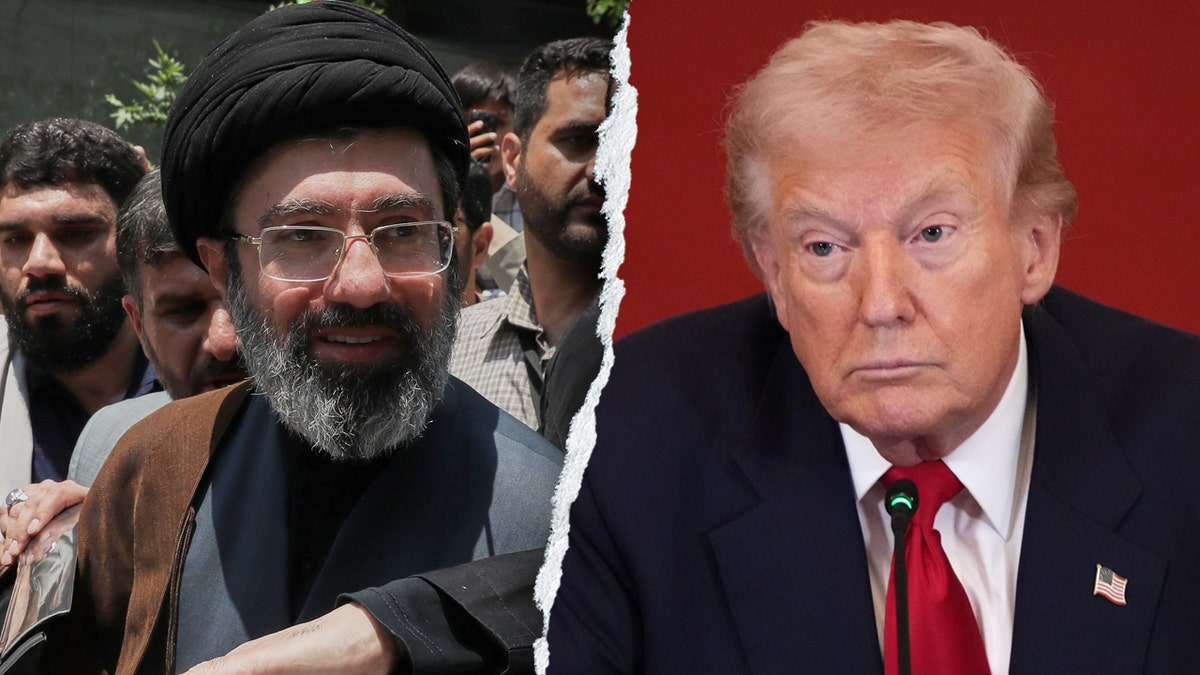
New Iranian Supreme Leader Mojtaba Khamenei and President Donald Trump are shown side by side as opposing figures in the Middle East. (Vahid Salemi/AP; Julia Demaree Nikhinson/AP)
“It reads Washington as two power centers and pitches to both — working to embarrass the deal the president owns while speaking the language of multipolarity back to the worldview it attributes to the vice president.”
In the wake of the signing and the first round of negotiations in Switzerland, for example, Trump said on Truth Social that unfrozen Iranian assets would be used to buy American agricultural products, including soybeans, wheat and corn.
The Treasury Department, he wrote, would release the Iranian assets “into escrow, controlled by the United States, and will be used for the purchase of food and medical supplies, exclusively from the United States, including corn, wheat and soybeans from our great American farmers. These are things that are desperately needed by Iran.”
The regime’s posts from its lead negotiator, Mohammad Bagher Ghalibaf, mocked the claims as “trash talks.”
“America falsely claims our unfrozen assets will buy their agriculture. Interesting. The only crop we’re harvesting is what you planted: decades of mistrust. It’s organic, abundant, and homegrown. But apparently the U.S. only exports GMO soybeans, broken promises and trash talks,” Ghalibaf wrote on X.
“The agriculture jab is aimed straight at Trump, who personally sold the frozen-assets release to American farmers as a corn-and-soybean windfall, so mocking ‘GMO soybeans and broken promises’ is built to embarrass the deal he owns,” Mohammed claimed.
VANCE REJECTS CLAIMS TRUMP-IRAN DEAL ECHOES OBAMA-ERA LOGIC AS HAWKS RAISE ALARM
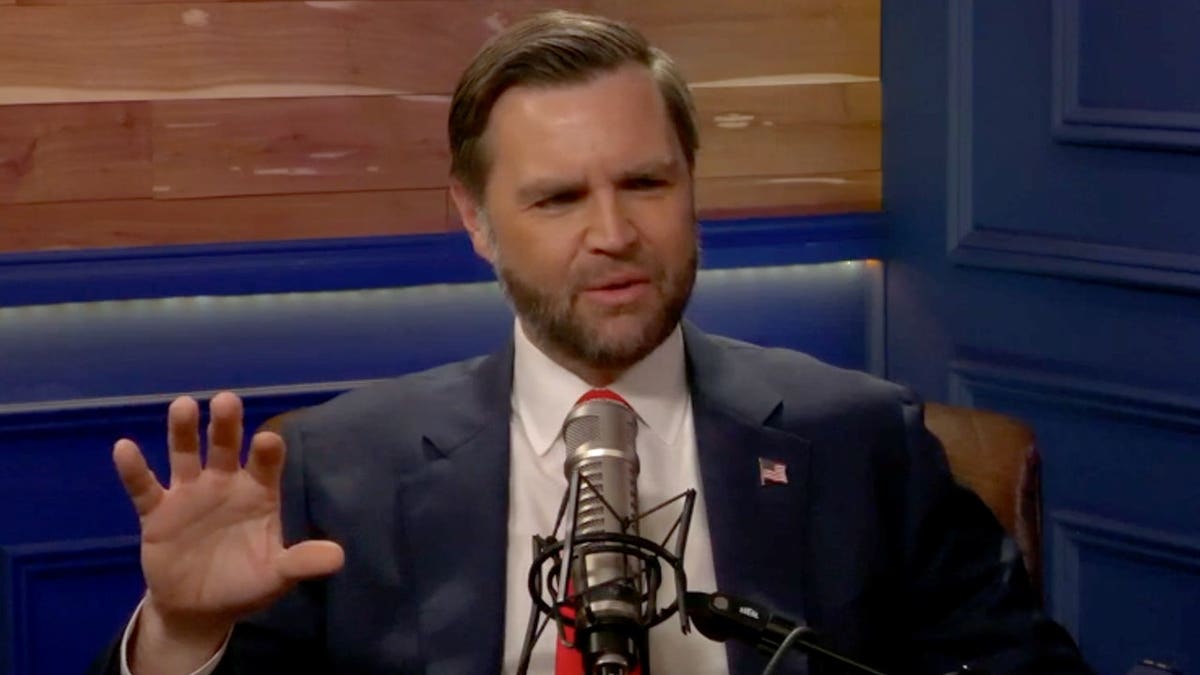
Vance tells Prime Times Digital the U.S.-Iran deal tests whether Tehran will trade decades of isolation for sanctions relief and renewed Western ties. (Prime Times Digital)
“Tehran gains if it can discredit the deal the president is selling,” he added.
“That is also not a 64-year-old Iranian speaker writing for himself; that is a young social media team writing in his name,” Mohammed said.
Mohammed also noted Trump’s posts are his own, with the “account and the man the same.”
“The Iranian accounts are the reverse. They come from an institution manufacturing a public presence for a leadership that can no longer appear in person,” he said.
As ordinary Iranian citizens continue to face strict internet restrictions at home, Tehran’s elite enjoy open access to foreign platforms to target Western audiences.
IRAN REGIME ESCALATES REPRESSION TOWARD ‘NORTH KOREA-STYLE MODEL OF ISOLATION AND CONTROL’
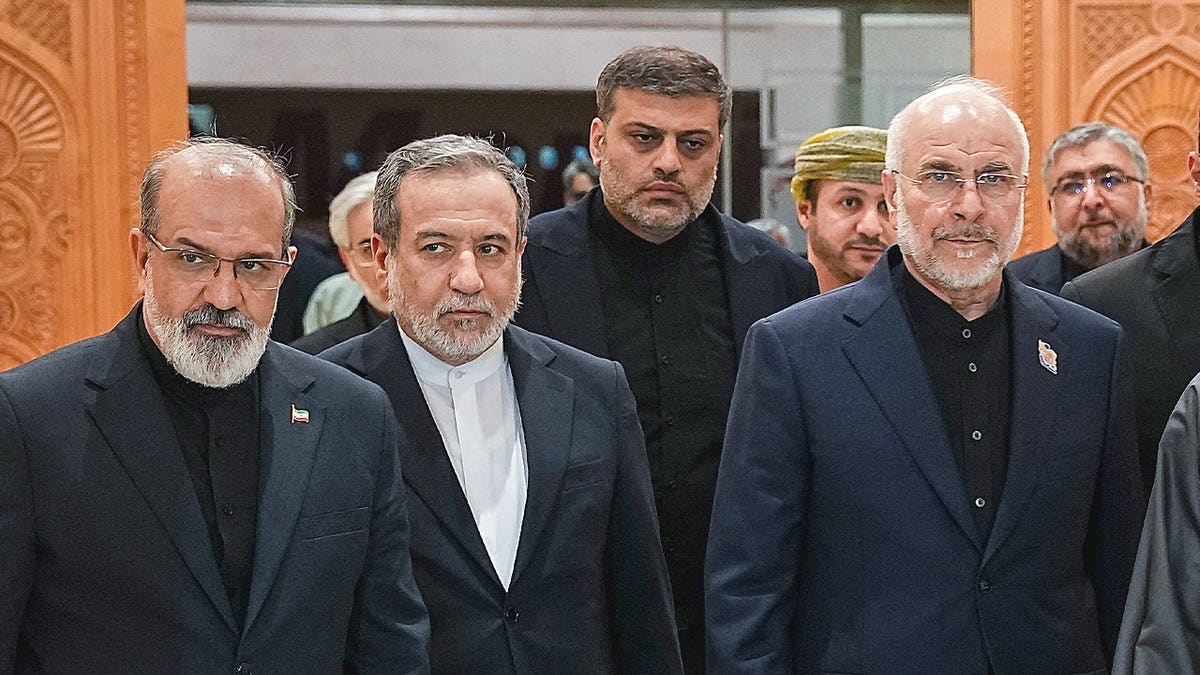
Tehran has deployed a new front on Western social media, including an influence campaign to sway Americans and undermine President Donald Trump’s push for a deal, analysts warn. (Hamed Malekpour / Middle East Images / AFP via Getty Images)
Alp Toker, of internet monitoring firm NetBlocks, told Prime Times Digital that the regime had “learned” asymmetric information warfare.
“These regimes are learning to combine social media, AI and internet censorship as tools for asymmetric information warfare, benefiting from a global audience while sidestepping accountability to their own citizens,” he said.
“There is a two-tier system in which government officials can use the platform freely to promote their agenda while denying access to their citizens, as they do in Iran.
“It’s a double-edged sword — you get more open politics at the cost of regime propagandization.
FOLLOW US FOR MORE BREAKING NEWS
“Iranian authorities, among others, are getting better at gaming this system,” Toker added.
Mohammed said the parallel systems — a heavily censored internet at home and what he described as an “open megaphone” aimed at Western audiences — provide the strongest evidence the campaign is an external influence operation rather than organic domestic speech.