
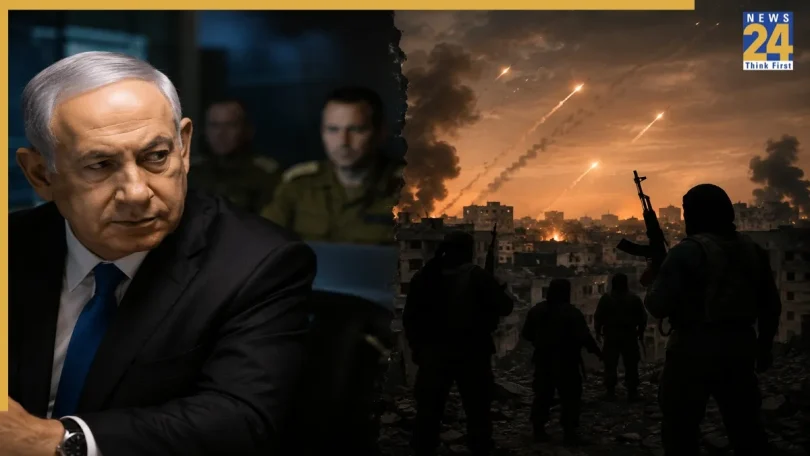
The latest rise in tensions in West Asia has once again put focus on a familiar pattern, whenever conflict rises, Lebanon often becomes a key battleground between Israel and Iran-backed groups.
Late Sunday, Iran fired missiles at Israel. In response, Israel launched airstrikes early Monday targeting central and western Iran, with explosions reported in cities like Isfahan, Tabriz and Tehran. But even as Israel and Iran exchanged direct fire, violence continued along Israel’s northern border with Lebanon.
How did the Israel–Lebanon conflict begin?
The conflict between Israel and Lebanon goes back to 1948, when Lebanon joined other Arab nations in opposing the creation of Israel. While fighting between the two was limited at the time, no peace deal was ever signed.
Since then, both countries have technically remained at war. There are no diplomatic ties, and travel between the two nations is banned.
Tensions grew sharply during Lebanon’s civil war (1975–1990), when Israel invaded southern Lebanon. This invasion changed the region’s politics and led to the rise of a powerful new group, now known as Hezbollah.
What is Hezbollah and why is it central to the conflict?
Hezbollah is an Iran-backed Shi’ite militant and political group based in Lebanon. It was formed in 1982 in response to Israel’s invasion. Over the years, Hezbollah has become Israel’s main adversary in Lebanon. It fought a guerrilla war against Israeli forces until Israel withdrew from southern Lebanon in 2000. Since then, there have been repeated clashes, including a major war in 2006 and near-daily exchanges of rockets and airstrikes in recent years.
After the Israel-Hamas war in October 2023, Hezbollah again began firing missiles at Israel, leading to continuous cross-border fighting. Israel has carried out strikes across Lebanon, including in Beirut and the Beqaa Valley, targeting Hezbollah positions.
Why does Israel attack Lebanon during wider conflicts?
The key reason is Hezbollah’s close ties with Iran. When tensions rise between Israel and Iran, Hezbollah often gets involved as Tehran’s regional ally.
For Israel, Hezbollah poses a direct threat to its northern border through rockets, drones, and fighters based in Lebanon. Israel says its strikes are defensive, aimed at stopping attacks before they happen.
Iran, however, sees Israeli operations in Lebanon as aggression and often links ceasefire demands to stopping strikes there. This makes Lebanon a frontline in the larger Israel-Iran rivalry.
First published on: Jun 08, 2026 10:12 AM IST
Get Breaking News First and Latest Updates from India and around the world on News24. Follow News24 on Facebook, Twitter.
End of Article
Related Story


