
By Helen Okechukwu and Ridwanullah Sakariyah
As insecurity continues to threaten lives, schools, and communities across Nigeria, stakeholders have called for urgent reforms in the country’s security architecture, arguing that political blame games, weak local security structures and poor intelligence culture are worsening the crisis.
The most recent insecurity incident occurred on 15 May in Oyo state across three schools, leading to the abduction of 39 students, seven teachers, and the death of one teacher. The rise in insecurity has become a national concern across Nigeria.
Since the inception of Boko Haram, which means “Western education is a sin,” in 2014, there have been several recurring security challenges that have led to the abduction of more than 2,000 students and the displacement of affected persons, PrimeTimes reports.
The recent attack in Oyo State across three schools simultaneously has raised several questions from citizens and renewed calls for improved security measures to put an end to the persistent incidents.
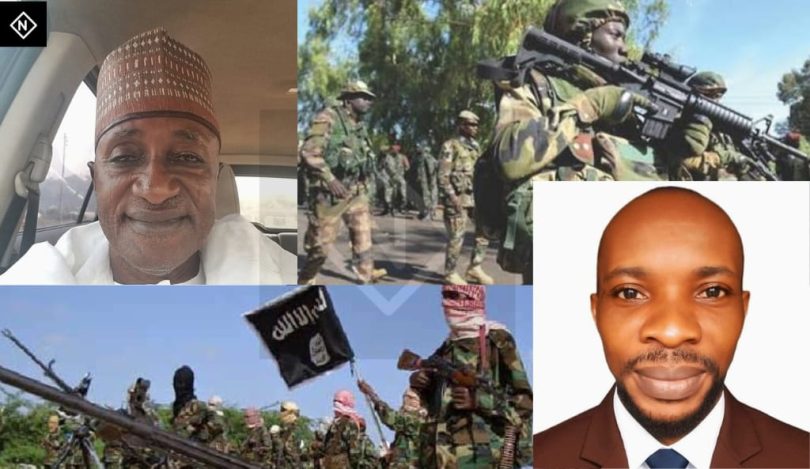
PrimeTimes, in an exclusive interview, spoke separately with Mr Opurum Loveday, one of the political figures in Rivers State, and retired Assistant Director of Internal Security (ADis/SSS), Mr. Adam Abuh, identified community-based security, intelligence gathering, improved funding and citizens’ participation as critical measures needed to address the country’s growing insecurity following the Oyo State abduction.
Mr Loveday, who described the level of insecurity as “worrisome,” calls on relevant stakeholders to take action as it has become a national issue.
He said, to a large extent, President Bola Tinubu, who is the Grand Commander of the Federal Republic (GCFR), and the military commander should be held responsible for the current insecurity challenges before the nation.
“The one that has that responsibility of ordering the military on what to do should be held responsible first. And that is why I said that the president and the presidency should be held responsible for the level of insecurity in Nigeria,” he said.
While speaking on the quality of security services policies, he said that the impact of good security policies should be felt by the people.
“When the people have not seen the effect of good, and effective security policies, then the people begin to ask questions. That means the policies are not healthy. The security policies are not good.
“I want to believe that the President of Nigeria is yet to tactically approach security issues…these people are destroying lives and properties of people in the country, you see them flashing what they are doing. I don’t want to believe that they cannot be tracked.”
He further encouraged President Tinubu to help the citizens by putting more effort in tackling the rising insecurity challenges ravaging the country at large.
“How do you expect a mother that has lost three children, that has lost lives of members of the family, how do you expect such a one to understand that that language is being put under control?” he said while questioning the level of insecurity in the country towards the mental health of affected people in the country.
Expressing his frustration towards the situation, he said the leaders should make frantic efforts, call for solutions, embark on research, to enable dissemination of information that will help the government to track and address problems of the people, rather than saying everything is under control.
Community-Based Security Remains Critical
Loveday argued that Nigeria’s diversity requires multiple security approaches rather than a centralized model.
He said, “And that particular policy still remains one major instrument that will help Nigeria. It is a highly heterogeneous society. Very heterogeneous in nature.
“And for you to be able to deal with a heterogeneous society or a system, you must adopt multiple approaches. You must not limit your approach to one pattern. You will not streamline your approaches to one or one popular pattern.”
According to him, state policing and community-based security remain among the most practical solutions.
He said, “Now, talking about insecurity in Nigeria, one of the policies that will help us a lot is state security policing. Now, take it down to grassroots, community-based policing. We are the people who secure ourselves.”
He further urged the government to create policies that would enable trained and regulated local security personnel to protect their communities.
“So the government should be able to make provisions, enact policies that will help communities to get arms. Under the supervision of the security agencies, let the grassroots security personnel be well trained, documented by the government, licensed, and then allowed to use arms. I tell you, you will see how these things will be reduced,” he stated.
Oyo Kidnapping Reflects Deeper Security Challenges
Speaking on the recent kidnapping of students and teachers in Oyo State, retired SSS officer Abuh said the incident exposed long-standing gaps in security awareness and intelligence gathering.