
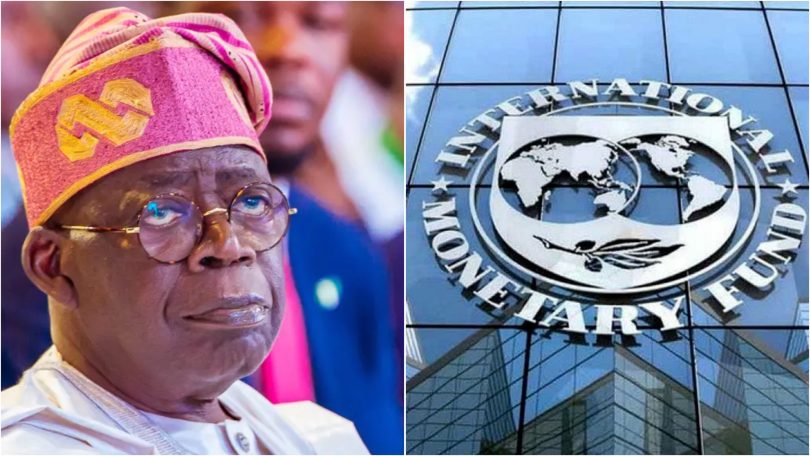
The International Monetary Fund has recommended introducing taxes on fuel products and telecommunications services in Nigeria as part of broader measures to increase government revenue and create fiscal space for development spending and social interventions.
The international financial organization argued that stronger revenue mobilisation had become increasingly important as Nigeria’s fiscal position remained under pressure despite recent reforms.
This comes as Nigerians are protesting against worsening standard of living made worse by widespread insurgency.
The recommendation was contained in the IMF’s 2026 Article IV Consultation report on Nigeria, where the Fund argued that additional tax measures would be needed over the medium term despite the recent overhaul of the country’s tax system.
“Further tax policy changes will likely be needed—such as increasing the VAT rate, extending VAT to fuel products, rationalising tax expenditures in particular VAT exemptions on extractive industries and some customs duties, and introducing telecom excises—to complement administrative gains,” the IMF said.
The institution, however, cautioned that the timing of any new taxes must take into account Nigeria’s rising poverty levels and worsening food insecurity.
“The timing of reforms must consider the poverty and food insecurity situation and ensure that the cash transfer system is in place and funded,” the Fund added.
A previous attempt by the Federal Government to impose a five per cent excise duty on telecom services met strong resistance from operators, subscribers and consumer advocacy groups before it was suspended and eventually scrapped.
Telecommunications firms had maintained that the industry was already weighed down by multiple taxes, rising energy costs, foreign exchange challenges and infrastructure constraints. They warned that any additional levy would likely be transferred to consumers through higher call and data tariffs.
Similarly, proposals to tax fuel products have faced opposition from labour unions and private sector organisations amid concerns over the rising cost of living following the removal of petrol subsidies and increases in transport and food prices.
The IMF’s latest recommendation comes as the Fund projects that Nigeria will require stronger revenue mobilisation efforts to sustain planned increases in public spending and provide support for vulnerable households.
According to the report, revenue-enhancing tax policies could generate additional revenue equivalent to 3.9 per cent of Gross Domestic Product within three years of implementation. The Fund identified a two-percentage-point increase in the Value Added Tax rate as the largest contributor, with a projected revenue gain of 0.8 per cent of GDP.
The report also projected that removing pioneer status incentives and revising free zone regulations would generate an additional 0.7 per cent of GDP. Reforms to capital gains taxation and adjustments to personal income tax bands, allowances and rates were each estimated to contribute 0.6 per cent of GDP.
The IMF further estimated that a top-up tax on multinationals and large firms could raise 0.5 per cent of GDP, while rationalising investment allowances would contribute another 0.4 per cent.
Notably, the category labelled “others”, which includes telecom excise duties and measures such as a carbon tax on fuel, was projected to generate an additional 0.4 per cent of GDP in revenue.
Beyond new tax measures, the Fund said Nigeria could achieve even greater gains through improved tax administration. It projected that administrative reforms would generate an additional 3.1 per cent of GDP through better compliance, stronger enforcement and efforts to reduce informality in the economy.
According to the report, measures such as fiscalisation, electronic invoicing and cross-validation of tax deductions could generate 1.5 per cent of GDP, while expanded tax identification registration and consolidation of taxpayer databases could contribute a further 1.6 per cent of GDP.
The IMF acknowledged that some of Nigeria’s recently enacted tax reforms would reduce government revenue in the short term because they were designed to support households and small businesses.
It estimated that revenue-reducing measures would lower revenues by 2.4 per cent of GDP. Expanded VAT input credits, additional zero-rated items and broader exemptions on basic consumption goods were projected to account for 1.7 percentage points of the decline.
Lower corporate income tax obligations for smaller firms would reduce revenues by 0.4 per cent of GDP, while lower personal income tax rates and expanded exemptions for low-income earners would account for another 0.3 percentage-point reduction.
Overall, the IMF projected that the combined impact of revenue-enhancing measures, administrative reforms and revenue-reducing policies would result in a net increase in government revenue equivalent to 4.6 per cent of GDP over the medium term.