
Health
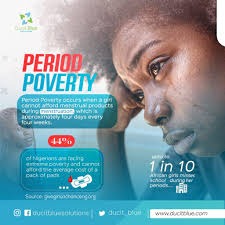
A health and gender expert, Aisha Ibrahim, has expressed concern over the growing challenge of menstrual poverty in Nigeria, warning that millions of girls and women lack access to affordable sanitary products.
Ibrahim made the remarks in an interview with the News Agency of Nigeria (NAN) on Monday in Suleja, Niger.
She also expressed concern over the lack of adequate hygiene facilities and access to accurate menstrual health information, warning that the situation could increase the risk of preventable infections.
According to her, menstrual poverty is forcing many schoolgirls to miss classes while exposing women and girls to infections, stigma and emotional distress.
“Many girls cannot afford sanitary pads and resort to using old cloths, tissue paper or other unsafe materials during menstruation.
“This puts them at risk of infections and affects their confidence and dignity,” she said.
Ibrahim said that rising inflation and the increasing cost of sanitary products had worsened the situation, particularly for women and girls from low-income families.
Similarly, a gender advocate, Mrs Grace Daniel, said menstrual poverty remained a major factor contributing to school absenteeism among adolescent girls.
“When girls do not have access to sanitary products, some stay home during their menstrual periods. Over time, this affects their education and future opportunities,” she said.
Daniel urged government agencies, development partners and private organisations to expand programmes providing free or subsidised sanitary products to vulnerable girls across the country.
A secondary school student at Glittering Field Academy, Abuja, Miss Esther John, said she sometimes missed classes because her family could not always afford sanitary pads.
“There are times I stay at home because I am afraid of staining my uniform in school. It makes me feel embarrassed,” she said.
Also, Mrs Blessing Samuel, a mother of three, said the rising cost of living had made it increasingly difficult for some families to prioritise menstrual hygiene products.
“Food comes first. Sometimes buying pads for my daughters becomes a struggle because prices keep increasing,” she said.
NAN reports that the World Health Organization (WHO) says addressing menstrual poverty requires a coordinated approach involving government, schools, healthcare providers and community leaders.
According to the organisation, improving access to menstrual products, clean water, sanitation facilities and menstrual health education will help protect the health, dignity and educational opportunities of girls and women in Nigeria.(NAN)
F.O
Tags: Expert Menstrual Poverty