
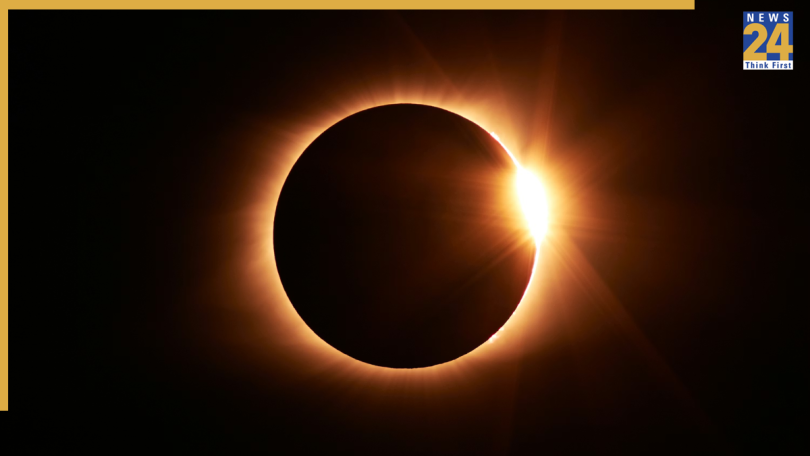
A rare and spectacular total solar eclipse will take place on August 2, 2027, and scientists are already calling it one of the biggest sky events of the century. According to NASA, the eclipse will last for more than six minutes, making it the longest total solar eclipse of the 21st century.
Before that, another total solar eclipse will occur on August 12, 2026. While both events are expected to offer breathtaking views of the Sun’s corona, the 2027 eclipse is drawing the most attention because the Moon will completely block the Sun for an unusually long time, turning day into deep twilight.
It Will Stay Dark for More Than 6 Minutes
NASA’s calculations show that the August 2, 2027 eclipse will reach a maximum duration of 6 minutes and 23 seconds. The last time people witnessed such a long total solar eclipse was in 1991. According to NASA, the next eclipse of similar length will not happen again until 2114.
Where Will the Eclipse Be Visible?
The eclipse path will begin in southern Spain and then move across North Africa before reaching the Middle East. Some of the best views are expected in Tunisia and Egypt. In Luxor, Egypt, the eclipse could last around 6 minutes and 19 seconds, making it one of the top viewing locations in the world.
The experience will be even more special because famous ancient landmarks such as the Karnak Temple and the Valley of the Kings are located nearby.
Why Will the Solar Eclipse Last So Long?
A solar eclipse occurs when the Moon passes between the Sun and the Earth, blocking sunlight for a short time. The 2027 eclipse will last longer because the Moon will be near its perigee, the point where it is closest to Earth. This makes the Moon appear larger in the sky, allowing it to fully cover the Sun for a longer duration.
Another important factor is that the maximum eclipse will happen in a region where the Sun will be almost directly overhead, adding a few extra seconds to the event.
First published on: May 27, 2026 09:08 PM IST
Get Breaking News First and Latest Updates from India and around the world on News24. Follow News24 on Facebook, Twitter.
End of Article
Related Story


