
The story so far:
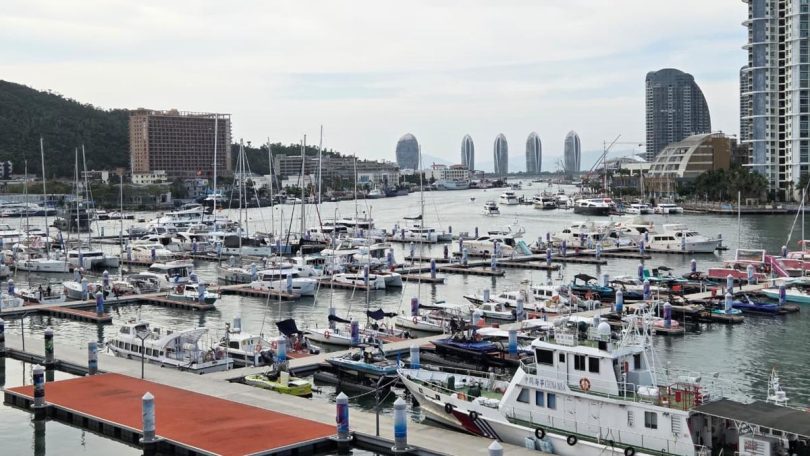
Hainan, China’s southernmost province and a tropical island in the South China Sea, has come to the forefront of the country’s modern-era opening-up efforts with the beginning of its free trade port (FTP) and customs closure in December. Envisioned as a ‘landmark leap’ into economic ease, China is trying to set up a business hub in the island province aimed at attracting global and local customers with the appeal of zero tariffs, low personal taxes, and simplified flow of commuters and data.
What is the free trade port initiative?
The plan for the FTP in Hainan was first unveiled on June 1, 2020. The FTP was officially launched on December 18, 2025, with island-wide special customs operations implementing the policy of “freer access at the first line, regulated access at the second line, and free flow within the island”. Under the initiative, tariff barriers on trade were removed from the island with the closure of ordinary customs operations, enabling easier imports. While the island remains an integral part of China, it has now become a neutral zone for international trade, with regular customs procedures and tariffs applying only to goods entering the Chinese mainland from the island. Visa-free entry for people from 86 countries is also expected to boost tourism.
Hainan will be a “new frontier of opening up, hub for regional cooperation and engine for economic globalisation,” said Wang Bin, spokesperson for the Chinese Communist Party’s Hainan Committee, ahead of the official opening of the FTP. He added that the FTP would help save 860 million RMB in tariffs annually while creating investment opportunities for Chinese enterprises in the Global South.
How will the initiative help China’s trade?
The island-wide special customs operation is seen as an opportunity to “deepen reforms in key sectors, steadily advance high-quality development, improve risk prevention, and build the FTP into a leading gateway for China’s opening-up in the new era,” He Lifeng, Chinese Vice-Premier, said at the launch of the FTP on December 18.
Since the launch, the number of tariff-free product categories has expanded from around 1,900 to 6,600, while the share of goods eligible for zero tariffs has risen from 21% to 74%. Global Times reported that 3,265 foreign-invested enterprises registered in the FTP between December 18 and December 31, while over 30,000 foreign trade registration enterprises were added in 2025.
According to Haikou Customs, goods worth around 753 million yuan (about $107 million) were imported into Hainan in the first few months after the FTP’s opening. The value of processed and value-added goods brought into the mainland during the same period stood at around 85.9 million yuan.
How are businesses benefiting?
The establishment of the FTP has drawn numerous industries to the island. The M1 Coffee Dream Factory in Wanning is one such enterprise benefiting from the initiative. “We import coffee beans for RMB 1,100 per kilo from Panama, which cost RMB 1,700 per kilo on the mainland,” said Tong Shuo, director of M1.
Hainan Ausca International Oils and Grains Co., Ltd., established with a total investment of 3.5 billion RMB, is among the first enterprises operating within the FTP. It piloted the import tariff exemption policy to produce goods with at least 30% added value after processing. The group started construction in September 2020, soon after the FTP plan was unveiled, and opened its first production line in April 2021. It now has a production line of 2 million tonnes per year.
How does the initiative encourage consumers?
The FTP has also opened Hainan to individual consumers.
Sanya, the province’s main tourist hub, houses the China Duty Free centre, with a collection of global and local brands competing for customers. The CDF offers a shopping experience for both international tourists and mainland residents, provided they present a return ticket at entry. Local residents, however, face a shopping cap of 1,00,000 RMB per person per year and must travel out of the province once a year.
“The FTP is expected to bring benefits with an increase in overseas visitors, which will boost spending and help the local economy,” said Bai Xue, deputy general manager at Sanya CDF. “The visa-free policy will help us provide a window to showcase Chinese culture to the world, while introducing local brands and shifting focus from the world to China,” she added.
The Global Times reported that offshore duty-free shopping in Hainan exceeded 2 billion RMB since the FTP’s opening, with more than 3,00,000 shoppers. Haikou and Sanya, the two major cities of the province, have seen the fastest growth in inbound flight ticket bookings.
What does China seek to gain with Hainan?
While Hainan is on its way to further China’s strategy of economic opening up, there are multiple factors affecting its success. Unlike Hong Kong — one of the world’s leading financial hubs, being a special administrative region under the Chinese government, with its own legal system, currency, and independent membership in international trade organisations — Hainan is China in all perspectives and domain.
With a customs-free, tariff-free, region outside the mainland that follows all other legal and constitutional provisions, China has made both a partner and competitor to Hong Kong in Hainan. China now has an open economic and tourist zone at the northern end of the much-contested South China Sea, with fresh and vast economic opportunities compared to congested Hong Kong.
The geopolitical and economic implications of Hainan, and its output to China, which seeks to attain “socialist modernisation” in the coming decade, will be unveiled in time.
For now, the Hainan experiment is attracting eyes and its baby strides are firm.
(The writer was in China at the invitation of the China Public Diplomacy association)
Published – May 25, 2026 08:30 am IST