
By: Inuwa Bwala
[email protected]
I have known Professor Farook Kperogi way back in Kaduna in the 1990s before he jetted out. He was my neighbour in Ungwan Dosa.
I knew him on the pages of Weekly Trust newspaper, where he worked, as a fine professional, with a knack for exclussive reports with analytical capabilty.
I follow his weekly columns in Tribune newspaper and on the social media.
I know him to be courageous and admits his faults whenever he goofs on certain issues.
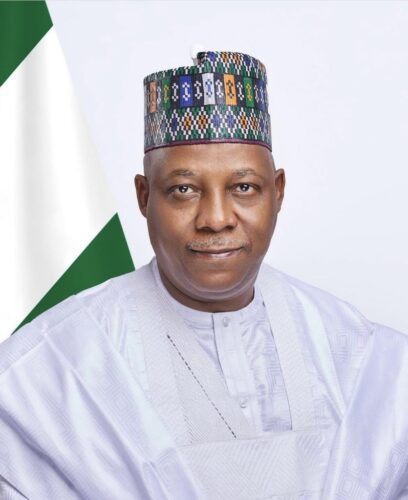
Prof. Kperogi’s emotional cartography on President Bola Ahmed Tinubu, and the choice of Kashim Shettima, may sound brillant, but it risks reducing Vice President Kashim Shettima to a demographic checkbox: that falls short of the man’s true worth and the reason he was chosen.
If Kperogi must know, Kashim Shettima was not picked in 2023 because he is Muslim. Rather, he was picked because he is a proven politician with a record of service under fire. Three attributes stand out from his public career, which should have been a better compass for an analyst, who wants to reflect truth and not a form an opinion just to impress. Kashim Shettima is a crisis-tested leader, who as governor of Borno from 2011-2019, governed at the height of Boko Haram insurgency. Maiduguri was under virtual siege, yet he stayed in the state, slept in Government House, and kept institutions running.
He is on record to have rebuilt schools destroyed by insurgents, re-opened markets, and set up a Victims Support Fund when the federal center was still finding its feet.
President Bola Ahmed Tinubu: long before he was chosen as the candidate for the 2023 Presidential election was in Maiduguri as Shettima’s guest, and he is conversant with the feats achieved. That is not “symbolism”, that was executive courage. Tinubu needed someone who understood post-conflict governance, and Shettima had receipts in conflict management, to show.
*I stand to challenge anybody, who can question Kashim Shettima’s deep understanding of Nigeria’s political dynamics, using his equally deep legislative and executive experiences, having served as governor and Senator.
Even before he became the governor, of Borno State, Shettima was Commissioner for Finance, later Commissioner for Local Government & Chieftaincy Affairs in Borno.
He was Senator for Borno Central before he was picked as Tinubu’s running mate.
Few Vice Presidential picks in Nigeria’s history came in with both executive and legislative experiences, from a conflict zone as Borno.
That combination matters for a Vice President whose constitutional role is to liase with the Senate and deputize the President on policy. He knows how the National Assembly works, and he knows how to manage a state budget in a war like situation.
Could Farook doubt Shettima’s pragmatic, people-centered politics, which have often been on display, since he assumed office, as Vice President? I doubt.
Those who worked with him in Borno, including my humble self, often describe Shettima as a leader who is accessible, data-driven, and always calm under pressure. He has built rapport across ethnic and religious lines, and sees governance more about service delivery, not slogans.
While he was the governor, Kashim Shettima introduced what has become a revolution in irrigation farming, livestock development, and youth skills training, even while fighting insurgency on the sidelines. That pragmatism is why he has been useful in Tinubu’s government coordinating political alliances, standing inn for the President at important national and international meets, advising on food security, humanitarian response, and economic council work.
To frame Shettima as just the “northern Muslim emotional compact” misses the political calculation Tinubu made. He picked a running mate who had already governed through Nigeria’s worst security crisis, managed budgets under stress, and understood the North beyond Abuja conferences. That’s political capital, not religious arithmetic.
Religion will always be part of Nigeria’s conversation. But leaders should be judged first by competence and record. Spppphettima’s dues are paid in Borno’s classrooms, hospitals, and resettled communities, not just in identity maps.
If 2027 is about continuity and results, then the case for Shettima rests on that record of service. Not on theology.
[email protected]