
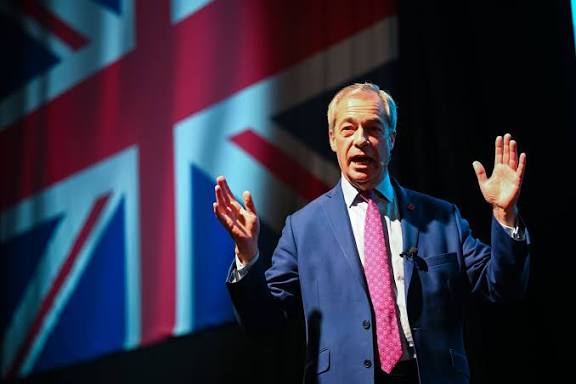
Millions of British workers could stop paying income tax on overtime under a new plan announced by Reform UK leader Nigel Farage, as his party seeks to win over voters who feel hard work is no longer properly rewarded.
The proposal would apply to workers earning less than £75,000 a year who work more than 40 hours a week. Under the plan, any overtime pay above those 40 hours would be free from income tax if Reform UK wins the next general election.
Farage described the policy as a “hard work bonus” and said it was designed to help people who take extra shifts but see much of the reward reduced by tax.
“People who put in the extra hours” often see “no real reward at the end of the month,” he said, arguing that many families feel work no longer pays as it should.
The announcement comes during the Makerfield by-election campaign, where Reform is trying to put Labour under pressure in a seat that could carry wider political meaning. A Survation poll put Labour on 43 per cent in the constituency, with Reform close behind on 40 per cent.
The policy is aimed at workers in sectors where overtime is common, including nurses, police officers, prison officers, warehouse workers, factory staff and civil servants.
Reform said a newly qualified nurse working six hours of overtime each week could be more than £1,300 better off over a year. Farage also said workers at the Heinz factory in Makerfield could gain more than £1,000 annually under the plan.
The party estimates that around 3.2 million workers receive overtime pay and says the tax cut could encourage more people to work extra hours, improve productivity and increase spending by giving workers more take-home pay.
But the plan has drawn criticism from Labour, the Conservatives and the Liberal Democrats, who questioned how Reform would pay for it.
Reform said the policy would cost about £5 billion a year and would be funded through wider spending cuts, including reductions to welfare, foreign aid, net zero schemes and some Civil Service back-office roles.
Treasury Chief Secretary Lucy Rigby dismissed the proposal as unrealistic, saying Reform should explain where its planned £40 billion of cuts would fall and which public services could be affected.
Shadow Chancellor Sir Mel Stride also questioned the plan, saying hard work should be rewarded but tax cuts must be delivered in a fair and responsible way.
Liberal Democrat deputy leader Daisy Cooper described Farage’s plan as “fantasy economics,” warning that the country could not afford what she called a risky economic gamble.
The Institute for Fiscal Studies also raised concerns. Helen Miller of the IFS said the proposal was problematic both in principle and in practice. She warned that employers could be tempted to classify normal working hours as overtime to reduce tax bills.
The issue also opens a wider debate about unpaid overtime. Analysis by the Trades Union Congress found that 3.8 million people worked an average of 7.2 unpaid hours a week in 2024, with workers in teaching, health and care among those most affected.
Politically, Farage’s announcement is a direct challenge to Labour’s claim to represent working people. Reform is trying to present itself as the party of workers who feel squeezed by taxes, low wage growth and rising living costs.
The plan also comes after Farage dropped a previous £90 billion tax-cut pledge in an effort to make Reform appear more financially credible.
With the Makerfield by-election approaching, the overtime tax plan is likely to become a key campaign issue. For workers who rely on extra shifts to pay bills, the offer may sound attractive. For critics, the unanswered question remains whether Reform can fund it without cutting services many of those same workers depend on.
As Britain moves closer to another fierce election season, the battle over wages, tax and the cost of living is becoming central to the fight for working-class voters.